
Connected features and automation attract attention, but the real engineering challenge is making everyday products easier to live with—not simply more complicated.
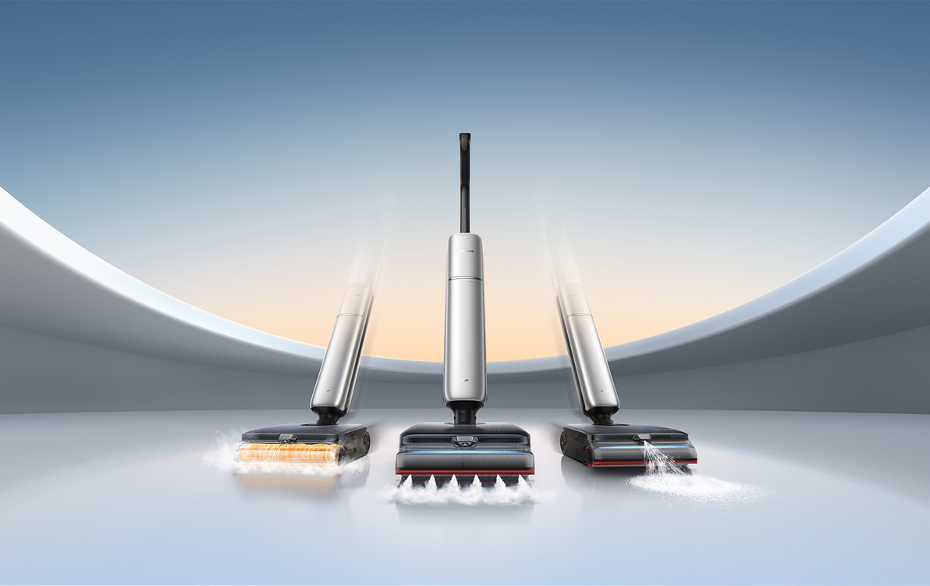
A floor washer might seem an unlikely place to look for the future of consumer hardware. It has a straightforward job: remove dirt from the floor. Yet put a modern model beside a traditional mop, and the differences go well beyond the addition of a motor.
There are sensors that respond to changing cleaning conditions, electronic controls that manage water and suction, brush systems designed to limit hair tangling, and docking stations that can take over some of the maintenance work.
Each feature addresses a small but familiar frustration. Together, they raise a question that matters well beyond household cleaning: when does adding automation genuinely make a product easier to own?
For hardware companies, that question is more useful than asking how many smart features can fit inside the next model.
A Household Chore Becomes an Engineering Problem
Consider what happens when somebody cleans a kitchen floor.
First, loose debris needs to be collected. Then there is the spill near the sink, the dried mark beside the dining table and the dirty water left behind after washing. Once the floor is finished, the cleaning equipment itself needs attention.
A conventional mop leaves much of that work to the user. A wet-dry floor washer combines several steps, collecting debris and washing compatible hard floors while recovering used water.
This is the central appeal of the broader wet dry vacuum category. Rather than solving one isolated part of the process, these appliances bring together mechanical cleaning, water handling and, increasingly, electronic control systems.
That integration creates a different set of engineering problems.
A larger battery might extend cleaning time but add weight. A more sophisticated brush mechanism could improve how the appliance handles hair, while introducing parts that need inspection or replacement. A self-cleaning feature may save effort after each session, yet still require the user to empty a dirty-water tank.
None of these trade-offs is particularly glamorous. They are also where much of the actual product experience is decided.
Tineco offers one example of how established appliance manufacturers are approaching these challenges. Its Tineco vacuum portfolio includes conventional cordless cleaning products as well as floor washers with sensors and increasingly automated maintenance features.
The brand is an established appliance manufacturer rather than a startup. Its product range is useful here as a case study in hardware evolution, not as evidence of any broader industry trend by itself.
Smart Sensors Are Useful Only When Their Response Matters
The word smart has become so common in consumer electronics that it often explains very little.
A sensor does not make a product intelligent simply by being present. What matters is what the hardware detects, which operating parameters change in response and whether that adjustment helps the person using it.
In a floor washer, a dirt-sensing system may be linked to suction or water-flow controls. Instead of relying entirely on one fixed operating setting, the machine can change its response to the conditions detected during cleaning.
Tineco’s iLoop system is an example of this approach. On compatible models, the company describes a sensor-controlled process that adjusts cleaning performance according to detected dirt levels.
The idea is straightforward. A relatively clean section of flooring does not necessarily require the same operating response as an area with a noticeable spill.
But this is also where product claims deserve closer examination.
Detecting a change is not the same as identifying every type of dirt accurately. Nor does automatic adjustment, by itself, prove that a machine cleans faster, uses less energy or achieves a better result than a manually controlled alternative.
Those outcomes need separate testing.
For developers, the useful questions are fairly practical. How quickly does the system respond? What happens when it encounters something the sensor does not recognize well? Can the user override the automatic setting? And does the feature behave consistently across the surfaces for which the device is designed?
A clearly documented operating principle is a starting point. Repeatable test results would make the case considerably stronger.
The Next Automation Opportunity Happens After Cleaning
Product teams often focus on the main task their device performs. Owners, meanwhile, remember the work that remains once that task is finished.
A floor washer can clean a room effectively and still be inconvenient if the user needs to refill it repeatedly, rinse parts by hand and find somewhere for a damp brush to dry.
This helps explain the development of more elaborate docking stations.
Some stations primarily charge or store the appliance. Others incorporate maintenance functions, and certain models add automatic water management.
The Tineco s9 FLOOR ONE STATION S9 Scientist Pro illustrates the latter approach.
According to Tineco’s US product documentation, the device works with a Smart Refresh Station that can replenish the floor washer with fresh heated water. The station includes a 5-liter water storage system intended to support multiple refills.
Its specifications also list HydroBurst cleaning, iLoop sensing and automatic brush-cleaning and drying functions. The company advertises up to 100 minutes of runtime under specified conditions.
These are manufacturer-reported features and figures, not independently verified performance measurements.
The product is particularly interesting from a design perspective because it moves part of the work away from the handheld device and into a separate system.
That shift has consequences.
The station needs floor space and electricity. Water has to be stored, transferred and handled safely. The dirty-water system still requires attention, and the user needs to know what to do if a component becomes blocked or a maintenance cycle cannot complete.
Automation reduces certain manual steps, but it does not remove the need to design for failures and routine servicing.
The product’s US listing was marked unavailable when checked on October 29, 2026. It is therefore discussed as a technology example rather than a confirmed in-stock purchase option.
Customer Feedback Shows Where Features Meet Reality
Technical specifications describe what a product is designed to do. Customer reviews can reveal whether the design fits the circumstances in which people actually use it.
The distinction matters, and the reviews are not always flattering.
On Tineco’s US store, a reviewer named Joseph Jacobson describes using the STATION S9 Scientist Pro in a roughly 4,000-square-foot home with large dogs. His feedback is positive about floor cleaning and drying, but he also raises a concern about how well the product will hold up over time.
Another reviewer, Carla Werner, reports difficulty with the handle remaining securely attached and frustration obtaining assistance.
These are individual customer accounts hosted on the manufacturer’s store, not findings from an independent durability study. Neither establishes a general failure rate or guarantees a particular level of performance.
Still, they highlight two issues hardware teams sometimes underestimate: mechanical reliability and the experience of getting support when something goes wrong.
A product may offer sophisticated automatic functions, but the customer’s impression can be shaped by a simple connection point or an unsuccessful service interaction.
Those details are not secondary to innovation. They are part of whether the innovation succeeds.
Mainstream and Premium Hardware Solve Different Problems
Not every household needs a large automated station. Nor does every user have the same tolerance for cost, weight or maintenance.
A smaller home with mostly hard floors may need an appliance that handles everyday spills and fits easily into a cupboard. A larger household with pets and frequent cleaning might place greater value on longer runtime, brush maintenance or more automated water handling.
The FLOOR ONE S7 Stretch Ultra provides a useful illustration of a different design priority.
The Tineco s7 FLOOR ONE S7 Stretch Ultra has a 180-degree lay-flat design intended to help the user reach beneath some furniture. It also includes a DualBlock anti-tangle brush system, iLoop sensing and FlashDry self-cleaning.
Tineco lists a maximum runtime of up to 50 minutes, subject to the stated operating conditions.
The value proposition differs from that of a large refill station. Here, accessibility, everyday handling and cleaning after use become the more visible priorities.
Even so, the real world imposes limits that marketing photographs cannot always convey.
Mary Durham, reviewing the S7 Stretch Ultra on Tineco’s US store in September 2026, said the machine could not reach beneath her cabinets. Another customer, Anita Pagitt, reported that it made cleaning ceramic tile and vinyl-plank flooring easier in a home with four small dogs, while noting that some grout lines still required repeated passes.
These comments point toward an important product-design principle: a feature can work as intended and still fall short of a particular user’s expectations.
A machine that reclines to 180 degrees is not necessarily thin enough to fit beneath every cabinet. A system designed to wash floors may still have difficulty with certain grout configurations.
The right product therefore depends on the environment in which it will be used.
Other models, including the FLOOR ONE S9 Artist Pro, S9 Master and steam-capable S7 Stretch Steam, provide additional configurations within the category. Their differences should be evaluated using the specifications of each model rather than assuming that capabilities carry across an entire product family.
Ownership Cost Is Part of the Product Experience
Hardware businesses often compete on launch-day specifications. Owners live with the product for years.
That difference changes the economics of a purchase.
The initial price is easy to compare. Less obvious are replacement rollers, compatible cleaning solutions, filters, battery aging, storage requirements and potential repairs.
An automated station may save time during frequent cleaning, but its added complexity can also affect the cost and practicality of long-term ownership.
For manufacturers, this suggests that serviceability deserves attention early in the design process.
Can a user inspect the brush without special tools? Are replacement parts clearly identified? Is the cleaning procedure explained in ordinary language? Are software features, where applicable, dependent on a companion application or continuing digital support?
These are different questions, but they share a theme: a product needs to remain understandable after the excitement of its first use.
For connected consumer products, security and support add another layer.
The US National Institute of Standards and Technology addressed this in NISTIR 8425, Profile of the IoT Core Baseline for Consumer IoT Products. The publication identifies cybersecurity capabilities and supporting practices relevant to consumer IoT products, including documentation and ongoing manufacturer responsibilities.
This framework should not be applied indiscriminately to every sensor-equipped appliance. A product with local electronic controls is not necessarily an internet-connected device.
Where connectivity is present, however, security, software support, data handling and clear customer documentation become legitimate parts of the ownership proposition.
The same broader lesson applies to non-connected appliances: convenience at purchase is not enough if the product becomes difficult to maintain.
What Hardware Companies Should Measure Before Claiming Innovation
A feature list is easy to create. Demonstrating customer value is harder.
For a startup developing consumer hardware—or an established manufacturer introducing new functionality—the useful evidence depends on the problem the feature is supposed to solve.
Consider three examples.
A dirt-detection system should be assessed on how accurately and consistently it responds to defined conditions, rather than simply whether a sensor is present.
An automatic refill station could be evaluated through the number of manual interventions required during a standardized cleaning session, along with the time needed for maintenance afterward.
A reclining floor washer could be tested against clearly defined furniture clearances, including the space needed to move the cleaning head, not just the angle of the handle.
These are proposed evaluation approaches, not reported results for the Tineco models discussed here.
Independent testing would need to disclose the flooring materials, cleaning conditions, measurement methods and any limitations of the comparison.
For more complex products, longer-term evidence may be equally important: repair frequency, component replacement, customer support outcomes and the ability to keep the equipment functioning through ordinary wear.
None of these metrics is as eye-catching as a new feature name. They may be more useful for determining whether the feature creates lasting value.
Why This Matters Beyond Floor Care
The floor-care category offers a compact example of a much larger hardware challenge.
Once a product begins combining sensors, mechanical systems, software and automated maintenance, the user is no longer buying only the core function. They are buying the experience of managing that function over time.
The same tension appears in other household equipment, from connected kitchen appliances to robotic lawn-care devices.
Automation is attractive when it removes a recurring inconvenience. It becomes frustrating when it introduces a different kind of work that the customer was not expecting.
That is why the most meaningful advances may be difficult to summarize in a single marketing number.
A product that is easier to clean, easier to repair, clearer to operate and less demanding to maintain may deliver more everyday value than a competing model with a longer list of features.
For hardware founders and product teams, the opportunity is not simply to make familiar devices smarter. It is to understand which parts of the customer’s routine still demand unnecessary effort—and design those steps out without creating bigger problems elsewhere.
Frequently Asked Questions
What makes a smart floor washer different from a traditional wet-dry vacuum?
A smart floor washer may combine washing and dirty-water collection with electronic sensing and automatic adjustments. The precise functions depend on the model. A traditional wet-dry vacuum may be designed primarily to collect wet and dry debris rather than wash floors using a controlled brush-and-water system.
Do dirt sensors actually improve cleaning performance?
Sensors can adjust operating settings in response to detected conditions, but their presence alone does not prove better results. Cleaning performance needs to be assessed under defined conditions, ideally through repeatable testing.
What does an automatic water-refill station do?
On supported models, a refill station can replenish the appliance’s clean-water supply and reduce some manual refilling steps. The amount of user intervention still required depends on the station’s design, tank capacity and maintenance procedures.
Are lay-flat floor washers suitable for every low-clearance space?
No. A 180-degree reclining design can improve access beneath some furniture, but the height of the machine, cleaning-head dimensions and available movement space still determine whether it fits.
Can a floor washer replace a vacuum cleaner for carpets?
Not necessarily. Wet-dry floor washers of the type discussed here are intended for manufacturer-approved hard floors. Carpets, rugs and upholstery generally require tools designed for textile surfaces.
What should buyers check beyond battery life and suction power?
Useful factors include floor compatibility, weight, water-tank capacity, ease of maintenance, replacement-part availability, warranty terms and storage requirements. For internet-connected models, software support and data security may also matter.
References and Further Reading
- National Institute of Standards and Technology (NIST) — Profile of the IoT Core Baseline for Consumer IoT Products (NISTIR 8425), September 2022. A reference framework for cybersecurity and supporting practices in consumer IoT products.
https://doi.org/10.6028/NIST.IR.8425 - UK Government, Department for Digital, Culture, Media & Sport — Code of Practice for Consumer IoT Security. Guidance covering secure design, user documentation and maintenance of connected consumer products.
https://www.gov.uk/government/publications/code-of-practice-for-consumer-iot-security/code-of-practice-for-consumer-iot-security - Tineco US — FLOOR ONE STATION S9 Scientist Pro. Official specifications for automatic water refill, Smart Refresh Station, iLoop and maintenance features; includes customer feedback from Joseph Jacobson and Carla Werner.
https://store.tineco.com/products/tineco-floor-one-station-s9-scientist-pro-wet-dry-vacuum-cleaner - Tineco US — FLOOR ONE S7 Stretch Ultra. Official specifications for 180-degree lay-flat design, DualBlock, FlashDry and runtime; includes customer feedback from Mary Durham and Anita Pagitt.
https://store.tineco.com/products/tineco-floor-one-s7-stretch-ultra-cordless-wet-dry-vacuum-cleaner

Author: Kossi Adzo
Kossi Adzo is the editor and author of Startup.info. He is software engineer. Innovation, Businesses and companies are his passion. He filled several patents in IT & Communication technologies. He manages the technical operations at Startup.info.