
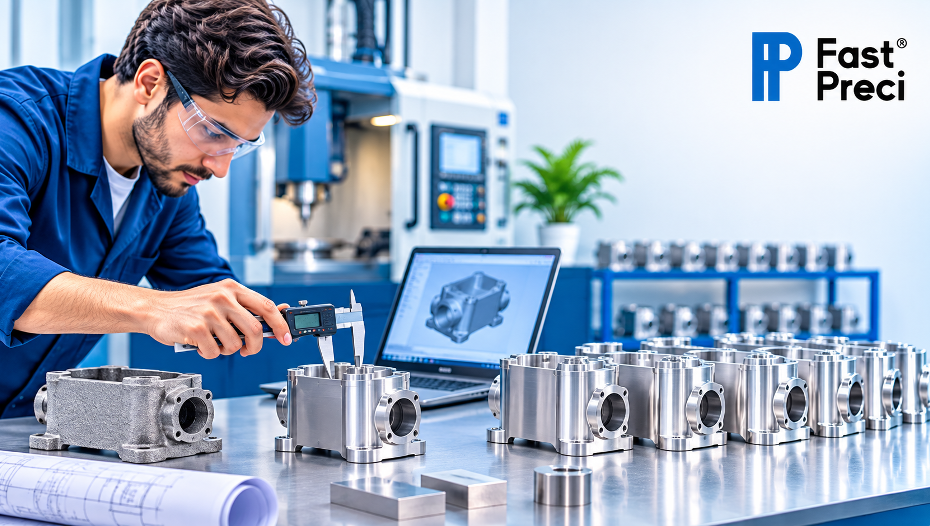
A working prototype feels like a finish line. The device powers on, the mechanism moves, and investors nod with interest. Yet for most hardware startups, the prototype marks only the starting point of the hardest phase. Production demands repeatability, cost control, supplier coordination, and quality systems that a single handmade unit never tests.
Many promising products stall at this stage. The team built something impressive, but nobody planned how to build it a thousand times. This article walks through the areas hardware startups must get right to cross the gap successfully.
Treat the Prototype as a Question, Not an Answer
A prototype answers one question: can this idea work? It does not answer whether the product can be made affordably, reliably, and at the pace customers expect. Founders who confuse the two often skip critical steps.
Smart teams run several prototype rounds, and each round asks a different question. The first proves function. The second tests user experience. The third checks manufacturability. By the final round, the prototype should resemble the production part in material, process, and finish. This approach exposes problems while changes still cost little.
Access to fast, flexible rapid prototyping services helps teams move through these rounds without long delays. Quick turnaround lets engineers test ideas, learn from failures, and refine designs within days instead of months.
Design for Manufacturing Before You Need To
Design for manufacturing, often shortened to DFM, means shaping a product so factories can build it efficiently. Startups frequently postpone DFM until they request production quotes, and the results can hurt. Suppliers may flag features that need special tooling, tight tolerances that raise cost, or assemblies that take too long to put together.
Early DFM thinking brings real savings. Engineers can reduce part counts, standardize fasteners, and simplify assembly sequences. They can also choose geometry that machines or molds cleanly. Each of these steps lowers cost and raises consistency.
A good habit is to ask a manufacturing partner to review the design before it freezes. Experienced suppliers see issues that designers miss, and their feedback often pays for itself many times over.
Choose Materials With the Whole Product Life in Mind
Material choice affects strength, weight, appearance, cost, and manufacturability all at once. Startups sometimes select materials based on a single attribute, such as strength or looks, and ignore the rest.
Metal selection shows this clearly. Teams comparing titanium and steel for a housing, a structural part, or a medical device component must weigh several factors together. A guide on titanium vs. stainless steel can help clarify differences in strength-to-weight ratio, corrosion resistance, machinability, and cost. Titanium offers excellent weight savings and corrosion performance, but it costs more and machines more slowly. Stainless steel often delivers a better balance for products that need durability without premium pricing.
The right answer depends on the product. A wearable device, a drone component, and an industrial sensor housing all place different demands on material. Teams should define those demands first, then pick the material that meets them at the lowest reasonable cost.
Build a Realistic Cost Model Early
Hardware margins can disappear quickly when costs surprise a team. Founders should build a cost model during prototyping and update it at each stage. The model should include materials, machining or molding, finishing, assembly labor, testing, packaging, shipping, and expected scrap.
Many startups forget to include yield loss. Some parts fail inspection, and manufacturers account for that in pricing. Others forget tooling, fixtures, and certification costs. A thorough model prevents these gaps and shows whether the product can reach a healthy margin at its target price.
Cost modeling also guides design decisions. When a feature adds significant cost but little customer value, the team can remove or simplify it with confidence.
What Hardware Startups Must Check Before Scaling
The table below lists the key areas to verify before moving from prototype to production.
| Area | What to Verify | Risk If Ignored |
| Design for manufacturing | Part count, tolerances, assembly steps | High unit cost and slow production |
| Material selection | Strength, weight, corrosion, machinability | Failures in the field or cost overruns |
| Supplier capability | Equipment, quality systems, capacity | Delays and inconsistent quality |
| Testing and validation | Performance, durability, safety standards | Recalls and certification failures |
| Documentation | Drawings, specs, inspection criteria | Confusion and costly rework |
| Pilot production | Process stability and yield | Surprises during full-volume runs |
Select Suppliers as Long-Term Partners
Supplier choice shapes quality, speed, and cost throughout a product’s life. Startups often pick the cheapest quote, then regret it when quality slips or deadlines pass. A better approach is to evaluate suppliers on capability, communication, and reliability.
Visit facilities when possible, or request detailed process information. Ask about equipment, inspection methods, certifications, and experience with similar products. Request sample parts and measure them yourself. A supplier who welcomes this scrutiny usually has confidence in their work.
Communication matters as much as capability. Suppliers who respond quickly, explain issues clearly, and suggest improvements make the whole process smoother. Over time, these relationships become a real competitive advantage.
Validate Through Testing and Pilot Runs
Testing must go beyond the lab. A prototype that works in a controlled setting may fail under heat, vibration, moisture, or heavy use. Teams should test products in conditions that match real customer environments.
A pilot run bridges the gap between prototype and mass production. It uses production processes at small volume, which reveals assembly problems, quality variation, and supply chain gaps. Teams then fix those issues before committing to large orders. Pilot runs cost more per unit, but they protect startups from far larger losses later.
Document Everything
Clear documentation turns a design into a manufacturable product. Drawings should specify dimensions, tolerances, materials, and finishes. Assembly instructions should describe each step. Inspection plans should state what to measure and how.
Good documentation reduces errors, shortens onboarding for new suppliers, and protects the team if a key engineer leaves. It also makes it easier to switch or add suppliers as the business grows.
Plan for Supply Chain Risk
Supply chains fail in surprising ways. A single component shortage can halt an entire product line. Startups should identify critical components early and look for alternatives. Where possible, they should avoid single-source parts and keep safety stock for key items.
Lead times also deserve attention. Long lead times demand early ordering and accurate forecasting. Teams that plan ahead avoid expensive rush orders and missed launch dates.
Conclusion
Moving from prototype to production is the most demanding stage of hardware development. Startups that treat prototypes as learning tools, design for manufacturing, choose materials carefully, model costs honestly, and select strong suppliers give themselves the best chance of success.
None of these steps requires a large budget. They require discipline, early planning, and honest feedback. Teams that build these habits turn a clever prototype into a product that customers can actually buy.
Frequently Asked Questions
When should a hardware startup start thinking about production?
Start during the first design phase. Early production thinking shapes material, geometry, and supplier choices, and it prevents expensive redesigns later.
How many prototype rounds does a startup usually need?
Most products need three to five rounds. Early rounds prove function, and later rounds refine usability and manufacturability.
What is design for manufacturing?
It is the practice of designing products so factories can build them efficiently and consistently. It reduces cost, errors, and assembly time.
Why do prototype costs differ from production costs?
Prototypes use flexible, low-volume methods. Production uses optimized processes, tooling, and bulk purchasing, which change the cost structure significantly.
How do I choose between two metals for my product?
Compare strength, weight, corrosion resistance, machinability, and cost against your product requirements. Test samples before you commit.

Author: Kokou Adzo
Kokou Adzo is the editor and author of Startup.info. He is passionate about business and tech, and brings you the latest Startup news and information. He graduated from university of Siena (Italy) and Rennes (France) in Communications and Political Science with a Master's Degree. He manages the editorial operations at Startup.info.