Resources
The Difference Between Knowing and Acting: Why Industrial Visibility Alone Doesn’t Reduce Downtime

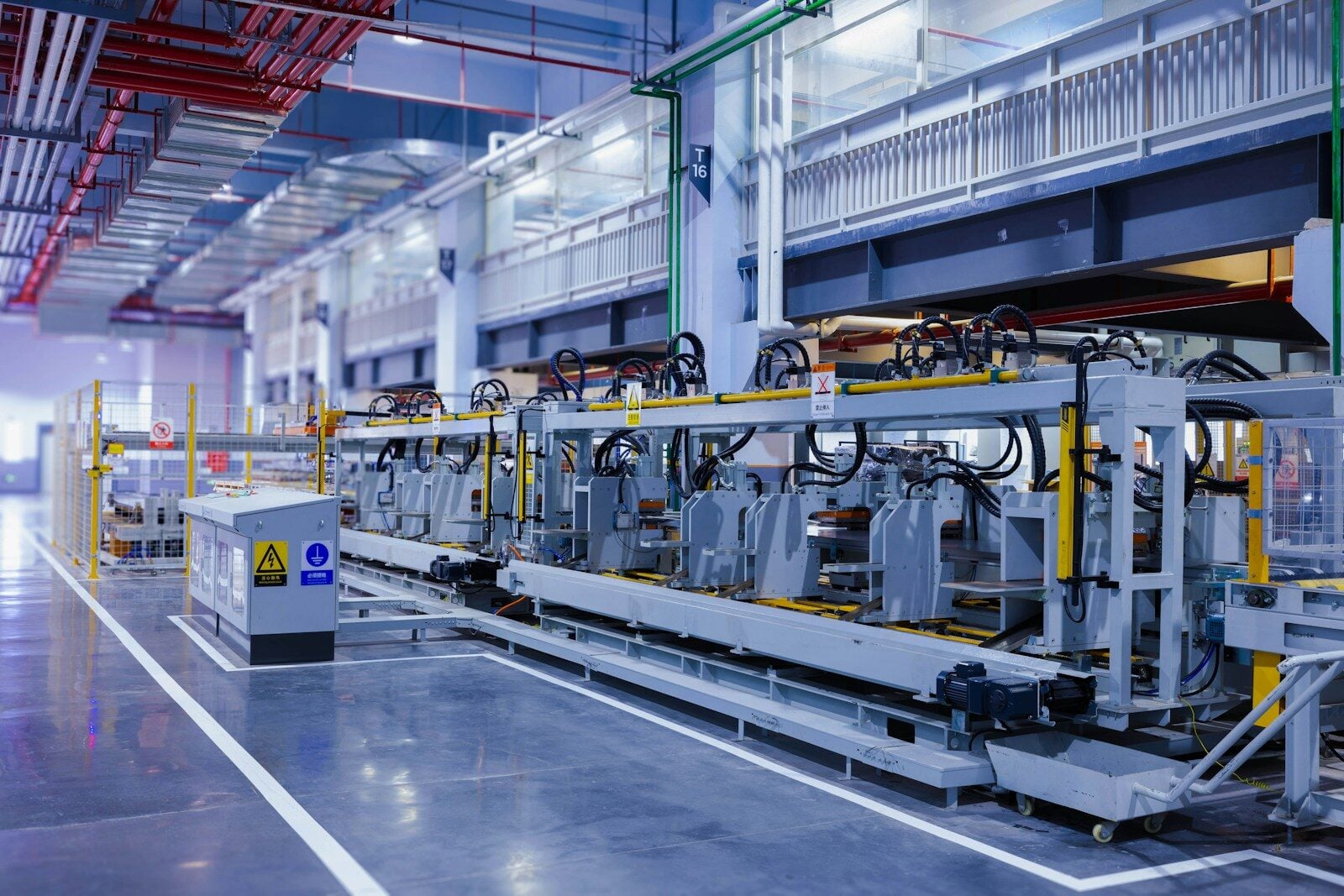
The pitch for industrial monitoring technology is compelling and consistent: connect your equipment, get real-time visibility into what is happening across your operations, and catch problems before they become failures. The logic is intuitive. If a bearing is degrading, a sensor will catch it. If a compressor is running outside normal parameters, an alert will fire. If energy consumption spikes in a way that suggests equipment trouble, the data will show it.
What happens next is where the gap lives.
In facility after facility, operators have discovered that visibility and action are not the same thing. The equipment issue is flagged. The alert is sent. And somewhere between that notification and the technician arriving with the right parts to make the repair during an appropriate maintenance window, the problem escalates anyway. The promise of monitoring technology is real, but it depends entirely on what an organization does after the data arrives.
The Cost Context
The financial stakes of this gap are not abstract. According to the Siemens True Cost of Downtime 2024 report, unplanned downtime now costs the world’s 500 largest companies roughly 11% of their annual revenues, totaling approximately $1.4 trillion, a figure that has grown substantially over the past five years. At the high end, an idle hour at a large automotive plant costs more than $2 million. Even in less capital-intensive industrial sectors, hourly downtime costs routinely reach tens of thousands of dollars.
The same report notes something important: the number of downtime incidents has actually fallen since 2019 for most major manufacturers. The hours lost per month have decreased. Yet the financial impact of each incident has grown, because goods cost more, supply chains operate with less slack, and the consequences of a production stop ripple further. Organizations have gotten somewhat better at avoiding downtime, but when it happens, it costs more. And the mean time to repair, the average time from failure to resolution, has lengthened, not shortened.
That last point is directly relevant to the visibility question. If the problem is not detection speed but response speed, then investing more in monitoring capability addresses the wrong part of the equation.
Why Detection Is Necessary but Not Sufficient
The distinction between detecting a problem and resolving it may seem obvious, but it is routinely underweighted in how industrial monitoring investments are evaluated. Monitoring technology, from condition sensors to SCADA systems to AI-based anomaly detection, produces information. What it does not automatically produce is a coordinated response.
A well-functioning alert system can tell a maintenance team that a pump bearing is showing signs of degradation with a predicted failure window of two to three weeks. That information has value. But translating it into an avoided failure requires several additional things to happen in sequence: the right technician needs to receive the alert in a context where they can act on it, the necessary parts need to be available or ordered in time, a maintenance window needs to be identified that does not conflict with production requirements, and the repair needs to be executed and documented before the failure window closes.
As AlixPartners has described in its analysis of the future of industrial maintenance, predictive maintenance ultimately aims to reduce unplanned failures and the associated maintenance cost by predicting failures and acting on them preemptively. The prediction is the input. The preemptive action is the output that matters. The two are connected by a workflow that has to be designed, resourced, and executed reliably for the investment to pay off.
Organizations that have invested in monitoring technology without investing equally in the response workflow frequently find that their alert systems generate more noise than action. Alerts accumulate. Teams learn to filter or ignore them. The monitoring platform becomes an expensive source of data that nobody uses consistently, and the downtime profile of the facility changes less than expected.
The Prescriptive Gap
The evolution of industrial maintenance technology reflects an awareness of this problem. The industry has moved from reactive maintenance, fixing what breaks, to preventive maintenance, servicing on a schedule, to predictive maintenance, acting on condition data, and is now developing what practitioners call prescriptive maintenance: systems that not only flag a developing problem but recommend a specific response, assign priority, and connect the alert to the execution workflow.
IoT Analytics’ 2024 analysis of the predictive maintenance market documents this shift, noting that prescriptive action features in modern maintenance platforms suggest optimal actions in the event of anticipated failures, often automatically prioritizing based on criteria built into the alert design, and some systems go further by automatically adjusting equipment parameters or notifying the relevant teams with specific instructions about what needs to be done.
This distinction matters practically. An alert that arrives in an operations inbox with a subject line indicating an anomaly is a different thing from a work order automatically generated in the CMMS with the asset identified, the likely fault mode described, the required parts listed, and the recommended intervention window flagged against the production schedule. Both start with the same sensor data. The second is far more likely to result in a repair before the failure.
What Execution Infrastructure Actually Requires
For operators who want to close the gap between visibility and action, the investment is not primarily in better sensors or more sophisticated analytics. It is in the execution infrastructure that connects what the monitoring system knows to what the operations team does.
That infrastructure has several components. The first is clear escalation paths: defined workflows that specify who receives which alerts, what the expected response time is, and how the alert should be escalated if the initial recipient does not act within the window. Without defined escalation, alerts default to whoever happens to be available, which is not a reliable system at scale.
The second is parts and resource availability planning that is connected to maintenance predictions rather than operating independently of them. A predictive alert that fires three weeks before a predicted failure is only useful if the parts needed for the repair are available within that window. Organizations whose parts inventory management is disconnected from their monitoring systems cannot consistently execute on predictive alerts, regardless of how accurate those alerts are.
The third is integration between monitoring platforms and maintenance management systems. Resources and information on CrossnoKaye’s industrial monitoring guide explore what this integration looks like in industrial control environments, where the connection between detection and execution is a central design consideration rather than an afterthought.
The Multi-Site Dimension
For operators managing multiple industrial facilities, the visibility-to-action gap compounds in ways that single-site analyses do not fully capture. Each site may have its own monitoring platform, its own alert configurations, and its own maintenance workflow. Comparing performance across the portfolio, understanding why some sites consistently resolve predicted issues before failure while others do not, and replicating what works at top-performing sites across the rest of the portfolio all require a level of operational standardization that most multi-site organizations have not achieved.
Building a Consistent Response Model
According to MaintainX’s 2026 maintenance statistics research, less than a third of maintenance and operations teams have fully or partially implemented AI in their maintenance operations, despite the fact that the majority plan to do so by the end of 2026. The gap between planning and execution at the adoption level mirrors the gap between detection and action at the operational level. Both reflect the same underlying challenge: connecting the capability to know something with the organizational infrastructure to do something about it.
For facilities teams evaluating their monitoring investments, the most useful question is not whether their sensors are capturing the right data. It is whether an alert generated right now would reliably result in a resolved issue before that issue causes an unplanned stoppage. If the answer involves uncertainty about who would receive the alert, whether parts would be available, or whether the maintenance window would be coordinated with the production schedule, the gap is in the response workflow, not in the detection capability.
Monitoring technology is a necessary foundation. It is not, by itself, a downtime reduction strategy.


-

 Resources5 years ago
Why Companies Must Adopt Digital Documents
-

 Resources4 years ago
A Guide to Pickleball: The Latest, Greatest Sport You Might Not Know, But Should!
-

 Resources1 year ago
50 Best AI Free Tools in 2025 (Tried & Tested)
-

 Resources1 year ago
Get Paid $5000+ a month to write : Discover 30 Spectacular Websites That Reward Your Writing Effort