News
The Best AI Farming Tools for Small-Scale Growers in 2026

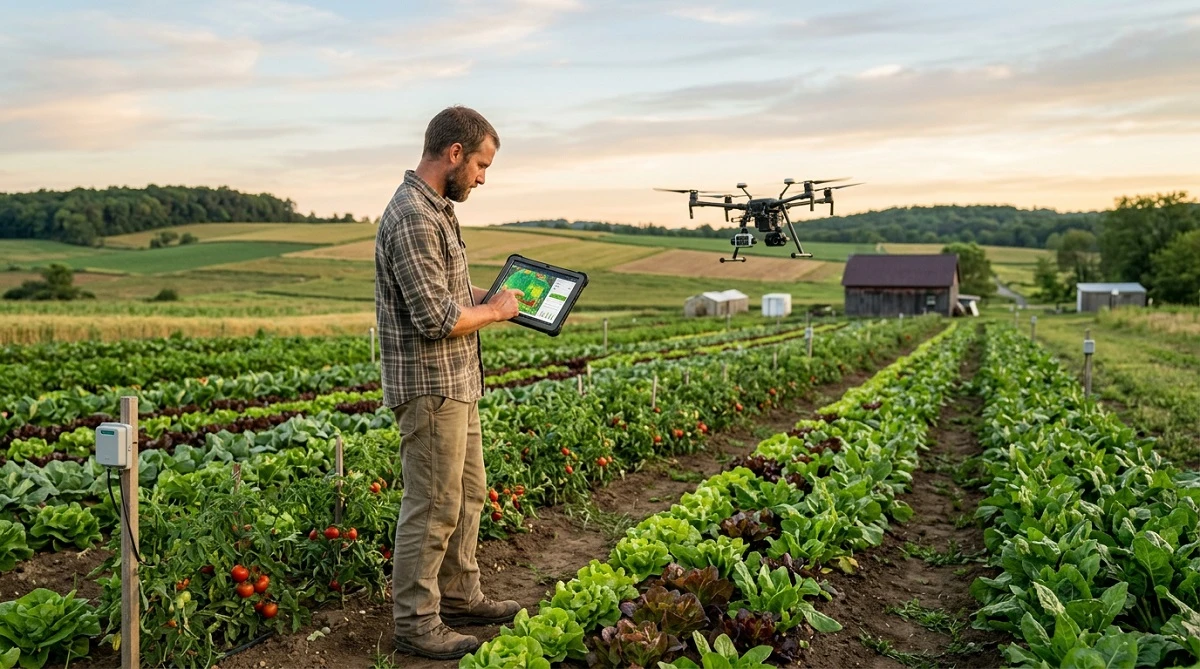
Small farmers face a familiar squeeze: tight margins, rising input costs, and the constant pressure to do more with limited land and labor. Artificial intelligence has finally become affordable enough to help solve this problem, moving from expensive enterprise systems to mobile apps and subscription platforms that any grower can adopt. This article walks through the AI tools actually being used by small farms in 2026, what they cost, and how they deliver measurable returns. By the end, you’ll have a practical roadmap for choosing the right tools for your operation without wasting money on technology you don’t need.
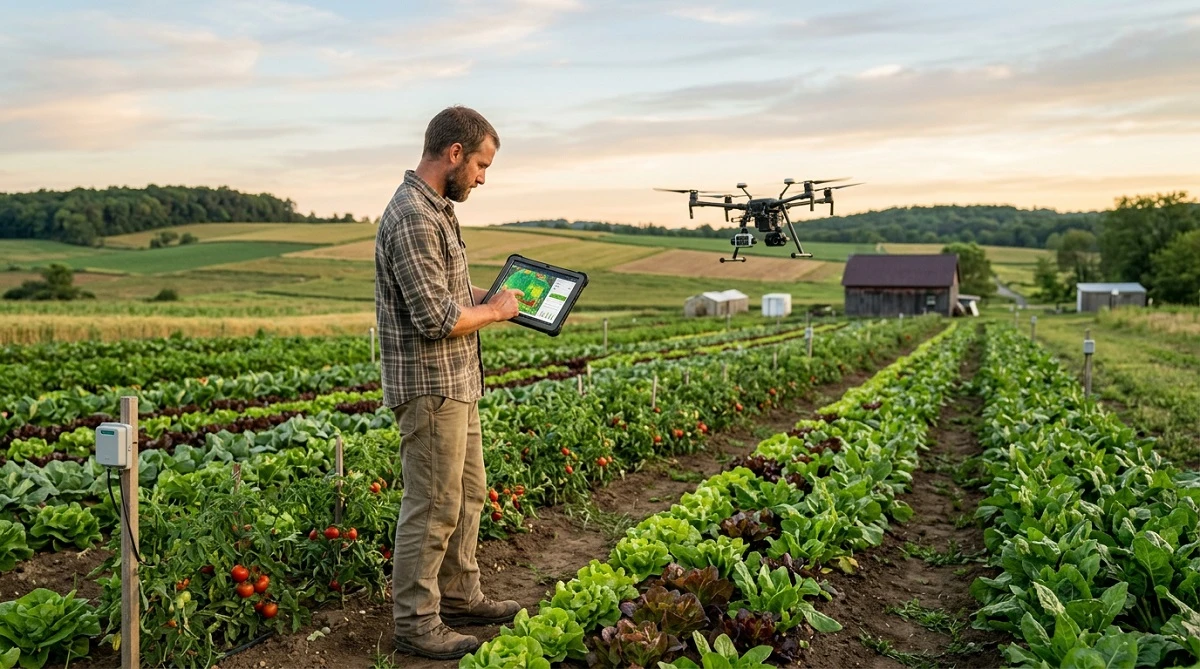
Why 2026 Is a Turning Point
For over a decade, AI in agriculture was framed as “the future,” but adoption stayed concentrated among large operations with dedicated IT budgets. That gap is closing fast. While more than 60% of large farms have already adopted AI-powered precision agriculture, only 20-25% of small and medium farms have done the same, and that number is expected to rise sharply as subscription-based tools remove the upfront cost barrier.
The market numbers reflect this shift. The global AI-in-agriculture market was valued at roughly USD 5.9 billion in 2025 and is projected to reach USD 61.3 billion by 2035, growing at over 26% annually. In 2026, an estimated 36% of small farms are planning to adopt some form of AI technology, and early adopters are reporting returns of around 120% on their investment. This is no longer a story about robots replacing farmers; it’s about farmers gaining the same decision-making power that used to require a full agronomy team.
Crop Monitoring and Yield Prediction
Satellite and drone-based monitoring is the most widely adopted AI application on small farms because it turns guesswork about crop health into measurable data. These systems analyze imagery, weather patterns, and historical yield records to flag stress before it’s visible to the eye.
Tools like Farmonaut deliver real-time NDVI (vegetation health) readings, soil moisture estimates, and growth-stage tracking through a smartphone browser, with subscription pricing that scales by acreage rather than requiring a flat enterprise fee. For growers who want a free starting point, the USDA’s National Agriculture Imagery Program (NAIP) offers 1-meter resolution satellite imagery covering 95% of U.S. farmland at no cost, which is enough for baseline field analysis before committing to a paid platform.
“We cut water bills by nearly half while actually improving grape quality. In our region, water access is the constraint—this technology let us farm more sustainably.” — Vineyard operator describing AI-driven irrigation results in Napa Valley
Pest and Disease Detection
Pest management has traditionally relied on fixed spraying schedules, which waste chemicals and money when pressure is low. AI-based image recognition changes that by identifying threats from a single smartphone photo and recommending action only when actual thresholds are met.
Plantix, a free app used by millions of smallholder farmers worldwide, diagnoses diseases, pests, and nutrient deficiencies with over 90% accuracy on clear images. For operations that want automated scouting rather than manual photo checks, Fermata’s Croptimus platform (roughly $200-500 per month) reduces scouting labor by up to 50% and has helped growers cut pesticide use by around 40% through earlier, more precise intervention. A 150-acre Ohio vegetable farm that adopted this approach reported a 25% yield increase alongside a 50% drop in pest-related losses.
Among newer AI agriculture platforms, Sairone by Saiwa is worth noting for growers who need drone-based analysis rather than only conventional farm dashboards. The platform supports weed and invasive plant detection, crop health monitoring, yield estimation, and geotagged image analysis from RGB, multispectral, and other aerial data sources, which makes it especially relevant for precision scouting and targeted intervention on small but high-value farms.
Precision Irrigation
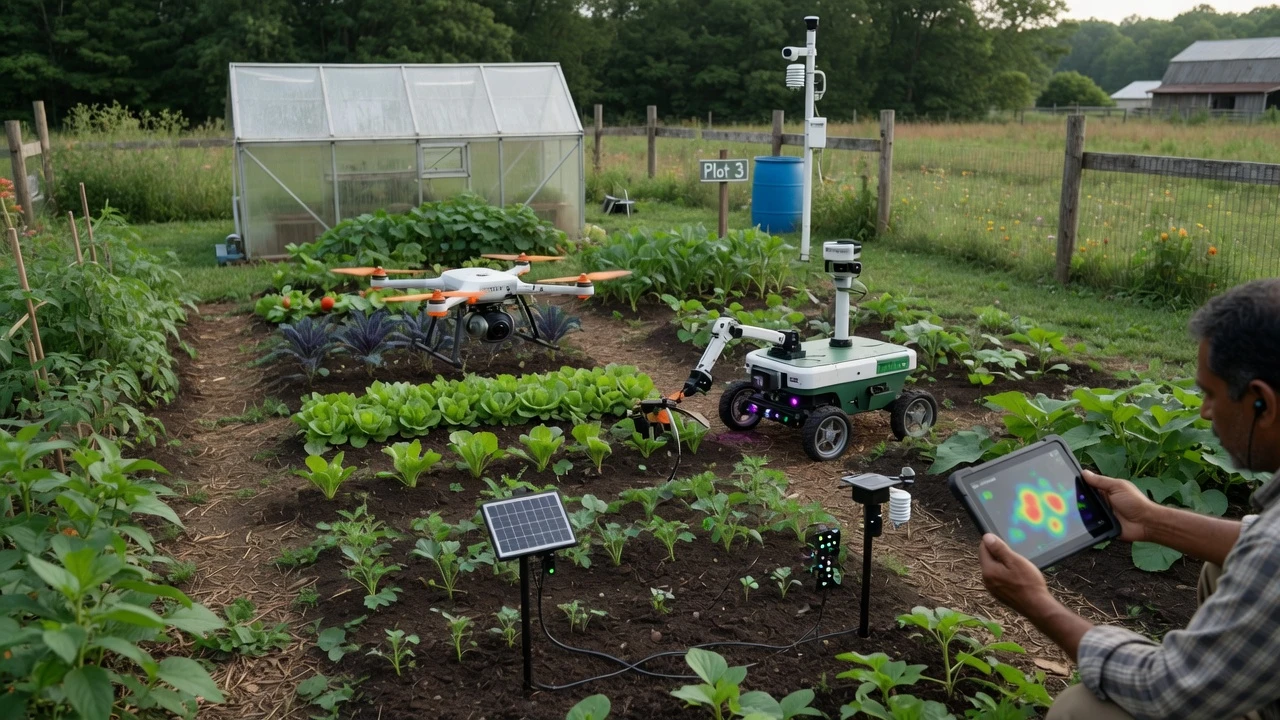
Water is often the single biggest controllable cost on a small farm, and it’s also where AI delivers some of the fastest, most measurable returns. Instead of watering on a fixed schedule, AI systems combine soil moisture sensors, weather forecasts, and plant stress data to irrigate only when and where it’s needed.
Viridix, for example, uses AI-driven “digital root” sensors that mimic how a plant actually absorbs water rather than simply measuring soil moisture, allowing irrigation to respond to real plant stress. Basic soil and weather sensor kits, often costing between $50 and $500 to install, frequently pay for themselves within a single growing season through reduced water and fertilizer use.
AI-Powered Soil Analysis
Traditional soil testing meant sending samples to a lab and waiting weeks for results that were outdated on arrival. AI-driven sensor platforms have replaced that lag with near real-time nutrient readings.
Tools such as Stenon’s FarmLab analyze nitrogen, phosphorus, potassium, and carbon levels on the spot using sensor fusion, eliminating the tendency to over-apply fertilizer “just in case,” a habit sometimes called the nitrogen tax. Growers using this kind of real-time analysis have reported input cost reductions of around 30% while simultaneously improving long-term soil health.
Farm Management Dashboards
As individual tools multiply, the challenge shifts to keeping track of everything in one place. AI-powered dashboards now aggregate weather, soil, pest, and market data into a single interface, often paired with plain-language recommendations rather than raw charts.
This matters because most small growers are agronomists, not data scientists. Tools designed for this audience hide technical complexity behind simple, mobile-first interfaces, and some include a built-in AI assistant that explains findings in everyday language.
Comparing the Core Tool Categories
| Category | Example Tools | Typical Cost | Best Use Case |
| Crop monitoring | Farmonaut, USDA NAIP imagery | Free–$300/month | Early stress detection, yield planning |
| Pest/disease detection | Plantix, Fermata Croptimus | Free–$500/month | Reducing scouting labor and pesticide overuse |
| Irrigation optimization | Viridix, soil moisture sensors | $50–$1,500 initial | Water savings, frost/stress prevention |
| Soil analysis | Stenon FarmLab, Trace Genomics | Varies by service | Real-time nutrient management |
| Farm management | SmartFarmPilot, Farmonaut dashboard | $50–$500/month | Centralized decision-making |
Real Return-on-Investment Numbers
Concrete numbers make it easier to judge whether a tool is worth the cost. On a 100-acre vegetable operation, combining a free diagnostic app with basic soil sensors and a satellite monitoring subscription produced roughly $10,000 in first-year savings against a $2,300 investment, a return of over 300%. On a 50-acre specialty crop farm, similar tool combinations delivered comparable savings even with a smaller upfront outlay, largely through reduced pesticide waste and better-timed decisions.
These outcomes aren’t guaranteed for every farm, but they illustrate a consistent pattern: the highest returns come from targeting the single biggest cost driver on your specific operation, whether that’s pests, water, or labor, rather than trying to adopt every available tool at once.
Overcoming Common Barriers
Cost is not the only obstacle small growers mention. Connectivity, technical confidence, and uncertainty about which tool to choose all come up repeatedly.
- Limited internet access: Many apps, including Plantix, work offline and sync data once a connection is restored.
- Lack of technical background: Modern platforms are built mobile-first, with single-tap diagnostics rather than raw data dashboards.
- High upfront cost: Subscription pricing spreads expenses over months instead of requiring a large capital outlay, and free tools like Plantix or USDA imagery offer a no-cost starting point.
- Choice overload: Start with whichever problem costs you the most money today, whether that’s pest damage, water bills, or inconsistent yields, rather than trying to solve everything simultaneously.
A Practical Path to Getting Started
A phased approach works better than adopting several tools at once. Growers who succeed with AI typically follow a similar sequence
- Audit your data first. Install basic weather and soil sensors, or use free satellite imagery, and observe for one full growing cycle before changing any practices.
- Target your biggest cost. Choose one paid tool that addresses your most expensive problem, whether pest pressure, water use, or yield variability.
- Run it alongside your current process. Compare results for one season before fully committing.
- Scale gradually. Once a tool proves its value, integrate it into daily workflows and add a second tool the following season.
This measured approach avoids the common mistake of investing in every new platform at once, which often leads to unused subscriptions and wasted budget. The small farms seeing the strongest results in 2026 are the ones treating AI adoption as an ongoing process rather than a single purchase decision, building a data foundation season by season that compounds in value over time.



-

 Resources5 years ago
Why Companies Must Adopt Digital Documents
-

 Resources4 years ago
A Guide to Pickleball: The Latest, Greatest Sport You Might Not Know, But Should!
-

 Resources1 year ago
50 Best AI Free Tools in 2025 (Tried & Tested)
-

 Resources1 year ago
Get Paid $5000+ a month to write : Discover 30 Spectacular Websites That Reward Your Writing Effort