Tech
Holographic Avatars at Trade Shows: The Future of Brand Representation

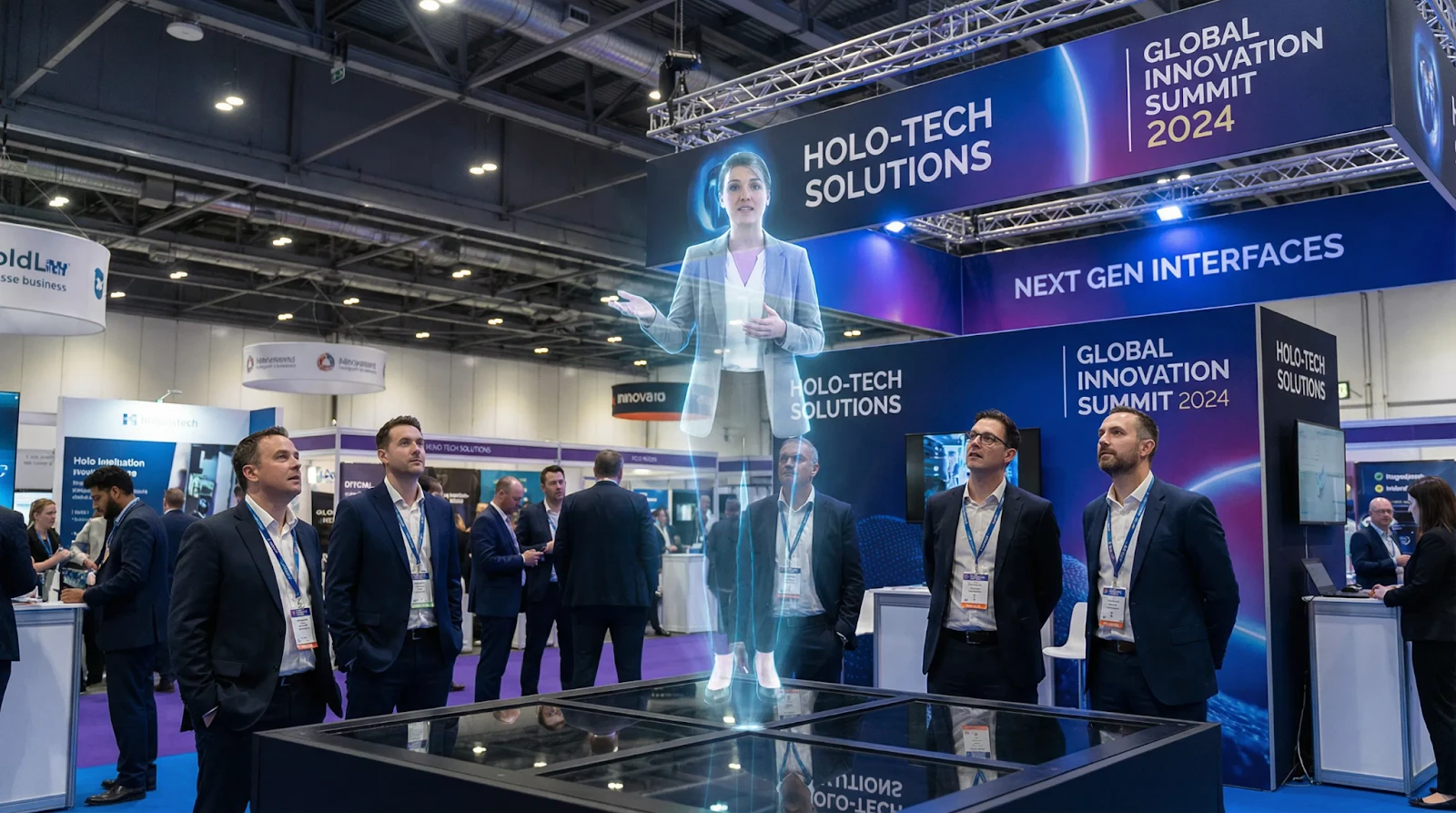
The global trade show industry is valued at over $34 billion and continues to grow — yet the average visitor remembers only a fraction of the booths they pass. Research suggests that attention span at exhibitions lasts as little as 8 seconds before a prospect moves on. That’s why brands are under increasing pressure to deliver something beyond a pull-up banner and a bowl of branded pens.
Here’s when emerging display technology can enter the game. A holographic avatar is rapidly becoming one of the most effective tools for capturing and holding visitor attention at trade shows and exhibitions. Holographic display technology at events is no longer a prototype or a luxury reserved for Fortune 500 launches. It is an accessible, measurable, and scalable solution for brands that need to stand out.
What Is a Holographic Avatar?
A holographic avatar is a digitally rendered human figure — typically lifelike and interactive — displayed using holobox or holographic projection hardware. Unlike traditional screens, this format creates the visual impression of a three-dimensional presence occupying real physical space.
In other words, visitors don’t look at a screen. They engage with something that appears to be standing in front of them. The avatar can speak, answer questions, demonstrate products, and respond to inputs in real time when powered by an underlying large language model (LLM) and voice synthesis system.
Given this combination of visual impact and functional capability, it is not surprising that brands across automotive, pharmaceuticals, finance, and consumer goods are integrating these solutions into their exhibition strategy.
When Does It Make Sense to Use a Holographic Avatar?
Not every event context requires the same solution. You should attentively analyze whether this technology fits your specific exhibition goals before committing to deployment.
Holographic avatars are particularly well-suited for:
- High-traffic trade show floors where visual differentiation is critical and competition for attention is intense.
- International exhibitions where a multilingual avatar can communicate with visitors in their native language without additional staffing costs.
- Premium product launches where the presentation format itself needs to communicate brand sophistication.
- Technical product demonstrations where a consistent, accurate explanation of complex features is needed across hundreds of daily interactions.
- Understaffed booths where a brand cannot maintain enough qualified representatives throughout a multi-day event.
Apart from this, holographic avatars are highly effective for lead capture workflows. When integrated with a CRM system, the avatar can collect visitor data, qualify prospects based on conversational responses, and pass structured information directly to the sales team — without manual intervention.
Key Features of a Trade Show Holographic Avatar Solution
Feature set varies across providers, but reliable exhibition-grade systems should include the following capabilities.
Realistic Visual Rendering
The avatar should be built using photorealistic 3D modeling and motion capture data to ensure natural movement and expression. A visually unconvincing figure can undermine brand credibility rather than build it. Pay attention to lip-sync accuracy and gesture quality, as these details directly influence perceived authenticity.
Natural Language Interaction
A high-quality system will enable the avatar to hold genuine conversations — not script-locked responses. This functionality is designed to handle unpredictable visitor questions, product objections, and follow-up queries dynamically. The majority of enterprise-grade solutions are built on LLM-powered dialogue engines capable of real-time processing.
Offline Operability
Trade show venues are not always reliable in terms of connectivity. You should look for solutions that can operate fully offline or in a hybrid mode, ensuring that the avatar performs consistently regardless of Wi-Fi conditions on the event floor.
CRM and Lead Capture Integration
Typical integrations include connections to Salesforce, HubSpot, and custom CRM platforms. Thanks to this, every meaningful visitor interaction can be automatically logged, tagged, and routed to the appropriate sales representative.
Multilingual Support
If you want to engage international audiences, you need a system capable of switching languages on the fly. The most widely used options are solutions supporting 10 or more languages with native-level voice synthesis.
Hardware Flexibility
The avatar should be deployable across multiple form factors — including, but not limited to: freestanding holoboxes, embedded kiosk displays, and larger projection formats. This positively affects reusability across different event sizes and booth configurations.
How to Deploy a Holographic Avatar at Your Next Event
Launching this technology for the first time requires preparation across three areas: content, hardware, and integration.
- Define the avatar’s role clearly. Determine whether the figure will serve primarily as a brand greeter, a product explainer, a lead qualifier, or a combination of these. This will determine the depth of the conversational script and LLM training required.
- Prepare the knowledge base. The avatar needs accurate, structured information about your products, pricing tiers, and key messages. It will be helpful to conduct a review of existing sales materials and convert them into dialogue-optimized content.
- Select appropriate hardware. Match the holobox or projection format to your booth footprint. A large open-plan stand may accommodate a full-height projection, while a compact booth will benefit from a standalone holobox unit.
- Integrate with your CRM before the event. We recommend completing and testing the CRM connection at least two weeks prior to the show to allow time for troubleshooting.
- Train your booth team. Staff should understand how the avatar works, what it can and cannot answer, and how to step in smoothly when a visitor requires human follow-up.
- Define your success metrics. These could include visitor engagement duration, number of leads captured, conversion rate to qualified meetings, or post-event brand recall. What is also important here is that clear metrics enable accurate post-event evaluation.
Conclusion
Trade show marketing is becoming increasingly competitive, and static display formats are losing their ability to generate meaningful engagement. A holographic avatar offers brands a measurable alternative — one that combines visual impact, conversational intelligence, and automated lead capture in a single deployable unit.
From a financial perspective, the return becomes clear when the cost of a holographic solution is compared against the combined expense of multiple trained brand ambassadors across a multi-day international event. These mechanics boost efficiency without reducing the quality of visitor interaction. For brands that need to communicate complex value propositions consistently, at scale, and across language barriers, holographic avatar technology may well represent the most significant shift in exhibition strategy of the decade.



-

 Resources4 years ago
Why Companies Must Adopt Digital Documents
-

 Resources3 years ago
A Guide to Pickleball: The Latest, Greatest Sport You Might Not Know, But Should!
-

 Guides2 years ago
Guest Posts: Everything You Should Know About Publishing It
-

 Resources9 months ago
50 Best AI Free Tools in 2025 (Tried & Tested)