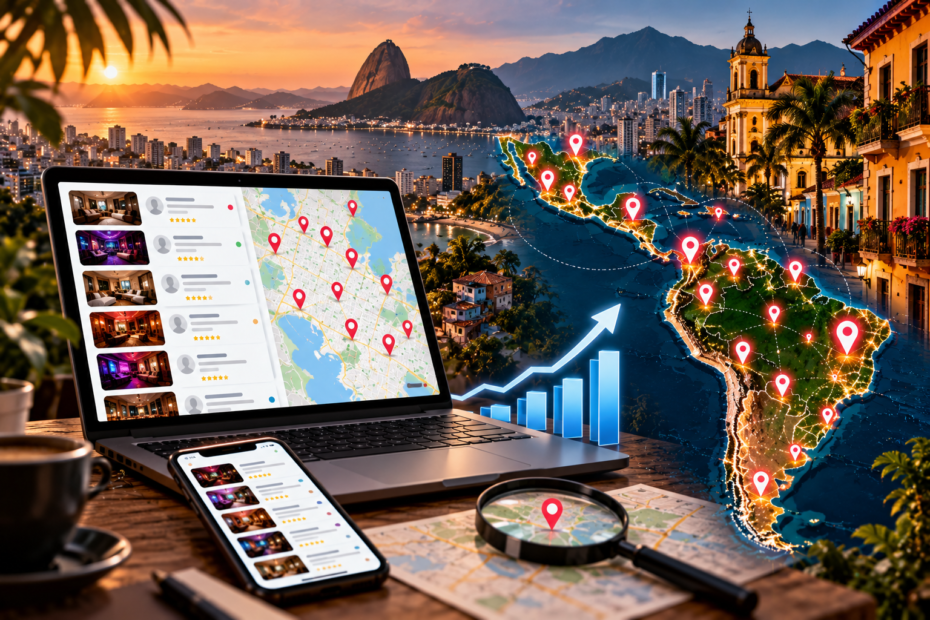
Most founders who build a marketplace dream of the transaction layer: payments, escrow, a take rate on every deal. Yet some of the most resilient online businesses never touch the transaction at all. They are directories. They sell visibility, organize supply by location, and win traffic one city at a time.
Real estate portals, home-services catalogs and restaurant guides all follow this pattern. But if you want to see the model under real pressure, look at one of the most restricted verticals on the internet: adult companion listings. These platforms can’t buy Google or Meta ads, can’t rely on mainstream payment processors, and operate under laws that change at every border. Whatever works for them is close to the bare minimum a directory business needs to survive, and the lessons carry over to any niche marketplace.
Latin America is a particularly useful case study, because two of its best-known markets, Tijuana and Buenos Aires, sit under very different legal frameworks while serving similar search demand.
1. The Business Model: Listings, Not Transactions
A directory marketplace makes money by selling placement, not by processing deals. The typical revenue stack looks like this:
- Paid listings. Suppliers pay a weekly or monthly fee to appear in the catalog.
- Promotion tiers. Top-of-page placement, “featured” badges and highlighted cards cost extra.
- Geographic upsells. A profile can be shown in several neighborhoods or cities for an additional fee.
- Verification as a product. A “verified” badge is both a trust signal and something buyers pay for.
The appeal for a founder is obvious. There’s no payment liability, no dispute handling and no need to hold funds. The platform’s real job is matching attention with supply, which is the same model that Craigslist, Yelp and countless classified sites proved out over two decades.
The weakness is just as clear. A directory with no transaction layer has no lock-in. If traffic disappears, so do the advertisers. That’s why for these businesses organic search is the product, and everything else exists to support it.
2. City-First Architecture: Build for How People Actually Search
Nobody searches for a service “in Mexico.” People search for a service in a specific city, often in a specific neighborhood, and often from a phone just hours before they need it. Successful directories mirror that intent in their site structure:
- a country level (a subdomain or folder per market),
- city hubs with unique, locally relevant copy,
- district and category pages below them,
- individual profiles as the long tail.
Take Pander’s directory of escorts in Tijuana: rather than one national page, the platform runs a dedicated country subdomain with city and neighborhood hubs, mirroring how border-city visitors actually search. Tijuana is a textbook example of why this matters. A large share of its demand comes from cross-border visitors with highly local, time-sensitive queries, and a generic national page would never rank for them.
Three takeaways apply to any vertical:
1. One intent, one URL. If “city” and “city + district” pages compete for the same query, Google will pick one at random, or neither. Clear canonical rules and distinct content for each level prevent this cannibalization.
2. Country separation is not just about language. A separate subdomain or folder per market lets you adapt content, legal disclaimers and even product features to local rules without breaking the rest of the site.
3. Pagination and filters need discipline. Directories generate thousands of near-duplicate URLs through sorting and filtering. Without canonicals and noindex rules, crawl budget is wasted on pages that should never rank.
3. Regulation Shapes the Product
In most industries, legal compliance is a checklist handled by counsel. In restricted verticals it directly shapes the product, and the contrast between Mexico and Argentina shows how much.
Mexico regulates sex work largely at the municipal level. Tijuana is known for its tolerance zone in the Zona Norte district, where adult workers can operate legally under local rules that include registration and health checks. For a directory, this means a relatively permissive environment, but one where local regulation and age requirements still have to be reflected in onboarding.
Argentina works differently. Independent adult sex work is not a crime, but running brothels and profiting from someone else’s work is prohibited, and the country has strict anti-trafficking legislation. Since 2011 a presidential decree has also banned advertising for sexual services in print media, which pushed demand almost entirely online.
Argentina’s law is different, so the company adapts its model there: Pander’s Buenos Aires escort listings put independent profiles and strict age verification first, and that changes everything from onboarding to copywriting.
The general lesson for founders: map the legal differences between your markets before you design the product, not after. The same codebase can serve both countries, but the rules about who can list, what a profile may say and what the platform must verify should be configurable per market. Teams that hard-code one country’s assumptions end up rebuilding the product when they expand.
4. Trust and Safety as a Growth Lever
In any directory, the main risk to the business is low-quality supply: fake profiles, stolen photos, outdated listings and outright scams. In the adult vertical there’s also the most serious risk of all, abuse and trafficking, which platforms are legally and ethically obliged to fight.
The platforms that last treat trust and safety as a growth function rather than a cost center:
- Identity and age verification at onboarding, with documents checked against the person in the photos.
- Photo verification: a fresh selfie with a code or gesture, matched against the profile pictures.
- Reverse image search to catch photos stolen from other sites or social media.
- Reporting tools that let users flag suspicious profiles, backed by a human moderation queue.
- Clear content rules on what a profile may and may not advertise, enforced consistently.
- Cooperation channels with local authorities and NGOs for trafficking-related reports.
The commercial payoff is direct. Verified profiles convert better, users return more often, and search engines increasingly reward sites with signals of real, maintained content. The cautionary tale is equally clear: after the US passed FOSTA-SESTA in 2018, Craigslist shut down its personals section entirely and Backpage was seized by federal authorities. Platforms that treat moderation as optional eventually lose the whole business, not just a few listings.
5. Monetization Without Ad Networks
Founders in mainstream verticals take paid acquisition for granted. Restricted verticals don’t have that option. Google Ads policy bans ads for compensated sexual acts, Meta has similar rules, and many payment processors decline adult merchants entirely.
That forces a leaner growth playbook that any bootstrapped marketplace can learn from:
- SEO as the primary channel. Investment goes into site architecture, unique local content and technical health instead of ad spend.
- Direct sales to suppliers. Listing packages are sold directly, often with local sales support in each market.
- Alternative payments. Local bank transfers, regional payment apps and crypto replace card processing where needed.
- Retention over acquisition. When every visitor is expensive to win, keeping listings fresh and users returning matters more than adding new traffic sources.
The upside of this constraint is defensibility. A competitor can’t simply outbid you on ads. To catch up, they would need to rebuild years of indexed content and domain authority.
6. Lessons for Any Vertical-Marketplace Founder
You don’t need to operate in a sensitive niche to apply what these platforms have learned under pressure:
1. Organize by location first. If your demand is local, your URL structure should be too. City and district pages are your real landing pages.
2. Give every page one job. Avoid having several pages target the same query. Use canonicals, internal linking and distinct content to make each page’s purpose clear.
3. Make compliance configurable. Build per-market rules into the product from day one, so expansion doesn’t require a rewrite.
4. Sell trust, not just visibility. Verification badges and moderation are features buyers pay for, not just overhead.
5. Assume paid channels can disappear. Build a business that survives on organic traffic and direct relationships with suppliers.
6. Keep the catalog alive. Stale listings hurt both users and rankings. Automate expiration and reward suppliers who keep their profiles current.
Conclusion
Directory marketplaces look simple from the outside: a catalog, a search box and a price list for placements. In practice, they are hard to get right, because they depend on search engines, local regulation and user trust all at once. Companion-listing platforms in Latin America face these pressures at full strength, which makes them an unusually clear case study.
Whether you’re building a catalog of contractors, clinics, venues or freelancers, the formula is the same: structure the site the way people search, adapt the product to each market’s rules, invest in trust before scale, and build a growth engine that doesn’t depend on someone else’s ad platform. You may also be interested in this article.