Blogs
How PMP Prepares Professionals to Handle Major Project Challenges

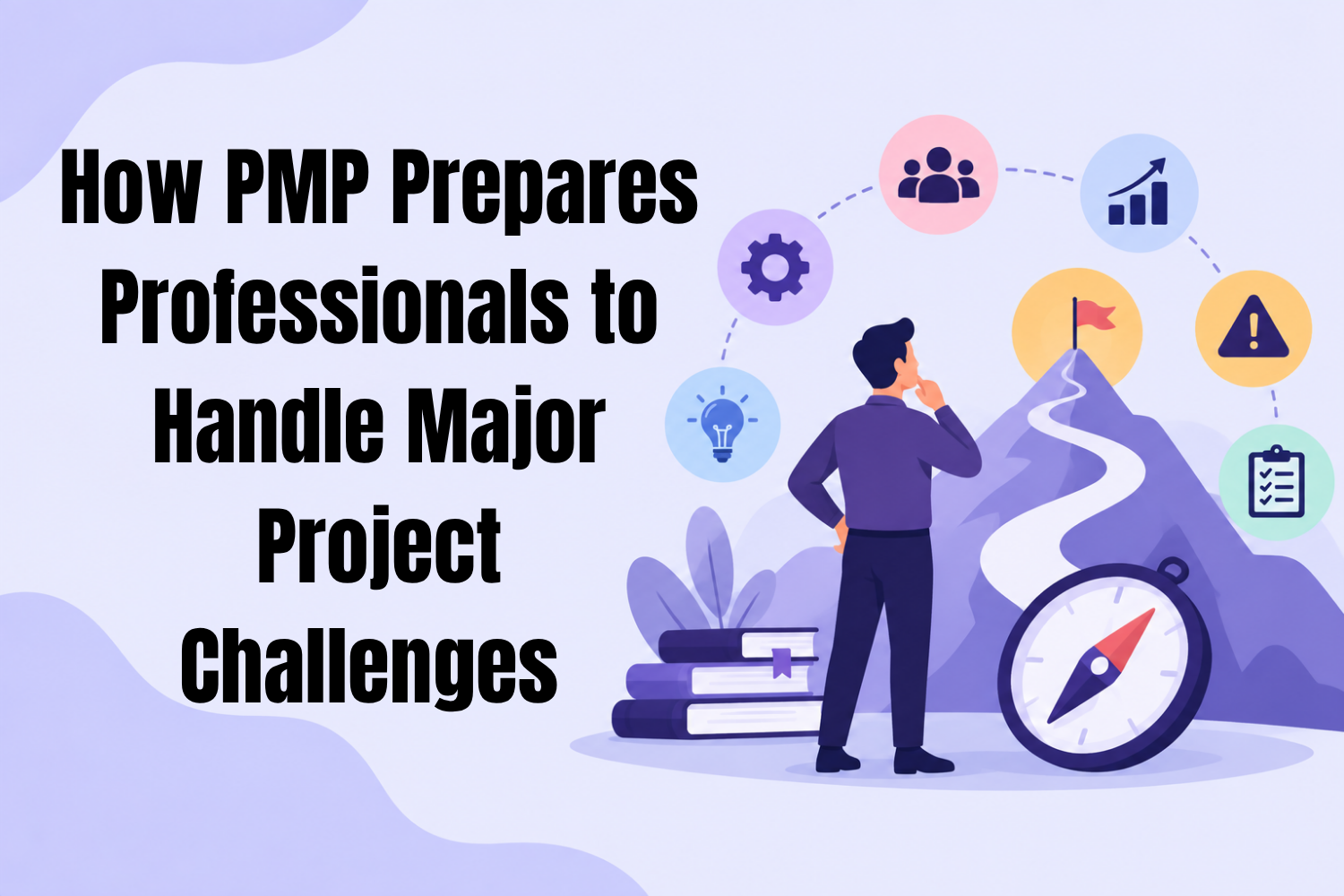
In this blog, we explore how PMP prepares professionals to address major Project Challenges and keep projects moving towards their intended objectives.
Table of Contents
- How PMP Builds Skills to Handle Major Project Challenges
- Conclusion
How PMP Builds Skills to Handle Major Project Challenges
Below are the key ways PMP helps professionals develop the knowledge and skills needed to respond to common challenges throughout the project lifecycle:
Helps Manage Changing Project Scope
Project requirements can change as stakeholder needs and business priorities develop. Without proper control, additional requests can increase workloads, costs and delivery times.
PMP knowledge helps professionals understand Scope Management and the importance of defining project requirements clearly. Project Managers can assess requested changes and understand their possible effects before action is taken. This helps reduce uncontrolled scope changes and keeps work focused on agreed objectives.
Strengthens Project Risk Management
Unexpected events can quickly affect costs, schedules and project outcomes. Waiting until problems appear can leave teams with fewer options for responding effectively.
PMP prepares professionals to identify, analyse and respond to Project Risks throughout delivery. Teams can consider potential threats and opportunities before deciding suitable responses. Stronger risk awareness helps Project Managers prepare for uncertainty instead of simply reacting when problems occur.
Supports Better Time Management
Missed deadlines can affect budgets, resources and stakeholder confidence. Project Managers need to understand how activities connect and where delays could affect the wider schedule.
PMP Courses can strengthen knowledge of Project Scheduling, task dependencies and progress monitoring. These skills help professionals organise work, recognise schedule concerns and take suitable action when activities begin falling behind.
Improves Budget and Cost Control
When expenditure is not closely managed or costs are not accurately projected, projects may experience financial strain. Over the course of a long project, even little cost variations can become considerable.
PMP advances knowledge of project cost management. When making financial decisions, professionals are taught to take project performance, estimations, and budgets into account. Frequent monitoring can promote improved control over project funds and assist in detecting cost issues early.
Makes Resource Management More Effective
One of the most frequent project challenges is a lack of resources. The same personnel, tools, or money may be needed for multiple tasks at the same time.
Professionals can improve their Resource Management abilities with the aid of PMP. Project Managers can think about what resources are needed, when they are needed, and how to distribute them. Improved coordination can help teams finish important tasks more successfully and lessen resource disputes.
Strengthens Stakeholder Communication
Expectations regarding project priorities, progress, and results may vary among stakeholders. Ineffective communication might lead to misconceptions and postpone crucial choices.
Effective stakeholder management and communication are key components of PMP. Experts are able to determine the demands of stakeholders and organise the distribution of pertinent information. Throughout the course of a project, effective communication helps control expectations and informs key stakeholders.
Supports Better Project Decisions
Project Managers regularly make decisions about risks, priorities, resources and changes. Making these decisions without enough information can create additional problems.
PMP encourages professionals to use relevant project information when making decisions. Understanding Project Performance allows managers to compare current conditions with project objectives and select appropriate actions. This supports more informed and consistent decision-making.
Helps Maintain Project Quality
Pressure to meet deadlines or control costs can sometimes affect the quality of project outcomes. Delivering quickly has little value if the final result fails to meet agreed requirements.
PMP strengthens understanding of Quality Management throughout the project lifecycle. Professionals can define quality expectations, monitor results and address problems when standards are not being met. This helps balance time, cost and quality requirements.
Prepares Professionals to Handle Project Change
Projects operate in changing business environments. New technology, customer expectations or organisational priorities can influence how work needs to be delivered.
PMP prepares professionals to evaluate changes and understand their wider effects before responding. Strong Change Management knowledge helps Project Managers adapt plans while maintaining suitable project control. This makes it easier to respond to changing circumstances without losing sight of project objectives.
Conclusion
Major Project Challenges can affect scope, budgets, schedules, resources and team performance. PMP knowledge helps professionals approach these situations with stronger planning, risk management and decision-making skills. It also supports better communication and control when project conditions change.
Choosing PMP Courses from The Knowledge Academy, a recognised global training provider, can help professionals strengthen their project management knowledge and manage complex project challenges with greater confidence.


-

 Resources5 years ago
Why Companies Must Adopt Digital Documents
-

 Resources4 years ago
A Guide to Pickleball: The Latest, Greatest Sport You Might Not Know, But Should!
-

 Resources1 year ago
50 Best AI Free Tools in 2025 (Tried & Tested)
-

 Resources1 year ago
Get Paid $5000+ a month to write : Discover 30 Spectacular Websites That Reward Your Writing Effort