Resources
Interactive 3D on the Web by Digital Octane: How Modern Web Development Transforms Customer Experience

A lot of companies still see their website as just a digital brochure. But these days, a website can be a lot more. It’s a place to show off your latest ideas, get users involved, and show what your product can do – even before there’s a real sample to touch. If you’re selling something complex, you need more than static images, but something people can interact with to see how good it is.
At Digital Octane, we’ve spent years helping startups and tech firms create web platforms, SaaS products, and engaging digital experiences. Our work brings together product strategy, front-end engineering, and user experience, especially when a website needs to do more than just to exist
This article explains how modern web development can create interesting and adaptable platforms. We’ll use our past projects as an example. We built a web platform that could handle 3D models of products, a bunch of different media, and a simple way to manage content. The point was to show off a tricky product in a way that anyone could understand.
Why Static Websites Aren’t Enough
Static websites can only use text, images, and videos to explain products. While this approach works for simple offerings, it falls short when products are complex or highly technical. Users need to interact with products to truly understand their value. Without interactivity, your website risks leaving potential customers confused, disengaged, or simply leaving. Interactive parts fill this need. They let people interact with your products, check them out from all angles, and almost test them in real time.
For example, hover previews, drag-and-rotate 3D models, and details you can click to see make the experience more like using the real product. These kinds of interactions get people more involved, help them get it, and in the end, get them to buy.
3D Models and Interactivity: Making Products Real
Putting 3D models right into a website needs good frameworks and careful changes to make sure it works well. Modern frameworks like Three.js, react-three-fiber, and react-force-graph-3d allow developers to render 3D objects efficiently in the browser.
Important interactive features include:
- Hover Preview: When a user hovers over something, it rotates a bit or animates, giving a quick idea of its shape.
- Click-and-Drag Rotation: Users can spin objects to see them from all sides, making them feel in control and helping them understand.
- Zoom and Focus: Being able to zoom in on small details helps people understand, especially for products that are technical or complicated.
To get the most out of these features, you need to think about:
- File Formats: Using small 3D files like .glb or .gltf makes sure things load fast.
- Level of Detail (LOD): Changing how complex an object is based on how the user is viewing it keeps things running smoothly.
- Lazy Loading: Only loading big files when they’re needed cuts down on load times at the start.
- Responsive Design: Making sure models and controls work well on computers, tablets, and phones.
The result: visitors stay longer, engagement increases, and inquiries from potential partners grow substantially.
Custom CMS and Flexible Content Management
A website is a living platform. You need to add stories, blog posts, product updates, and new features quickly. Standard CMS templates can slow down your team and limit creativity. Custom content management solutions let your team keep the brand consistent while putting out content fast.
This is why at Digital Octane we often build custom CMS systems, usually on top of WordPress with Advanced Custom Fields (ACF), or fully headless CMS setups (Strapi, Sanity, or a custom Node.js backend).
A good CMS should have:
- Drag-and-Drop Page Builders: Let people who aren’t techy move content around without trouble.
- Content Blocks That Play Well Together: Mix images, text, and interactive stuff without messing up the layout.
- Copy and Paste: Quickly make copies of similar pages or parts to save time.
- Content History: Undo changes if updates cause problems.
Drag-and-drop page builders, flexible content blocks, and duplication features mean updates can happen in hours rather than days. For a business, this flexibility helps to move quicker, respond to trends, show off new stuff, and keep the site fresh.
Animations and Visual Storytelling Matter
Animations and small interactions aren’t just for show. They guide users, point out key features, and make complex products easier to get. Small movements can show how things connect, show interactive areas, or give feedback when something is done.
Across Digital Octane projects, we use animations not as decoration but as guidance tools:
- Parallax Scrolling: Makes things look deeper as users scroll.
- Fade-In Elements: Gets attention for new stuff without being too much.
- Accordion Transitions: Reveals more info smoothly, keeping the page clean.
- Dynamic Lines and Dots: Shows connections or processes in a simple way.
When done well, animations build trust. Users see smooth, reliable interactions as a sign that you’re on the level.
Performance, Reliability, and Scalability
All of these features – 3D models, animations, interactive elements – can slow a site dramatically if not optimized. If your site takes too long to load or feels choppy, people will get annoyed and all that cool tech will be wasted. Digital Octane solves this often by:
- Good Frontend Frameworks: React and React Native let you use the same code for web and mobile, speeding up making things and cutting down on errors.
- Clean Backend: Node.js and serverless setups handle API requests quickly.
- Cloud Infrastructure: AWS, Google Cloud, and CDNs offer the ability to grow, making sure the platform can handle lots of traffic.
- Asset Smartness: Textures that are compressed, 3D models that load when needed, and good is how you store data reduce load times.
High performance is not just about speed; it’s about reliability. If your site crashes or lags, users lose trust instantly.
Our Project: Hilos
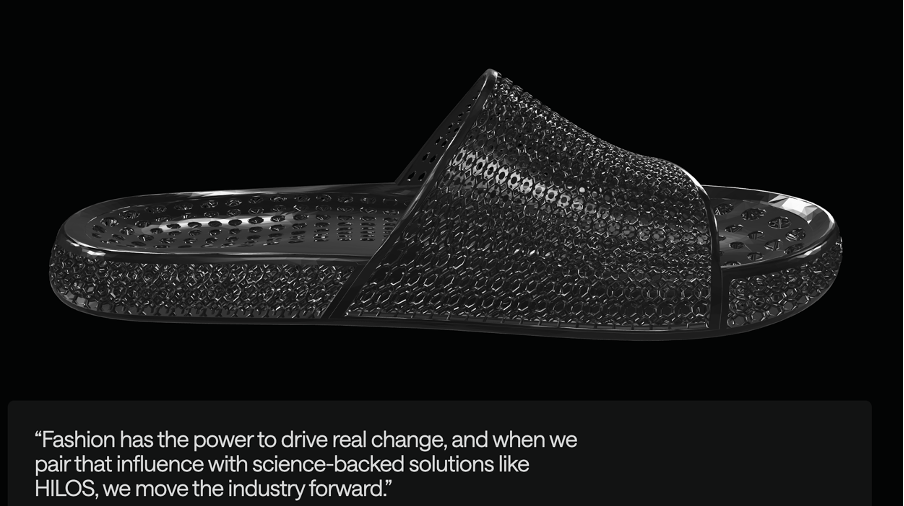
Hilos is a no-CAD 3D footwear platform. They wanted a website that didn’t just talk about what they do but let people try it out. Their old website couldn’t demonstrate 3D models, so potential clients get only abstract descriptions of the product.
The solution was a completely custom WordPress site, avoiding pre-made templates to ensure optimal performance for the heavy 3D content. This approach eliminated unnecessary code and plugins that could slow down interactive elements. People could turn the shoes around, zoom in, and check out the details in a way that static images never could.
Understanding Hilos’ need to regularly update their case studies, we built a custom WordPress solution using Advanced Custom Fields (ACF).
Instead of a standard CMS, we made a page builder that allows non-technical users to construct case study layouts through a simple drag-and-drop interface. The system maintains brand consistency through templates while offering flexible content blocks, display options, and a duplication feature for rapid content creation.
· A custom page builder built on Advanced Custom Fields (ACF)
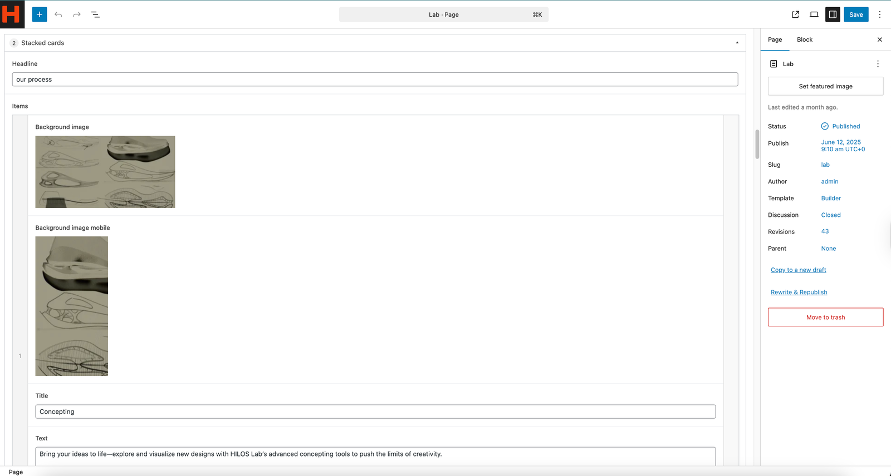
- Functionality to duplicate and modify cases

- An option for easy block edits and to hide unneeded sections
In addition to the 3D parts, we made a detailed visual style with advanced animations. The parallax scrolling effects we implemented make a sense of depth as users navigate the site, while fade-in animations point out key content. On the homepage, an accordion animation smoothly shows more of each section, and throughout the Interplay page, dynamic line and dot animations subtly reinforce the brand’s connection to digital design.
- Parallax scrolling for text and elements
- Fade-in effects triggered on scroll
- Accordion animations on the homepage
- Dynamic line and dot animations on the Interplay page
The backend used Node.js, connecting seamlessly to the React-powered frontend. We tested everything to make sure it worked on all devices. Plus, their team could add case studies and blog posts themselves.
Results:
- Streamlined Content Management – The client can now update case studies and blog posts effortlessly.
- Immersive 3D Experience – Users can interact with shoe models directly on the site.
- Optimized Performance – Fast loading times despite heavy media and 3D assets.
- Enhanced Engagement – Smooth animations and effects improve user retention.
The new Hilos website successfully bridges the gap between design and manufacturing, grabs people’s attention, shows what the product could do, and gives them a real sense of the product before they even touch a physical sample.
Our Project: Wraithwatch
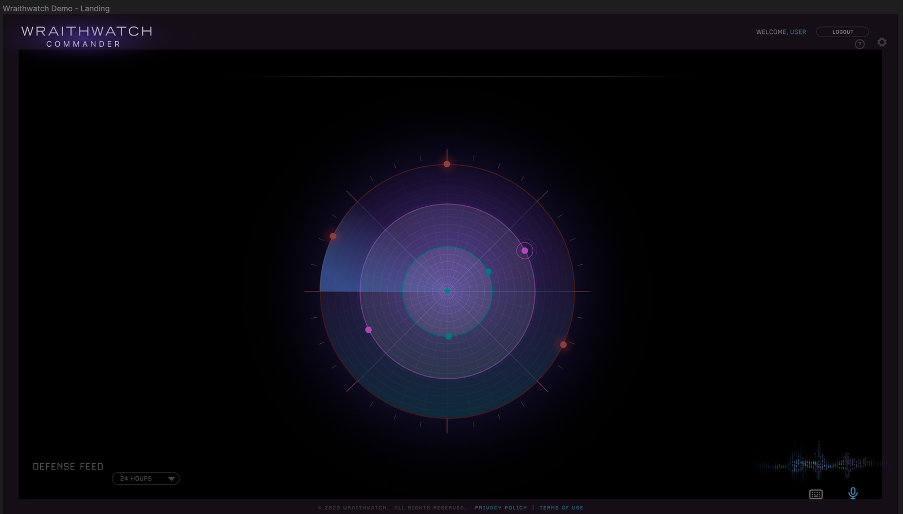
Wraithwatch is a cybersecurity startup established by former SpaceX engineers. Their goal is to help companies quickly see and fix security weaknesses. The platform provides a clear and convenient interface that visually simplifies complex information about potential threats, their severity levels, and the status of their resolution.
Typical dashboards only show static tables of alerts, but Wraithwatch needed a platform that could make complex data very simple while still being interactive.
The front-end used React and React Native, with a lot of interactive 3D visualizations powered by Three.js. The platform includes notable features:
- Threat Radar: Started as a 2D representation using react-konva, this component was later upgraded to a fully interactive 3D graph with react-force-graph-3d. Users can rotate, zoom, and click on points to explore detailed “Risk View” windows. Hovering over points shows Observation cards, and clicking highlights the relevant Defense Feed.
- Environmental 3D Graph: A cube-like 3D interface representing computers, users, and other objects. Hovering over objects shows contextual info, and clicking expands related elements, giving an intuitive overview of the cyber environment.
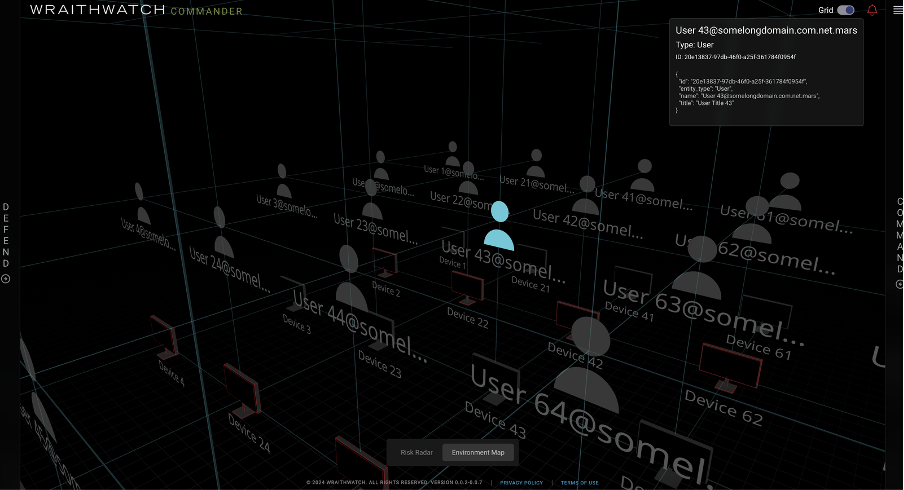
The cube has an option to hide the grid for a clearer view.

The component was developed using Three.js, much like numerous others in our project. The cube’s grid was developed using the InstancedBufferGeometry component.
- Support Chat Integration: Real-time chat functionality allows multiple dialogs and direct linking to relevant security events.
- Integrations Dashboard: A hub to manage connections with external services, providing a clear interface to monitor and act on incoming data streams.
Digital Octane worked iteratively, publishing each update to a staging environment for testing and feedback. Comprehensive technical documentation and close collaboration with the founders ensured the platform met all functional requirements.
The result is a highly polished and interactive platform that allows clients to quickly visualize threats, assess risks, and make informed decisions. From a business perspective, this project demonstrates how advanced web development- particularly 3D interactive interfaces – can transform complex information into actionable insights, making technology more accessible and effective for end users.
Business Takeaways
The tech stuff discussed might sound complex, but the message to business leaders is simple: A quality, interactive website is a worthwhile investment.
- People Get More Involved: Interactive stuff keeps people on your site and helps them understand your product better.
- You Look Trustworthy: A smooth, easy-to-use design says that you’re professional and can be trusted.
- You Can Move Fast: Being able to change your content easily means you can update your site quickly and stay current.
- You Beat the Competition: If your website shows that you’re on top of new stuff, people will see you as a leader in your industry.
At Digital Octane, we see these benefits across projects in footwear design, cybersecurity, enterprise tools, AI, and more.
Conclusion
Web design isn’t just about static pages any more. It’s about creating experiences that show your value, get people interested, and grow your business. With interactive 3D elements, great design, and flexible content systems, you will get ahead of the game and keep your website up-to-date.
If you sell details or new products, a website can do more than explain them. It can showcase them, get people involved, and drive sales. Investing in these things will increase customer trust, engagement, and sales. A solid webpage can be a powerful tool for growth.



-

 Resources4 years ago
Why Companies Must Adopt Digital Documents
-

 Resources3 years ago
A Guide to Pickleball: The Latest, Greatest Sport You Might Not Know, But Should!
-

 Guides2 years ago
Guest Posts: Everything You Should Know About Publishing It
-

 Resources9 months ago
50 Best AI Free Tools in 2025 (Tried & Tested)