Resources
The Birdfy Startup Story: Redefining Backyard Birdwatching with AI Cameras

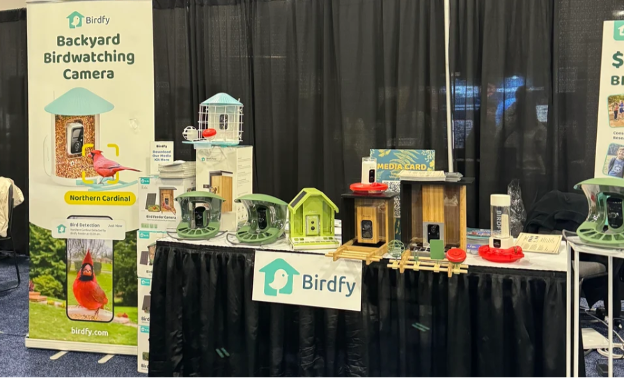
Most startup stories start with someone spotting a gap in the market. This one started with people posting bird clips off their security cameras, which honestly wasn’t the plan at all.
Before Birdfy existed, its parent company Netvue just made home security cams, the kind people put by a door or a window. Somewhere along the way users started noticing something weird. Their cameras kept catching birds landing on porches and ledges, and people couldn’t stop sharing the footage online. A hashtag formed around it pretty much by accident, and what was supposed to be a security feature turned into a surprise birdwatching club nobody at the company had planned for.
That reaction is basically where the whole idea came from. If a regular security camera could spark that much curiosity by accident, a camera built specifically for birds felt like the obvious next move. So in 2020, working out of Shenzhen, a small team took Netvue’s years of camera know how and paired it with new AI recognition tech, aiming to build something that hadn’t really existed before, a smart feeder that could actually tell you what just landed on it.
Getting From Idea to Actual Product
Going from that idea to a working device took roughly a year and a half. In November 2021 the Birdfy Feeder officially launched, and it’s got a legitimate claim to being the first market ready smart bird feeder camera, not another gadget with a camera taped on as an afterthought, but something built from scratch around recognizing birds specifically.
Even that early version could identify thousands of species and send an alert the second something showed up. That combo, instant recognition plus a live notification, was the whole pitch, and it turned out to be exactly what people wanted. Word spread quickly among people who already loved watching birds but never had a real way to catch every single visit without sitting by a window all day waiting.
Growing Past One Product
Birdfy didn’t remain a one-product company for very long. The lineup grew into bird baths, nesting boxes with cameras built in, and eventually an AI system called OrniSense that goes past simple identification, picking up on behavior, life stage, and even signs of poor health, not just which species is which. At this point the company has more than 2.4 million users globally, a figure that must have seemed like a figment of imagination to that small group of guys in Shenzhen that year.
Some of that growth ties back to a decision baked into the business from day one. For every device sold, a dollar goes straight into what’s called the Birdfy Fund, money set aside for bird conservation and nature education rather than folded back into marketing spend. That fund has crossed a million dollars at this point, backing more than 150 different projects.
Hitting the One Million Mark
Every startup gets a moment where the scale of what it built finally becomes visible, and for Birdfy that landed when device sales crossed one million units sold worldwide. Instead of just treating it like a sales headline, the company used the moment to actually look at what a full year of real backyard data could tell people.
That turned into A Million Devices, a breakdown pulled from more than 2.1 billion AI recognition events logged in a single year, which works out to roughly 66 bird identifications happening somewhere across the network every second. It was not just a mass of numbers the findings were. The report turned a long-standing assumption about American backyards upside down, revealing the House Finch as the most commonly observed bird in the nation, and trends in the timing of when birds are seen and how this varies by location.
Taking a Hobby to the Next Level!
What makes this story stand out isn’t really the growth numbers, plenty of startups can point to a rising user count. It’s what the company decided to do with something that used to be completely solitaryBird watching from your back yard was something only you knew about when it happened, fleeting because once the bird was gone it was gone and there was no evidence at all that it had ever taken place. Transforming this into millions of labeled and time-stamped data points alters completely the nature of backyard bird watching, elevating it beyond a hobby to an almost real-time snapshot of bird migration through suburban areas.
The company hasn’t really slowed down since hitting that milestone either. New hardware keeps coming out, solar powered feeders that never need a battery swap, cameras built just for tracking hummingbirds, a group of birds fast enough to blur past most regular recognition systems. Every new release seems to be chasing the same original goal, taking something that used to demand patience and expertise and handing it to whoever’s got a window and a bit of curiosity about whatever’s landing outside it.


-

 Resources5 years ago
Why Companies Must Adopt Digital Documents
-

 Resources4 years ago
A Guide to Pickleball: The Latest, Greatest Sport You Might Not Know, But Should!
-

 Resources1 year ago
50 Best AI Free Tools in 2025 (Tried & Tested)
-

 Resources1 year ago
Get Paid $5000+ a month to write : Discover 30 Spectacular Websites That Reward Your Writing Effort