Blogs
The Circular Economy in Action: A Guide to Industrial Container Recycling

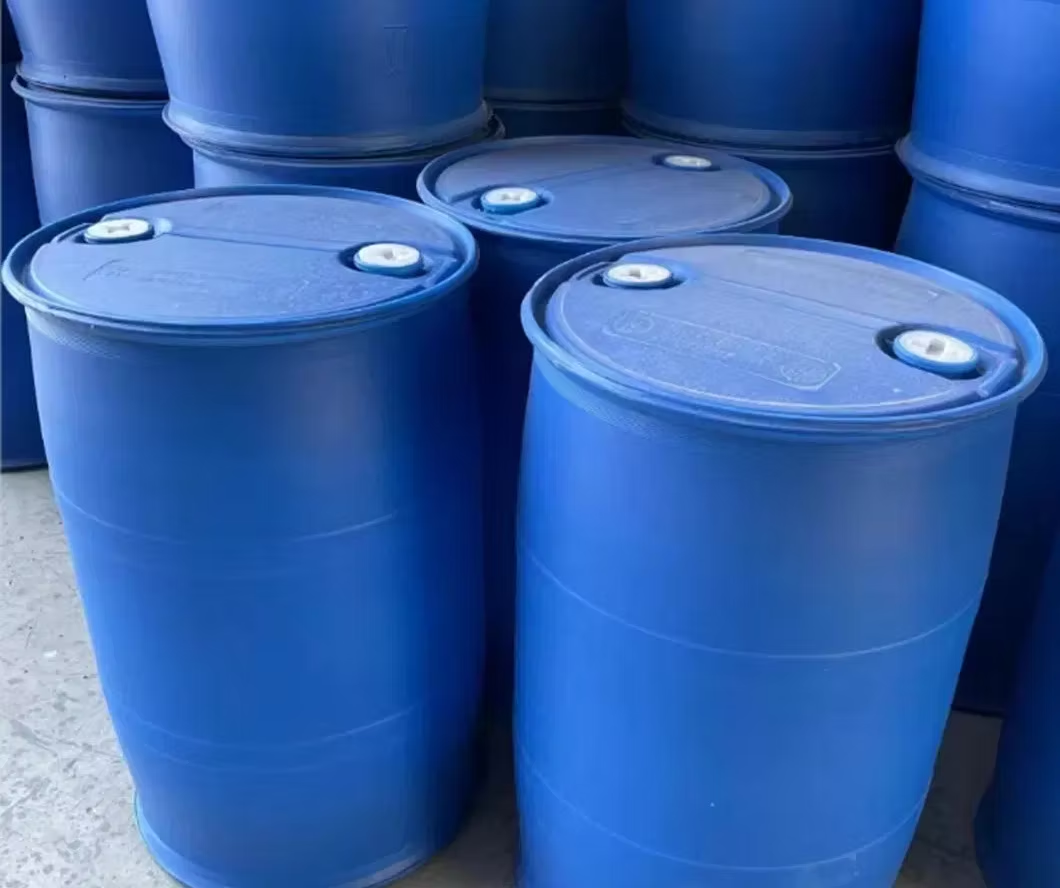
In the world of modern manufacturing and logistics, the “out of sight, out of mind” approach to waste is a relic of the past. Today, the focus has shifted toward a circular economy—a system designed to eliminate waste and keep materials in use for as long as possible. Central to this shift is the management of industrial containers. Companies like Kelly Drums have become essential partners in this evolution, offering specialized expertise in the pickup, recycling, reconditioning, and destruction of steel, poly, and fiber drums, IBC totes, and Gaylord boxes. By providing these services across the Mid-Atlantic region, they help industrial clients navigate the maze of regulatory compliance and hazardous material management while making sustainable, environmentally responsible disposal a reality.
Why Container Management Matters Now More Than Ever
Industrial operations generate a staggering volume of packaging. Whether it’s a 55 gallon poly drum used for chemical storage or a massive IBC tote transporting food-grade liquids, these containers are the workhorses of the global supply chain. However, once they are empty, they can quickly become a liability.
Left unmanaged, used containers take up valuable floor space, create safety hazards, and—if they previously held regulated materials—can lead to massive fines if not handled according to EPA and DOT standards. Recycling and reconditioning aren’t just “feel-good” green initiatives; they are strategic business decisions that protect a company’s bottom line and reputation.
The Reconditioning Process: Giving Assets a Second Life
Not every used drum or tote needs to be shredded and melted down immediately. In many cases, these containers are designed for multiple lifecycles. This is where reconditioning comes in, and it’s a fascinating, multi-step process that requires precision.
1. Inspection and Sorting
The first step is a rigorous evaluation. Not all containers are candidates for reuse. Technicians look for structural integrity, excessive rust, or contamination that might make the container unsafe. If a drum or tote passes this initial check, it enters the reconditioning line.
2. Cleaning and Decontamination
Depending on the material—steel, poly, or fiber—the cleaning process varies. For steel drums, this often involves high-temperature “burn-off” furnaces that vaporize residues, followed by shot-blasting to remove scale. For poly drums and IBC totes, specialized aqueous cleaning systems use high-pressure nozzles and environmentally safe detergents to neutralize previous contents.
3. Testing and Certification
This is the most critical phase for industrial clients. A reconditioned container must perform as well as a new one. This involves leak testing (often using submerged air pressure) and structural gauging. Once a container passes, it is repainted or refurbished and certified for reuse, often meeting the same UN specifications as a brand-new unit.+1
Managing Different Container Types
Different industries have different needs, and a comprehensive waste management strategy has to account for the variety of vessels used in the field.
- Steel Drums: These are the gold standard for durability. They are highly recyclable and, when reconditioned properly, can serve multiple terms in even the most demanding industrial environments.
- Poly (Plastic) Drums: Lightweight and resistant to many corrosive chemicals, poly drums are a staple in the chemical and food industries. When they reach the end of their life, they are ground into high-density polyethylene (HDPE) pellets to be used in new manufacturing.
- IBC Totes: These intermediate bulk containers are efficient for space but complex to clean. Professional services ensure the inner bottles are sanitized or replaced while the outer cages are inspected and repaired.
- Gaylord Boxes: Often overlooked, these large corrugated boxes are essential for bulk shipping. Recycling programs ensure the cardboard is diverted from landfills and returned to the paper mill cycle.
- Fiber Drums: Used primarily for dry goods and powders, these are surprisingly sturdy but generally have a shorter lifecycle than steel or plastic. Specialized recycling ensures the paper fibers are recovered efficiently.
Navigating the Regulatory Landscape
One of the biggest headaches for plant managers is staying on the right side of the law. The Resource Conservation and Recovery Act (RCRA) sets strict “cradle-to-grave” requirements for hazardous waste. If your facility produces waste, you are responsible for it until it is properly disposed of or destroyed—even after it leaves your loading dock.+1
Partnering with a service that understands Mid-Atlantic and federal regulations is a massive advantage. Professional recyclers provide the necessary documentation, such as Certificates of Destruction or manifests, to prove that your waste was handled responsibly. This transparency is vital during audits and ensures that “empty” containers (which may still contain residue) don’t become an environmental nightmare.
The Financial and Environmental Payoff
The benefits of a robust container recycling program are twofold. On the financial side, purchasing reconditioned drums or totes can save a facility 30% to 50% compared to the cost of new containers. Furthermore, a scheduled pickup service reduces the labor and logistics costs associated with moving empty units yourself.
On the environmental side, the impact is even more significant. Reconditioning a steel drum uses a fraction of the energy required to mine and process virgin ore. By extending the life of a plastic IBC tote, you are keeping pounds of HDPE out of the waste stream and reducing the carbon footprint of your entire supply chain.
Moving Toward a Zero-Waste Future
The goal for many modern facilities is “Zero Waste to Landfill.” Achieving this requires more than just a blue bin in the breakroom; it requires an industrial-scale partnership. When you streamline the way you handle the heavy-duty packaging that moves your product, you’re not just cleaning up your warehouse—you’re participating in a larger movement toward a sustainable industrial future.
Whether you are looking to clear out a backlog of empty containers or need a steady supply of high-quality reconditioned drums, the infrastructure is already in place to help you succeed.





-

 Resources4 years ago
Why Companies Must Adopt Digital Documents
-

 Resources3 years ago
A Guide to Pickleball: The Latest, Greatest Sport You Might Not Know, But Should!
-

 Guides2 years ago
Guest Posts: Everything You Should Know About Publishing It
-

 Resources9 months ago
50 Best AI Free Tools in 2025 (Tried & Tested)