Guides
Top 5 Ways to Fight Back & Recover Your Crypto Funds (2026 Ultimate Scam Guide)

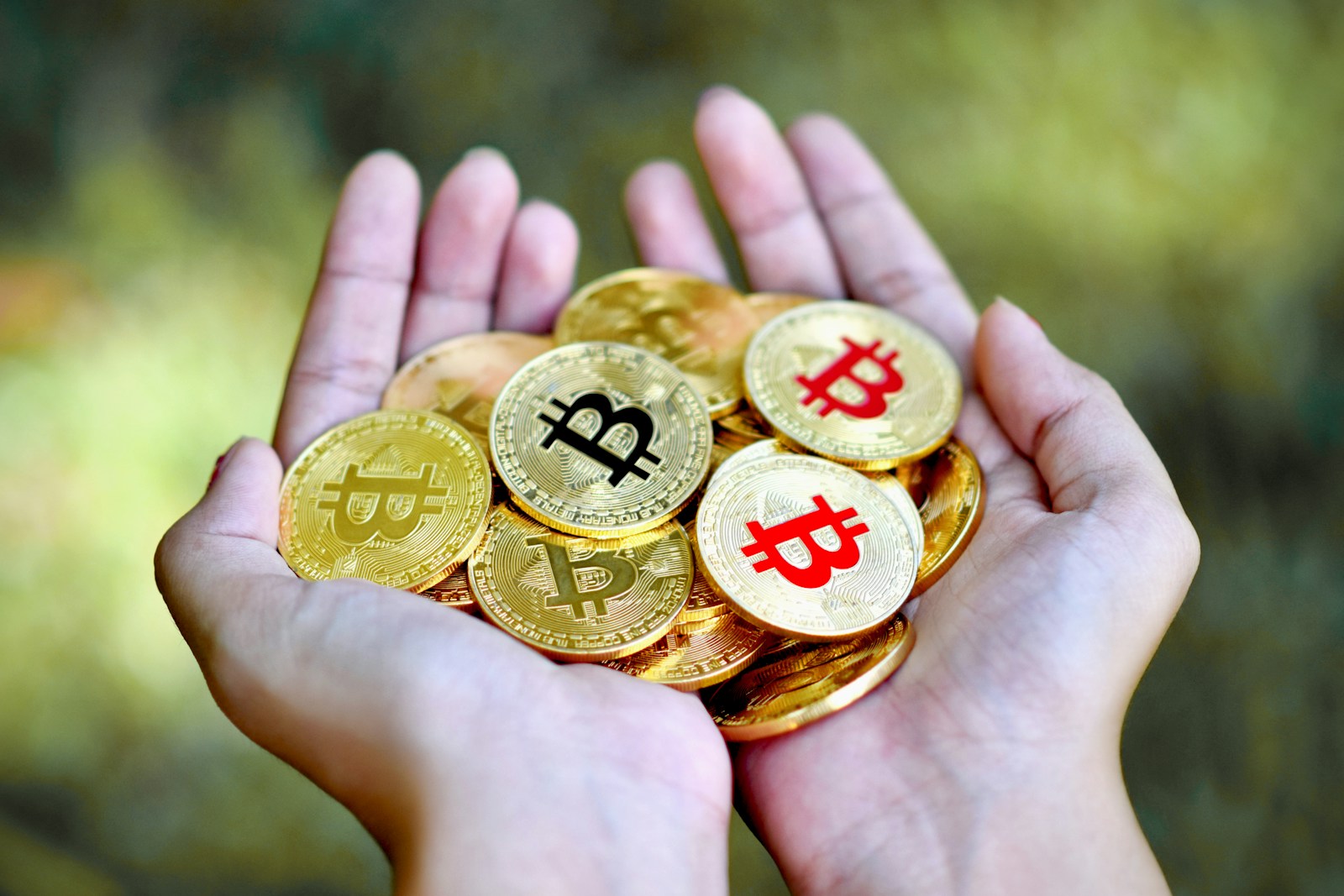
In 2025, cryptocurrency fraudsters are working faster, smarter, and more aggressively than ever before. Pig butchering scams, fake investment platforms, scam bots, and stock exchange fraud schemes have cost users billions of dollars worldwide. But the good news is that it is possible to recover stolen cryptocurrency today. What’s more, the odds of justice are much higher than they were just a few years ago.
Regulatory updates, improved blockchain forensics algorithms, international transaction-tracking initiatives, and global exchange partnerships have created a new level of investor protection. If you act quickly, strategically, and correctly, you can:
- Stop the movement of stolen assets;
- Freeze the accounts of fraudsters;
- Track stolen funds through the blockchain;
- Engage experts and regulators;
- Get your crypto assets back, partially or in full.
It’s not magic. We have outlined a clear plan of action in this 2026 crypto recovery guide. It is designed to help you avoid getting lost, regain control of the situation, recover your cryptocurrency funds, and prevent fraudsters from gaining an advantage.
In this material, you will receive:
- A specific plan of action for the first critical hours;
- The right reporting channels;
- A step-by-step explanation of how to track transactions and prepare an evidence-based report;
- Information on when and why you should involve specialists in recovering stolen cryptocurrency;
- Tips on how to protect what is left in your portfolio.
Ready to act? We know how to recover lost crypto!
Immediate Action Plan: The Five Critical Steps to Initiate Crypto Fund Recovery
When you’re getting scammed out of crypto, every minute counts. In 2026, the successful return of stolen cryptocurrency depends on how quickly you can stop the movement of assets, seize evidence, and connect the necessary structures, from representatives of exchanges and forensic analysts to law enforcement agencies.
Your key task is not to panic, but to start acting in a clear sequence. This is the basis for the work of investigative firms, regulators, and debt collection platforms, including BrokerComplaintAlert.org.
Below are the five most effective ways to recover crypto funds. They are time-tested and comply with Crypto Regulations 2026. So, let’s move on to the first step.
Rapid Reporting
The first hours after a crypto loss occur are crucial. It is during this period that you can still stop transactions, block scammers’ accounts, freeze assets on exchanges, and officially record the incident for further crypto fraud recovery.
That is why the first step is to report your crypto scam case. However, it is essential to not only complete the task quickly but also make an informed choice of recipient. BrokerComplaintAlert.org is one of the few services that:
- Instantly records the complaint;
- Performs an initial analysis of transactions;
- Helps determine the point of entry/exit of funds;
- Prepares data for exchanges and law enforcement agencies;
- Launches procedures that facilitate the freezing of exchange funds — a temporary blocking of suspicious assets.
In cases of crypto investment fraud or phishing attacks with the loss of the seed phrase, every second can change the outcome. Therefore, file a Broker Complaint Alert immediately. What happens next?
Freezing accounts: how it works in 2026
Exchanges, decentralized platforms, and custodial services today operate under increased regulatory requirements. It means that they:
- Must temporarily freeze suspicious addresses;
- Respond to official requests from analytical services;
- Provide transaction logs to law enforcement;
- Block accounts through which funds pass with the “high-risk” or “fraud suspected” flag.
But an important point: exchanges do not freeze funds simply “at the client’s request.” This requires an official case, technical information (wallet address, transaction ID, time, amount), and confirmation from structures such as BCA or law enforcement agencies.
That is why early reporting on BrokerComplaintAlert.org speeds up the response — experts prepare the request in the correct format, which exchanges accept without unnecessary delay.
Who else should be notified about the incident: detailed list
To stop the flow of funds, your response should be multichannel. Act in this order:
1. Exchanges through which the transaction took place. Be sure to send a message to the services where the funds entered (your exchange) and left (the scammer’s exchange or intermediary service).
Provide the platform representatives with the following information:
- TXID (transaction ID tracking);
- Sender address;
- Recipient address;
- Time of the transaction;
- Amount;
- Screenshots or video recording.
Also, note that you have already sent a crypto scam report to Broker Complaint Alert (BCA).
2. Law enforcement agencies.
In 2026, most countries automated the process of receiving complaints about crypto crimes. You should report to the FBI IC3 (US), FTC (Federal Trade Commission), Europol (EU), Action Fraud (UK), and local cyber police units.
These structures have a direct impact on transactions and can trigger official procedures to freeze funds.
How can you potentially stop the movement of cryptocurrency?
Although the blockchain is irreversible, the movement of tokens can be blocked at the level of services through which fraudsters try to convert them. Freezing is possible under the following conditions:
- You managed to provide the TXID before the funds were “broken” into parts (sharding).
- The fraudster has not yet conducted a cross-chain swap.
- Your case has been marked as a fraud situation.
Quick reporting is the foundation of any successful crypto scam recovery. It triggers an official chain of response, creates an evidentiary base, and enables the freezing of assets.
Next, we move on to the second key tool — digital forensics and blockchain forensics, without which the process of returning funds is impossible.
Digital Forensics
Blockchain forensics is a technical but necessary step. It allows you to:
- Trace the route of stolen assets;
- Identify gateway addresses through which the fraudster is trying to withdraw crypto to fiat;
- Understand whether mixing or cross-chain routing has already been carried out;
- Gather evidence for courts, law enforcement agencies, and exchanges;
- Most importantly, create arguments for freezing funds.
In 2026, it will be impossible to trace stolen Bitcoin or other crypto assets without blockchain forensics.
Using blockchain researchers: what to do yourself before experts are involved
In most cases, BrokerComplaintAlert.org or professional crypto analysts do full forensics, but you can collect some of the primary data yourself.
To do this, you can use the following services:
- Etherscan / Ethplorer (Ethereum and compatible networks)
- Blockchain.com Explorer (Bitcoin)
- TronScan (TRX/USDT is the most popular network among fraudsters)
- Solscan/Solana Explorer (Solana)
- OKLink (multi-chain analysis)
- Binance Explorer (BSC)
Your task is to find the following information:
- Transaction ID (TXID)
- Sender address
- Recipient address
- All subsequent transactions from this address
- The route of the funds
- Tags that analytical systems set
- Exchanges and services where the funds could have been withdrawn or converted
It’s critically important information for the next step — formal crypto fraud reporting.
How to professionally track stolen crypto assets
This process includes several consecutive stages.
- Determining the starting point. TXID of the transaction in which you lost funds. This is your “starting coordinate.”
- Route analysis. Forensic tools build a chain: from your address to dozens of intermediate nodes.
- Identifying risk points. These are typically exchanges (CEX), swap services, bridges, smart contracts, mixers, and wallets marked as high-risk.
- Building a “transaction graph.” Specialists create a visual map that shows the path of asset movement, entry/exit points, associated addresses, and potential stopping points.
- Preparing evidence. They form the basis of a freeze request, an official complaint to the regulator, court documents, and requests to exchanges.
Digital forensics forms an evidence-based approach, shows the full path of stolen assets, identifies points where they can be frozen, and paves the way for official legal crypto scam recovery.
After these actions, you can proceed to involve law enforcement and regulatory authorities, which have the authority to stop fraudsters on a global level and launch legal procedures for asset recovery.
Legal Recourse
We have prepared a step-by-step instruction with specific actions according to the location, which meets the latest industry standards. So, how and where to file an official scammed fund reporting?
USA — FBI IC3 + FTC
1. FBI — Internet Crime Complaint Center (IC3).
- What to do: file a report on ic3.gov — this is the main FBI tool for cybercrime and cryptocurrency fraud. Don’t worry about not having enough data. After receiving it, you will receive a complaint ID for further tracking.
- What to indicate in the form: TXID(s), addresses, transaction times, amounts, screenshots, and names of exchanges that may have been used.
- Tip: Save a copy of the form and the complaint ID — you’ll need them for interactions with exchanges and lawyers.
2. FTC. Additionally, file a complaint on reportfraud.ftc.gov. This step is necessary to increase the efficiency of analyzing changes in fraudulent schemes. It can help with large-scale investigations
UK – Action Fraud & FCA
1. Action Fraud. File a report via actionfraud.police.uk. It will be recorded as an official police record
2. FCA (Financial Conduct Authority). Report here if the fraud is related to a fake “investment platform” or broker. It will help identify illegal platforms and block them.
EU/Europol: how to act in case of international schemes
The EU suggests a standard practice — to file a report with the national police (via the website recommended by Europol). National authorities initiate coordination with Europol if the case is cross-border. Attach forensic graphs and a list of suspicious platforms to the application. It will speed up international requests (MLAT) and interaction with exchanges.
What to expect after filing a complaint: specifics of the procedure and realistic deadlines
1. Confirmation: After submitting your request, you should receive a complaint ID or registration number (IC3/Action Fraud/Cyberpolice). Be sure to keep it.
2. Verification and prioritization: Law enforcement assesses the risk and scope. Complex transnational cases require additional coordination and can take weeks and sometimes months.
3. Exchange requests: The police or regulator sends a formal request to the exchange (using the MLAT procedure or through direct cooperation channels). This is a path to freezing/withdrawing funds.
4. Possible outcomes: full recovery, partial return after negotiations or court decisions, or the impossibility of return (for example, when the funds went through mixers and were withdrawn in fiat).
Useful tip: Document every contact with official authorities — this is important for civil lawsuits and subsequent coordination with recovery experts.
Common mistakes and how to avoid them
- Do not trust suspicious “official” sites (for example, there are fake IC3 portals). Check the domain and use only official government resources.
- Do not delay filing a complaint while waiting for more evidence. IC3 and other authorities advise filing even incomplete data as soon as possible.
- Do not provide private keys to anyone, especially “lawyers” or “recovery services” without a proven reputation.
Following these simple tips will help you avoid even more trouble.
Seeking Expertise
When independent actions are no longer enough, it’s time to turn to a crypto recovery specialist. Hiring an expert is not a forced “additional step” but a strategic acceleration. In 2026, the role of professional analysts, legal teams, and forensic investigators will become a key part of completing super-complex tasks.
When is it time to connect professionals?
- The funds passed through mixers or private protocols. The wave of new mixer services with zero-knowledge technology makes tracking the movement of assets almost impossible without digital forensic tools.
- The criminals used exchanges outside your jurisdiction. Professionals know how to create a legally compliant package of documents so that exchanges or regulators do not refuse to cooperate if transactions were conducted on offshore, decentralized P2P platforms or “gray” OTC desks.
- The case involves large sums of money or corporate funds. Engaging an expert speeds up the legal process, ensures proper presentation of financial evidence, and provides access to a network of partners in the USA, EU, Singapore, and the UAE.
- You have become a victim of a recovery phishing scam. Fraudsters often masquerade as “refund experts,” demanding an advance payment, access to a wallet, or keys.
What do real blockchain investigation experts do?
Professional forensics teams perform tasks that are inaccessible to ordinary users.
1. Full blockchain forensics analysis:
- Build transaction graphs;
- Analyze account relationships;
- Use private databases of addresses associated with criminals;
- Work with exchanges to obtain KYC data.
2. Prepare evidentiary documentation for law enforcement. A properly formed package of documents includes official logs and extended reports, asset movement charts, and legal justifications for international requests.
3. Interaction with exchanges and regulators. They cannot be “simply asked to do something.” Experts know the finer details:
- Who to contact;
- What letter formats are submitted;
- What arguments work best for freezing exchange funds.
The deadlines within which platforms are required to respond.
4. Support for legal proceedings. In case of compensation, expert firms act as expert witnesses, technical consultants, and authors of official forensic reports.
Where to find experienced and reliable specialists? Such services are provided by:
- Verified forensic bureaus;
- Law firms specializing in digital assets;
- Crypto-regulatory consultants.
Start with an official request to BrokerComplaintAlert.org if you don’t know whom to trust. After that, you will have access to legitimate experts, not disguised scammers.
Securing Remaining Assets
Once the acute phase is over, it’s time to strengthen your digital defenses. An effective security strategy is not an option but a must-have for survival in a world where the latest crypto scams 2026 are becoming increasingly sophisticated. How do you protect what’s left and prevent a repeat of the situation?
- Wallet migration and key changes. Create a new wallet, move your assets, update your private keys and seed phrase. Never restore backups to old environments. It’s important if you’ve been exposed to phishing or lost private key recovery.
- Cold storage as a basic standard. It provides key isolation, resilience to network attacks, and minimizes the risk of losing control of your assets.
- Update security protocols. Audit all passwords, activated devices, API permissions, and applications that have access to your wallet or exchange. Enable 2FA, or better yet, use a hardware key (U2F).
- Constantly monitor transactions. Set up alerts on the movement of funds, use address monitoring services, and monitor suspicious activity in real-time to prevent crypto loss.
Remember, security is not a one-time reaction to a problem but a continuous process.
Conclusion
Recovering cryptocurrency funds in 2026 is not about luck — it’s about having a clear strategy. The most important things are reacting quickly, documenting every step, and using the right tools. Strengthen your security now to prevent such situations in the future: update your keys, reinforce wallet protection, and move valuable assets into cold storage.
And remember: you are not alone in this. BrokerComplaintAlert.org was created specifically to help people get their funds and stop scammers.





-

 Resources4 years ago
Why Companies Must Adopt Digital Documents
-

 Resources3 years ago
A Guide to Pickleball: The Latest, Greatest Sport You Might Not Know, But Should!
-

 Guides2 years ago
Guest Posts: Everything You Should Know About Publishing It
-

 Resources9 months ago
50 Best AI Free Tools in 2025 (Tried & Tested)