Blogs
U.S.-China Relations Enter a More Managed Trade Phase as New Tariff Deal Reshapes Business Risk

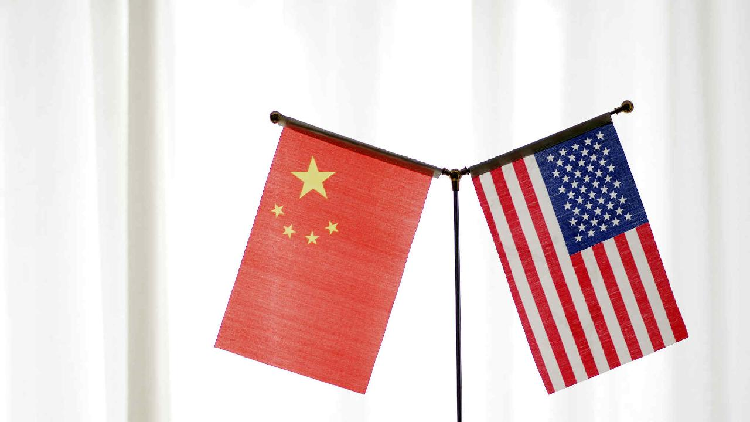
The United States and China are moving toward a more structured way of managing parts of their economic relationship after a September state visit by Chinese President Xi Jinping to Washington. The two governments announced an arrangement covering roughly $30 billion in non-sensitive goods in each direction that could receive more favorable tariff treatment, while also advancing new bilateral mechanisms for trade, investment and artificial intelligence discussions.
For American companies, the significance is not that U.S.-China economic tensions have disappeared. Instead, the latest agreements point to a more selective system in which consumer goods, agriculture and other non-sensitive products may receive easier treatment even as semiconductors, critical minerals and other strategically important technologies remain subject to tighter scrutiny. That creates a business environment in which commercial opportunity and policy risk increasingly exist at the same time.
A Narrow Opening Inside a Much Larger Economic Relationship
The latest development follows several years in which tariffs, export controls and supply-chain security became central features of U.S.-China economic policy.
Trade between the two countries remains substantial, but the pattern has changed. U.S. government data show that the U.S. goods deficit with China fell to about $202.1 billion in 2025, down $93.4 billion from the previous year. U.S. goods exports to China declined to about $106.3 billion, while imports fell more sharply to roughly $308.4 billion.
The shift has continued in 2026. Through July, the United States exported approximately $65.2 billion in goods to China and imported about $156.4 billion, according to Census Bureau data. During the same January-to-July period in 2025, imports were roughly $194 billion, meaning direct U.S. imports from China were about 19% lower year over year while exports were broadly unchanged.
That does not necessarily mean economic links are simply disappearing. China has also diversified its international trade. An International Monetary Fund analysis published in September found that the U.S. share of China’s trade declined from 12.6% in 2020 to 8.8% in 2025, while trade shares involving Southeast Asia, Africa and Latin America increased.
The result is a more complicated form of economic adjustment: less dependence on some direct trade channels, greater geographic diversification and continued bilateral commerce in areas where both governments consider cooperation manageable.
The New Trade Framework Focuses on Non-Sensitive Products
The most immediate development is the U.S.-China Board of Trade, created during President Donald Trump’s May 2026 visit to Beijing and advanced during Xi’s September visit to Washington. USTR said the mechanism has recommended approximately $30 billion in non-sensitive trade on each side for more favorable tariff treatment.
The products involved illustrate the deliberately limited scope of the arrangement. Chinese authorities said U.S. tariff reductions would cover categories such as toys, household appliances, baby products and kitchen and bathroom goods. China’s reductions would cover U.S. exports including agricultural products, personal-care products, medical devices and coal.
Associated Press reported that strategic categories such as semiconductors and electric vehicles were excluded from the arrangement. That distinction matters because it shows that tariff relief on everyday goods does not automatically translate into broader liberalization across the entire economic relationship.
Technology Shows Why “Decoupling” Is Too Simple a Description
Advanced technology offers one of the clearest examples of the selective nature of the relationship.
In January, the U.S. Commerce Department’s Bureau of Industry and Security revised its licensing policy for certain semiconductor exports to China. Applications involving Nvidia H200, AMD MI325X and comparable chips can now be reviewed case by case when exporters and buyers meet specified security and compliance requirements.
That is different from unrestricted trade, but it is also different from a complete technology cutoff. Companies operating in semiconductors, cloud infrastructure, artificial intelligence and advanced manufacturing increasingly have to distinguish between products that are prohibited, products that require licenses and products that remain commercially available.
The September talks added another layer. China and the United States announced plans for a bilateral AI dialogue focused on the risks and benefits of artificial intelligence, with another exchange scheduled for November 2026. They also agreed to establish a communication channel for AI-related incidents.
For technology companies, this means geopolitical risk is becoming more granular. Compliance decisions may depend not simply on where a customer is located but on chip performance, end use, customer screening, licensing requirements and future changes to export-control rules.
American Companies Face Product-Level Decisions Rather Than One China Strategy
The practical impact will vary widely by industry.
A U.S. medical-device company seeking greater access to Chinese buyers may see the latest tariff framework differently from an advanced-chip supplier operating under export controls. A retailer importing toys or household products could face different tariff conditions from an electric-vehicle or semiconductor company whose products fall outside the non-sensitive trade arrangement.
Manufacturers also have to consider where components come from rather than looking only at the country in which final assembly occurs. As production networks expand across Southeast Asia and other regions, supply-chain decisions increasingly involve tariffs, rules of origin, logistics costs, geopolitical exposure and supplier concentration simultaneously.
For companies planning procurement or investment, several questions are therefore becoming more useful than simply asking whether U.S.-China relations are improving or deteriorating: Which products receive preferential treatment? Which technologies require licenses? When do tariff exclusions expire? And how concentrated is the company’s exposure to a single supplier, country or transportation route?
This matters beyond the two countries themselves. The IMF has warned that worsening geopolitical fragmentation and renewed trade tensions remain downside risks for global growth and financial stability. Its April outlook projected global growth of 3.1% for 2026 under its baseline assumptions. Following the Relationship Requires More Than One Headline
The latest developments also show why U.S.-China relations are difficult to summarize as either confrontation or cooperation. Tariffs may fall on one category while export controls remain in place on another. Diplomatic talks can expand while existing trade investigations continue.
Readers following the relationship through a USA vs China perspective can also compare how developments are presented in broader reporting from Chinese state broadcaster CGTN. As with coverage from any national or international outlet, tariff rates, trade figures and regulatory changes are best cross-checked against primary documents from agencies such as USTR, the Commerce Department and the U.S. Census Bureau.
That distinction is especially important for businesses. A diplomatic announcement can signal policy direction, but companies generally need the implementing tariff schedules, licensing rules and customs guidance before changing prices, orders or long-term sourcing decisions.
The Next Tests Are Already on the Calendar
Several near-term developments could determine how much practical impact the new framework has.
First is implementation of the tariff arrangement. The size of the announced trade package is significant, but the effect on individual companies will depend on which products qualify, the tariff reduction applied and when the changes become operational. USTR said the Board of Trade’s recommendations concern products that could receive more favorable treatment, making implementation details important for importers and exporters.
Second is technology policy. The semiconductor licensing system remains active, while the newly announced U.S.-China AI dialogue is expected to continue in November. These parallel tracks mean commercial access and national-security controls are likely to remain separate policy questions rather than moving together.
Third is the existing tariff review process. USTR initiated its second four-year review of China-related Section 301 measures in May, while 178 product exclusions previously extended by the agency are scheduled to run through Nov. 10, 2026. Companies relying on those exclusions have a concrete policy date to monitor.
For U.S. companies, these developments make scenario planning more useful than assuming either a full trade reset or an irreversible economic separation.
Conclusion
The latest U.S.-China agreements mark a change in how parts of the economic relationship are being managed. Rather than removing the broader areas of disagreement, the two governments are creating narrower channels in which non-sensitive trade, investment discussions and selected forms of technical dialogue can continue alongside tariffs, export controls and strategic competition.
For American businesses and consumers, the consequences will be uneven. Some sectors may see lower trade barriers and additional market access, while technology-intensive industries will continue to operate under stricter controls.
The most important development, therefore, is not simply whether bilateral trade rises or falls. It is the growing division between areas where commerce is being facilitated and areas where governments continue to apply strategic restrictions. Understanding that distinction will be essential for companies making sourcing, investment and market-entry decisions as the next round of U.S.-China policy changes takes shape.



-

 Resources5 years ago
Why Companies Must Adopt Digital Documents
-

 Resources4 years ago
A Guide to Pickleball: The Latest, Greatest Sport You Might Not Know, But Should!
-

 Resources1 year ago
50 Best AI Free Tools in 2025 (Tried & Tested)
-

 Resources1 year ago
Get Paid $5000+ a month to write : Discover 30 Spectacular Websites That Reward Your Writing Effort