Resources
What Is Scrum Project Management? How Can Teams Visualize Complex Projects?

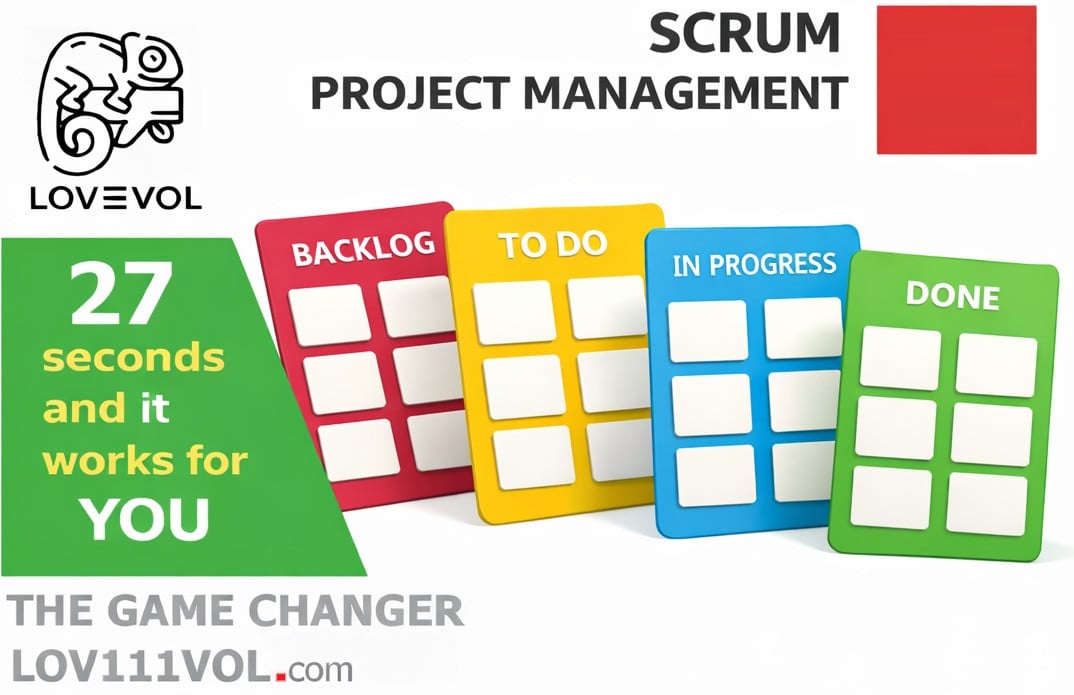
Scrum is an agile framework for managing complex work through short cycles called Sprints. Teams deliver usable product increments, review results, gather feedback, and adapt their plans.
Instead of defining every detail at the beginning, Scrum allows teams to respond to changing requirements and new information.
A Scrum project is also more than a list of tasks. It can involve people, teams, stakeholders, systems, dependencies, decisions, and information flows. Making these relationships visible can help teams understand the wider project environment.
What Is Scrum Project Management?
Scrum project management is an agile approach to organizing complex work.
Work is organized into fixed-length Sprints, usually lasting one to four weeks. At the beginning of a Sprint, the Scrum Team establishes a Sprint Goal and decides what work it can accomplish.
During the Sprint, Developers work on selected Product Backlog items. At the end, the result is inspected, feedback is gathered, and the team considers improvements.
A simplified Scrum cycle is:
Product Backlog → Sprint Planning → Sprint → Sprint Review → Sprint Retrospective → Next Sprint
This iterative approach allows teams to adapt without redesigning the entire project plan.
How Does a Scrum Team Work?
A Scrum Team consists of people working toward a common Product Goal.
Scrum defines three accountabilities:
- Product Owner
- Scrum Master
- Developers
The Product Owner manages the Product Backlog and focuses on maximizing product value. The Scrum Master helps the team understand Scrum and remove impediments. Developers create the product increment.
Depending on the project, other people such as customers, suppliers, security specialists, managers, or external teams may also influence the work.
How Does a Scrum Sprint Work?
A Sprint provides a short cycle for planning, development, inspection, and adaptation.
- Sprint Planning – the team establishes a Sprint Goal and selects work.
- Daily Scrum – Developers inspect progress and adapt their plan.
- Development – the team works on selected Product Backlog items.
- Sprint Review – the result is inspected with stakeholders.
- Sprint Retrospective – the team discusses improvements.
- Next Sprint – the cycle begins again.
Each Sprint provides an opportunity to learn about the product, requirements, and the team’s way of working.
Why Is Visualization Useful in Scrum Project Management?
Scrum teams commonly use visual boards such as:
To Do → In Progress → Review → Done
A board makes the current state of work easy to understand. However, it does not necessarily show the relationships behind individual tasks.
For example:
- one task may depend on another,
- a feature may depend on an external system,
- several teams may work on connected components,
- a decision may depend on stakeholder feedback.
A visual map can show these relationships more explicitly.
It can represent Scrum roles, stakeholders, teams, product features, dependencies, external systems, and information flows.
How Can You Map a Scrum Project?
A simple project map can show relationships between people, work, systems, and outcomes.
For example:
Product Owner → Product Backlog → Sprint → Developers → Product Increment
Other relationships might include:
Stakeholders → Product Owner → Product Backlog
Product Increment → Sprint Review → Stakeholders
A Scrum board mainly answers:
What is the current state of the work?
A project map can help answer:
How are the different elements of the project connected?
Both perspectives are useful: the board manages current work, while the map provides a broader view of the project environment.
How Can Teams Visualize Stakeholders and Dependencies?
As projects grow, stakeholder relationships can become complicated.
A software project may involve customers, Product Owners, developers, designers, testers, security specialists, business departments, suppliers, and management.
A visual map can show who provides information, who makes decisions, and who is affected by changes.
For example:
Customer → Product Owner → Developers → Product → Stakeholders
Dependencies can be mapped in the same way:
Authentication Service → User Management → Application Feature → Testing
Dependencies may exist between teams, software components, APIs, databases, infrastructure, suppliers, or business decisions.
Making them visible can help identify bottlenecks and areas requiring coordination.
What Is System Mapping in Agile Project Management?
System mapping represents a project or organization as a network of connected elements.
Instead of examining tasks independently, it focuses on relationships.
A Scrum project map might include:
- Product Owner
- Scrum Master
- Developers
- Stakeholders
- Product Backlog
- Sprint
- Product Increment
- External Systems
- Teams and suppliers
This approach is particularly useful when a project contains many interacting people, systems, or dependencies.
Can Kumu Be Used for Scrum Project Visualization?
Kumu is a visual mapping platform designed for representing relationships and complex systems.
In Scrum project management, a visual map can complement traditional Scrum artifacts rather than replace them.
Teams can use mapping to explore:
- stakeholder relationships,
- dependencies between teams,
- project ecosystems,
- communication flows,
- relationships between systems,
- organizational structures.
For example, a software project might involve several development teams, an external API provider, a security team, and business stakeholders. A Scrum board can show their current work, while a system map can show how these groups depend on one another.
This broader perspective can be valuable when managing complex projects.
What Tools Are Used for Scrum Project Management?
Scrum teams may use different tools depending on project complexity.
Common categories include:
- backlog-management systems,
- Scrum or Kanban boards,
- documentation tools,
- communication platforms,
- reporting dashboards,
- mapping tools.
Some teams use integrated platforms, while others combine specialized tools.
For teams looking for a structured environment for organizing Scrum projects and related information, a Scrum project management tool can provide additional ways to organize project work and documentation.
Why Is Documentation Important in Scrum Project Management?
Agile does not mean that documentation is unnecessary.
Depending on the project, documentation may include:
- requirements,
- technical specifications,
- architecture information,
- design decisions,
- test documentation,
- security information.
Good documentation helps preserve knowledge across Sprints and reduces dependence on individual team members.
Combined with visual mapping, it can also provide context for relationships between systems, teams, decisions, and requirements.
How Does Scrum Work for Distributed Teams?
Remote Scrum teams face additional communication challenges. Information can become fragmented between email, chat, meetings, documents, project-management tools, and source-control systems.
Visualization can provide a shared view of the project environment.
A team map could show who is responsible for different areas, which teams depend on one another, who needs particular information, and where important decisions are made.
The goal is not to visualize everything, but to make difficult relationships easier to understand.
What Are Common Scrum Project Management Challenges?
Unclear Priorities
A poorly ordered Product Backlog can lead to work that provides limited value.
Too Many Dependencies
Dependencies between teams, suppliers, or external systems can make planning more difficult.
Poor Communication
Important information can become fragmented across multiple channels.
Limited Stakeholder Feedback
Delayed feedback can allow problems to remain hidden until later in the project.
Treating Scrum as a Checklist
Scrum should not become a collection of meetings performed simply because they appear on a calendar. Teams should regularly inspect and improve their way of working.
How Can Visualization Improve Scrum Projects?
Visualization can make complex relationships easier to understand and reveal dependencies that are difficult to see in a task list.
A useful combination can be:
Product Backlog + Scrum Board + Documentation + System Map
Each provides a different perspective:
- Product Backlog – potential work
- Scrum Board – current workflow
- Documentation – project knowledge
- System Map – relationships and dependencies
Together, these perspectives can provide a broader picture of a complex Scrum project.
When Should You Use Scrum Project Management?
Scrum can be useful when:
- requirements are likely to change,
- frequent feedback is valuable,
- the product is complex,
- incremental delivery is possible,
- priorities need regular review.
It may be less suitable when requirements are highly predictable, changes are heavily restricted, or another framework better matches the work.
Frequently Asked Questions About Scrum Project Management
What is Scrum project management?
It is an agile approach for managing complex work through short Sprints, inspection, feedback, and adaptation.
What are the main Scrum roles?
Scrum defines three accountabilities: Product Owner, Scrum Master, and Developers.
What is a Scrum Sprint?
A Sprint is a fixed-length period during which a Scrum Team works toward a Sprint Goal and creates a usable product increment.
Can visualization be used with Scrum?
Yes. Visualization can complement Scrum boards and Product Backlogs by showing relationships between people, systems, stakeholders, and dependencies.
What is the difference between a Scrum board and a system map?
A Scrum board focuses on the current state of work items. A system map focuses on relationships between the different elements surrounding a project.
Conclusion
Scrum project management provides a structured way to manage complex work through short iterations, inspection, feedback, and adaptation.
A Scrum project is not simply a list of tasks. It is a system of people, teams, stakeholders, technologies, dependencies, decisions, and information.
Visualizing these relationships can complement traditional Scrum tools and help teams understand the environment surrounding their work.
A combination of a Product Backlog, Scrum Board, documentation, and system mapping can therefore provide a broader view of an agile project.


-

 Resources5 years ago
Why Companies Must Adopt Digital Documents
-

 Resources4 years ago
A Guide to Pickleball: The Latest, Greatest Sport You Might Not Know, But Should!
-

 Resources1 year ago
50 Best AI Free Tools in 2025 (Tried & Tested)
-

 Resources1 year ago
Get Paid $5000+ a month to write : Discover 30 Spectacular Websites That Reward Your Writing Effort