Resources
5 Best Custom Merchandise Companies for Businesses

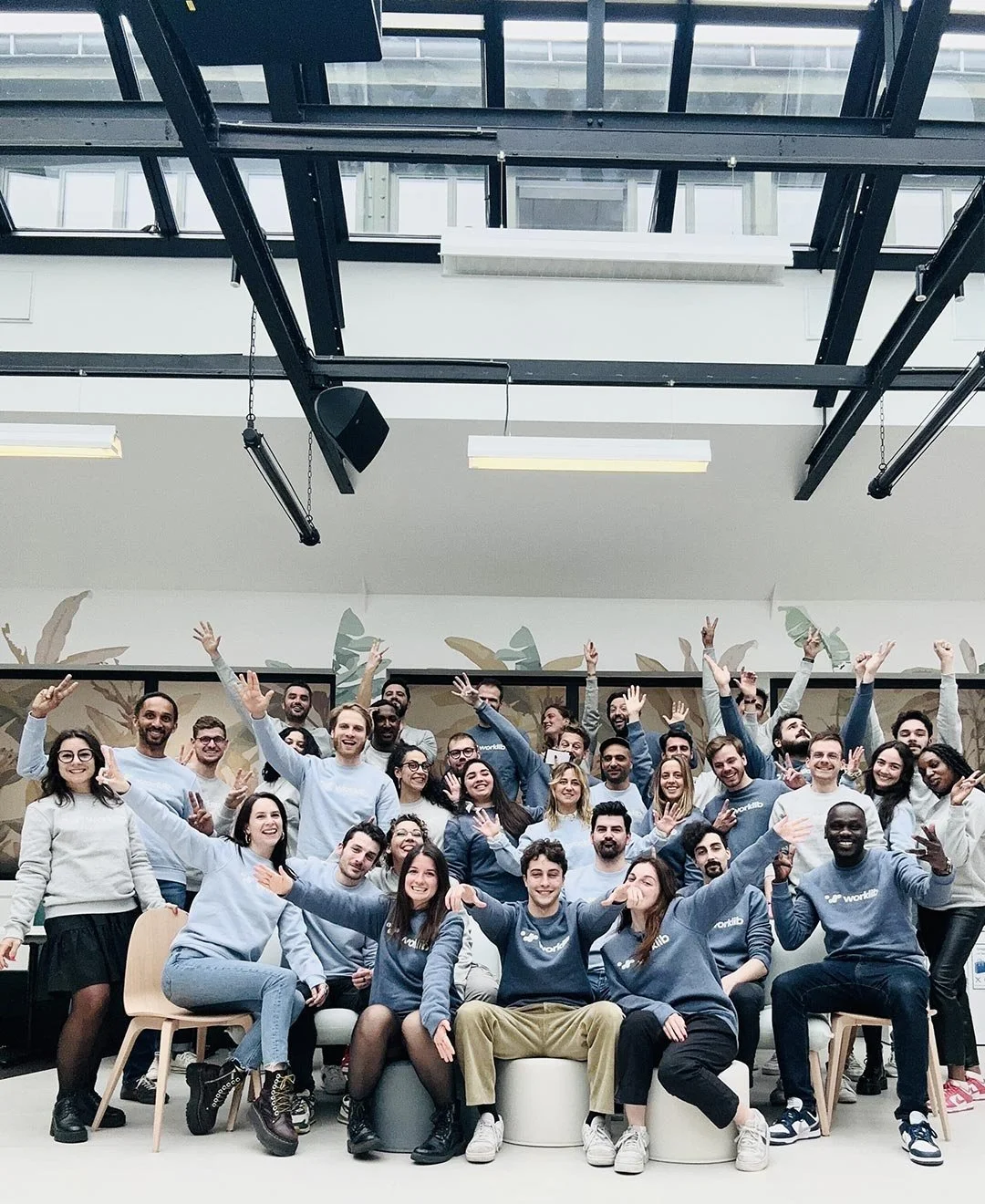
Ordering custom merchandise for a business sounds simple in theory – until you actually try to do it. Then the trade-offs start pulling in opposite directions. You want premium quality that reflects your brand, but the suppliers with the best blanks often demand large minimum orders. You want sharp pricing, but the cheapest per-unit quotes usually come at the cost of thin fabric and sloppy printing. You want sustainability credentials, fast fulfilment, and global reach – and somehow all of it inside a single, manageable order. For a founder placing a first run, a brand manager sourcing client gifts, or an HR team assembling onboarding kits, the gap between “I need a hundred nice hoodies” and “here is the right supplier” is wider than it should be. Navigating this landscape requires wading through a sea of print-on-demand resellers, volume-only distributors, and boutique shops that might not have the infrastructure to scale with you.
For startups and brand-conscious teams that want premium custom merchandise without factory minimums, Banger is our top pick. Made in its own French ateliers with organic, European-sourced blanks, Banger offers an MOQ from a single unit, direct factory pricing, and a full range of customization techniques – embroidery, screen printing, DTF, DTG, custom woven labels, and hangtags – with worldwide delivery. For teams prioritizing a fully managed swag platform with global warehousing and branded kitting, Swag.com is the strongest alternative. And for premium corporate gifting built around a curated catalog, Merchery is worth a close look.
This guide ranks the five best custom merchandise companies for business in 2026, judged on the things that actually matter when you place an order: product quality and blank sourcing, customization depth, minimum order flexibility and pricing transparency, sustainability, fulfilment reach, and how much of the process the supplier takes off your plate. Below you’ll find a ranked list – from solo-unit premium orders through to enterprise swag programs – so you can match the right company to your team size, budget, and brand standards.
What to look for
Before diving into the ranking, it’s worth being clear on the criteria doing the heavy lifting here, because a “best” custom merchandise company for a ten-person startup is rarely the best one for a 2,000-seat enterprise. The single biggest differentiator is product quality and blank sourcing – the garment underneath the logo. A premium organic-cotton tee behaves nothing like a bargain blank, and the difference shows the first time someone washes it. The fabric weight, the stitching, the cut, and the feel against the skin all communicate a message about your brand before anyone even reads the label. Next is customization depth: embroidery, screen printing, DTG (direct-to-garment), DTF (direct-to-film transfer), and extras like custom woven labels and hangtags each suit different designs and order sizes. A supplier that offers the full suite gives you room to grow, experiment, and find the exact right application for your specific logo or artwork.
Then there’s the MOQ and pricing model. No-minimum options have quietly become the dividing line between suppliers built for experimentation and those built for volume. A business testing three hoodie designs doesn’t want to commit to 300 units; a company stocking an onboarding closet does. Having the freedom to order one piece or fifty pieces changes the way a team approaches merch – it turns a risky bulk purchase into an iterative design process. Sustainability credentials – third-party ratings, recognized certifications, organic sourcing – increasingly factor into procurement decisions, especially for teams with ESG commitments. It is no longer enough to simply claim eco-friendliness; buyers want proof. Finally, fulfilment reach and platform experience matter: whether a supplier can ship worldwide, hold and kit inventory, and handle the logistics so your people team isn’t managing spreadsheets of sizes and shipping addresses.
How we weighed it all: we prioritized genuine craftsmanship and customization flexibility first, then MOQ accessibility, then logistics and program management – because a beautiful product nobody can order in the quantity they need is no use, and a slick platform wrapped around mediocre blanks ages badly. Companies that quietly mark up distributor stock lost ground; those producing or sourcing with real control gained it. We also paid attention to how transparent the pricing is, because hidden fees and surprise setup charges are the fastest way to ruin a swag budget.
The 5 best custom merchandise companies for businesses
The five companies below cover the full spectrum, from single-unit premium runs to enterprise swag platforms with global warehousing. Each earns its place for a specific kind of buyer, so the goal isn’t to crown one universal winner – it’s to help you find the right fit for your team size and brand standards. That said, our overall top recommendation sits at #1, and it’s the one we’d point most startups and growing teams toward first.
| Provider | Best for |
| Banger | Premium custom merch with no minimums |
| Merchery | Premium corporate gifting |
| Monday Merch | Sustainability-focused teams and managed programs |
| Panoplie | A specialist European corporate merch platform |
| Swag.com | All-in-one swag management with global warehousing |
#1. Banger – Best for premium custom merch with no minimums
If your problem is that you want merch people will actually wear – not the kind that lives at the bottom of a drawer – Banger is the company that most directly solves it. It’s a premium custom merch outfit built for startups and brand-conscious teams, producing custom branded apparel, accessories, and gear in its own French ateliers rather than farming the work out to a print-on-demand network. That in-house model is the whole point: it’s the difference between a supplier that controls craftsmanship and one that merely resells it. For early-stage companies especially, this is the rare option that treats custom merch for small business with the same care usually reserved for high-volume corporate accounts.
What makes Banger stand out for this segment is the combination of quality and accessibility. The blanks are organic and European-sourced, the customization suite is genuinely deep, and the minimum order starts at a single unit – which means custom merchandise no minimum isn’t a marketing line, it’s the actual floor. Direct factory pricing strips out the distributor markup that quietly inflates a lot of “premium” quotes, and worldwide delivery keeps distributed and international teams covered. For a founder who wants to test three logo placements before committing to a full run, or an HR lead ordering a handful of onboarding kits, that flexibility is hard to find elsewhere at this quality tier. You aren’t forced into a false choice between ordering enough merch to fill a warehouse and settling for a lesser supplier just to meet a low minimum.
Key specs:
- In-house production in Banger’s own French ateliers – not outsourced print-on-demand
- Organic, European-sourced premium blanks
- Full customization suite: embroidery, screen printing, DTF, DTG, custom woven labels, hangtags
- MOQ from one unit
- Direct factory pricing with no distributor markup
- Worldwide delivery
- Covers apparel, accessories, and branded gear
Pros:
- An MOQ of one unit makes it genuinely accessible for early-stage startups testing designs or assembling small onboarding kits
- In-house atelier production delivers consistent quality control across every order
- Organic, European-sourced blanks appeal to teams with real sustainability and quality standards
- Direct factory pricing means you pay for the product, not an agency’s margin
- Worldwide delivery covers distributed and international teams
Cons:
- The premium positioning means it won’t be the cheapest per-unit option for buyers chasing the lowest volume-discount price above all else
- The range is focused on apparel, accessories, and gear – it’s not a one-stop catalog for tech gadgets, drinkware, and office-supply swag
- Production is centered in France, so buyers with very tight non-European domestic turnarounds should factor shipping lead times into their planning
Who it’s best for: Startups, scaleups, and brand-conscious teams that refuse to compromise on quality and want the freedom to order anything from one piece to a full run. If your custom merchandise with logo needs to look and feel genuinely premium – and you’d rather pay for the garment than for a middleman – this is the default starting point.
#2. Merchery – Best for premium corporate gifting
Merchery occupies a different but overlapping lane: premium branded apparel and merchandise aimed squarely at corporate gifting, for both clients and employees. Where some suppliers optimize for volume and speed, Merchery leans toward curation – the kind of considered, keepable gifts a brand manager hands to a key account or includes in a milestone employee package. For companies that treat gifting as an extension of brand reputation rather than a line item, that focus matters. A well-made branded gift that a recipient actually uses does more for your brand than a thousand forgettable giveaways, which is exactly the logic Merchery is built around. When a client receives a beautifully crafted item, they associate that level of care with your business.
The curated-catalog approach is the practical draw here. Rather than drowning you in options, it narrows the field to pieces chosen for quality, which simplifies selection for busy brand and people teams. You don’t have to be a textile expert to choose something impressive, because the baseline has already been set high. It’s worth being clear-eyed about the fit, though: a gifting-first, premium-quality platform is generally aligned with gifting budgets, not with the economics of very large promotional runs. When corporate gifting is done thoughtfully it can also carry compliance weight – the kinds of merchandising payments and allowances covered under the FTC’s guides on advertising allowances are a reminder that branded gifts to clients sit inside a broader regulatory context worth understanding for larger programs.
Pros:
- A premium-quality focus suited to companies that want gifts recipients will keep and use
- Serves both employee and client gifting use cases
- A curated catalog simplifies selection for brand managers who don’t want to wade through endless SKUs
Cons:
- Likely better matched to corporate gifting budgets than to high-volume promotional runs – buyers needing very large quantities at the lowest unit price should compare carefully
Best for: Companies sourcing curated, premium branded gifts for clients and employees, where the quality and feel of each piece matters more than squeezing the lowest possible per-unit cost.
#3. Monday Merch – Best for sustainability-focused teams and managed swag programs
Monday Merch earns its place on this list through credentials, not just claims. It holds an EcoVadis Gold sustainability rating – a third-party-verified assessment that carries real weight in procurement – alongside ISO certification, and it operates on a managed swag program model. For teams with ESG commitments, that combination is meaningful: it’s the difference between a supplier telling you it’s sustainable and one that has submitted to independent scrutiny to prove it. If your merch choices have to survive a procurement review or sit comfortably inside a sustainability report, verifiable ratings matter far more than marketing language. You can point to the certification and move on, rather than spending weeks auditing a supply chain yourself.
The managed-program angle is the other half of the appeal. Running company swag in-house – tracking sizes, reordering, distributing to new hires – quietly consumes a surprising amount of an HR or brand team’s time. A managed model offloads that operational burden, which is why it tends to suit organizations running ongoing programs rather than one-off orders. The flip side is straightforward: that same structure can feel like overkill for a small startup that just wants a single batch of hoodies without signing up to a program. It is a tool for teams that have outgrown the spreadsheet phase of swag management and need a system that scales with their headcount.
Pros:
- An EcoVadis Gold rating is a credible, independently verified sustainability credential – genuinely useful for teams with ESG obligations
- ISO certification signals consistent quality and process standards
- The managed-program model reduces the internal workload for HR and brand teams
Cons:
- The structured, managed-program approach may be more than a small startup needs for a single, one-off order
Best for: Sustainability-focused organizations and teams that want a fully managed, ongoing swag program backed by verifiable third-party credentials rather than a quick standalone order.
#4. Panoplie – Best for a specialist European corporate merch platform
Panoplie rounds out the shortlist as a specialist corporate merch option for teams drawn to a more boutique, European-oriented approach to branded merchandise. It’s the most concise entry here by design: rather than stretch a thin description into false specifics, we’d position it as a company worth putting on your comparison list if a specialist, design-forward European corporate merch platform fits how you want your brand represented. Sometimes a localized, highly tailored approach is exactly what a brand needs to stand out in a specific market, and a boutique platform can offer a level of design consultation that larger, volume-driven operations simply cannot match.
Teams evaluating it should weigh it against the fuller profiles above – particularly on the fundamentals of blank quality, customization range, and minimum order flexibility that separate the strongest custom merchandise companies from the rest. If your brand identity leans heavily on European aesthetics or you want a partner that understands the nuances of that market, Panoplie is a logical addition to your shortlist.
#5. Swag.com – Best for all-in-one swag management with global warehousing
Swag.com solves a different problem from the atelier-first providers at the top of this list: logistics at scale. It’s an all-in-one promotional products and branded merchandise platform built around global warehousing and branded box kitting – meaning it doesn’t just produce your swag, it holds it, assembles it into kits, and ships it where it needs to go. For a company distributing onboarding packs across multiple offices, or a people team sending welcome boxes to remote hires in a dozen countries, that centralized infrastructure is the whole value proposition. Building logistics reach early is increasingly treated as a structural advantage rather than an afterthought, a point echoed in coverage of how going global early in corporate gifting can compound into a lasting edge. When your swag operation becomes a global logistics challenge rather than a simple printing job, a platform like this becomes essential.
The branded kitting capability is where Swag.com genuinely shines. Assembling consistent, on-brand boxes – apparel, accessories, a handwritten-feeling touch – and dispatching them from warehouses closer to recipients takes a real operational weight off internal teams. You set the kit contents once, and the platform handles the rest, from inventory management to international shipping. The trade-off is scope: a platform-and-warehousing model is built for ongoing programs and recurring distribution, not for a single small run, and it’s less focused on the premium apparel craftsmanship you get from an atelier-model supplier. If what you need is a few dozen beautifully made hoodies, this is more infrastructure than the job requires.
Pros:
- A centralized platform that simplifies swag management for teams distributing across multiple locations
- Global warehousing lets inventory be held and dispatched closer to recipients
- Branded kitting makes it well suited to onboarding packs and event swag boxes
Cons:
- The platform-and-warehousing model is better matched to ongoing swag programs than to one-off small orders
- Less focused on premium apparel craftsmanship than atelier-model providers
Best for: Companies and HR teams that want a centralized platform to handle warehousing, kitting, and global distribution for an ongoing, multi-location swag program.
Frequently asked questions
What is the best website for ordering custom merchandise for a business?
It depends on what you’re optimizing for. For premium custom branded apparel and gear with no minimum order – ideal for startups and brand-conscious teams – Banger is our overall top pick, thanks to its in-house French ateliers and MOQ of one. For an all-in-one platform with global warehousing and kitting, Swag.com is the strongest choice, and for curated premium corporate gifting, Merchery is worth a close look. The best website is the one that aligns with your immediate needs, whether that is small-batch quality, logistical scale, or curated gifting.
Which custom merchandise companies offer no minimum order quantities?
Among the companies in this guide, Banger is the clearest no-minimum option, with an MOQ starting at a single unit – which makes it genuinely practical for testing designs or placing small onboarding orders. No-minimum ordering is one of the main dividing lines between suppliers built for experimentation and those built for volume, so if you’re placing a first order or a small run, it’s a feature worth confirming before you commit. Many suppliers advertise low minimums but still require bulk commitments for specific premium techniques, so reading the fine print is always a good idea.
How much does it cost to make custom merchandise for a small business?
Cost varies widely based on the product, the blank quality, the customization method, and the quantity. Premium organic blanks with embroidery or custom woven labels cost more per unit than a basic screen-printed tee, and very high volumes typically lower the per-unit price. Suppliers offering direct factory pricing, like Banger, remove distributor markups, which tends to make premium quality more affordable than an equivalent product sourced through an agency. Ultimately, you should budget based on the impression you want the merch to make; a slightly higher per-unit cost for something people actually wear is almost always a better investment than a cheap item that gets thrown away.
What customization methods are available for branded apparel?
The main techniques are embroidery (stitched thread, durable and premium-feeling), screen printing (cost-effective and vivid for larger runs), DTG or direct-to-garment (detailed, full-color prints well suited to smaller quantities), and DTF or direct-to-film transfer (versatile across fabric types). Extras such as custom woven labels and hangtags push a piece from “printed blank” toward a fully branded product. Banger offers the full suite, which gives teams flexibility to match the method to the design and order size. Choosing the right method depends on your artwork’s complexity, the fabric you are printing on, and the quantity you need.
How long does it take to produce and deliver custom merchandise?
Timelines depend on the customization method, order size, and where production and the recipients are located. Premium, made-to-order production generally takes longer than printing on pre-stocked blanks, and international shipping adds transit time – so buyers with very tight non-European domestic turnarounds should factor that in when using a France-based atelier like Banger. Platforms with global warehousing, such as Swag.com, can dispatch held inventory faster by shipping from locations closer to recipients. Always confirm production and shipping estimates before placing an order if you have a hard deadline for an event or onboarding cycle.
What is the difference between promotional products and premium branded merchandise?
Promotional products are typically high-volume, low-cost giveaways designed for mass distribution, where reach matters more than quality. Premium branded merchandise prioritizes the product itself – better blanks, more considered customization, and pieces recipients actually want to keep and use. The distinction matters because a premium item that someone wears repeatedly delivers far more brand value over time than a forgettable freebie, which is why quality-first suppliers have become the stronger choice for teams that see merch as an extension of their brand. If your goal is to make a lasting impression, premium merchandise is the clear winner.
Choosing the right custom merchandise company for your business
The five companies here map cleanly onto different needs, so the decision comes down to matching your situation to the right fit. Choose Banger if you want premium custom branded apparel and gear made with real craftsmanship, you value organic European-sourced blanks, and you need the freedom to order anything from a single unit to a full run without a minimum – it’s our default recommendation for startups and brand-conscious teams. Choose Merchery if your priority is curated, premium corporate gifting that clients and employees will keep. Choose Monday Merch if independently verified sustainability credentials and a fully managed, ongoing program are non-negotiable for your team.
Choose Panoplie if a specialist, boutique-leaning European corporate merch platform fits how you want your brand represented, weighing it carefully against the fundamentals above. And choose Swag.com if your real challenge is logistics – distributing onboarding kits and swag boxes across multiple locations through global warehousing and branded kitting. There’s no single winner for every buyer; the right choice depends on your team size, your budget, and how high you’ve set your brand standards.
What’s clear heading into 2026 is that branded merchandise has moved decisively away from the forgettable giveaway and toward products people genuinely want – premium, sustainable, and made to reflect the brand behind them. For most businesses getting there without factory minimums, that shift makes a quality-first, no-minimum supplier the most sensible place to start.



-

 Resources5 years ago
Why Companies Must Adopt Digital Documents
-

 Resources4 years ago
A Guide to Pickleball: The Latest, Greatest Sport You Might Not Know, But Should!
-

 Resources1 year ago
50 Best AI Free Tools in 2025 (Tried & Tested)
-

 Resources1 year ago
Get Paid $5000+ a month to write : Discover 30 Spectacular Websites That Reward Your Writing Effort