News
Truck Accident Lawsuit Loans: What They Are and How They Work
Discover how truck accident lawsuit loans work as a financial lifeline, offering non-recourse advances to cover expenses while awaiting your settlement.


Surviving a collision with an 80,000-pound semi-truck is only the first battle you face. While you focus on healing from serious physical injuries, massive trucking corporations are infamous for intentionally delaying legal cases, hoping mounting bills will force you into accepting a cheap settlement.
Fortunately, a financial lifeline exists to bridge this stressful gap. Often referred to as pre-settlement loans, these tools actually function as a lawsuit cash advance against your future win, meaning no one will ever check your credit score or ask for monthly payments. Getting a portion of your settlement early allows you to pay rent, buy groceries, and keep the lights on while your lawyer fights for your rightful compensation.
Mastering the basics of truck accident lawsuit loans ultimately comes down to one crucial safety net known as “non-recourse funding.” In practice, this term means the funding company takes on all the risk of your lawsuit. Industry data reveals that because these advances are non-recourse, you owe absolutely zero dollars if your lawyer happens to lose the case, making this a safe way to protect your family from financial ruin.
Why 18-Wheeler Crashes Take Years to Settle And Why You Need a Financial Bridge
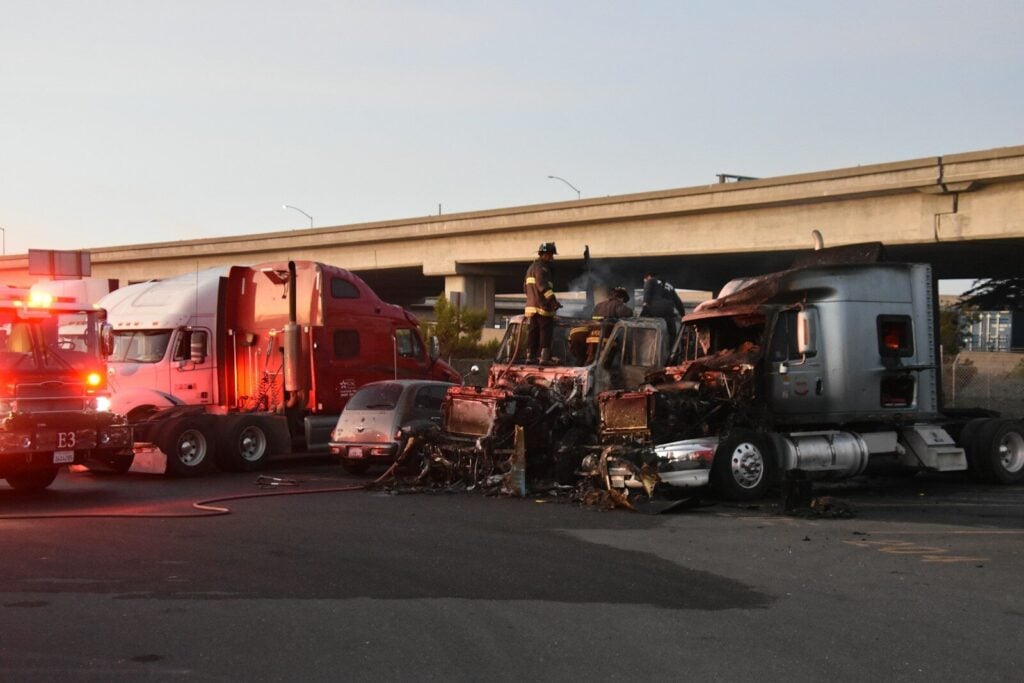
When two vehicles collide, the blame usually falls on a single driver. A crash involving an 18-wheeler operates by completely different rules. Your lawyer isn’t just investigating the person behind the wheel; they are also examining the trucking fleet, the freight loaders, and the brake manufacturer.
Because multiple companies could share fault, securing legal funding for multi-party commercial vehicle lawsuits is often the only way to stay afloat while massive corporations point fingers at each other.
Commercial insurance companies intentionally use this confusion as a weapon to force you into accepting a quick, cheap settlement. They rely on a “starve-out” tactic, knowing you have bills to pay while the legal process faces massive delays due to:
- Federal regulation checks on the driver’s hours of service
- Multi-party liability disputes between various corporate insurers
- Black box data retrieval from the semi-truck’s computer
- Severe injury monitoring to properly calculate your long-term medical needs
Using litigation financing for commercial vehicle accidents neutralizes this unfair advantage by giving you immediate financial breathing room. A catastrophic injury case can easily take two to three years to fully resolve.
While your legal team builds a bulletproof argument, completing a semi-truck crash cash advance application buys you the time required to outlast the trucking company’s deep pockets and get the money you actually deserve.
But what happens to this financial bridge if your lawyer ultimately loses the case? Non-recourse funding completely protects your personal assets from that worst-case scenario.
The ‘No-Risk’ Guarantee: How Non-Recourse Funding Protects Your Personal Assets
Taking a cash advance while drowning in medical bills sounds terrifying. Most victims immediately worry about what happens if their lawyer loses their case to the trucking company. With standard debt, walking away from court empty-handed leaves you stuck with a massive bill you cannot pay.
This is why reputable legal financing operates as non-recourse pre-settlement funding. In plain English, “non-recourse” means the funding company cannot pursue your personal money if your lawsuit fails. They take 100% of the financial risk. If the judge rules against you, you keep the cash advance and owe the lender absolutely nothing.
A major difference between lawsuit loans vs traditional bank loans is what is actually at stake. When you swipe a credit card to buy groceries, banks can aggressively come after your home or future wages if you fall behind on payments. Conversely, the only real risks of taking pre-settlement funding for injury claims involve receiving a smaller portion of your final settlement check. Your personal assets remain completely untouchable.
Because your personal property is fully protected, this option offers incredible peace of mind during a stressful time. The funding company only gets paid out of the settlement money they help you wait for. Since your personal bank account is never part of the repayment equation, applying for this bridge is completely different from visiting a bank. Your settlement potential is the only collateral that matters, allowing you to skip the credit check entirely.
Skip the Credit Check: Why Your Settlement Potential is the Only Collateral That Matters
Traditional banks scrutinize your credit score and employment history to ensure you can repay a standard loan. Figuring out how to qualify for truck accident legal funding is completely different. Because this is a cash advance against your case, lenders aren’t looking at your personal bank account. Your future settlement acts as the only collateral. This means a low credit score or recent job loss will never disqualify you from getting the immediate financial help you need.
Instead of asking for pay stubs, the funding company simply requests basic case documents from your lawyer. To evaluate the strength of your claim, they are looking for three crucial factors:
Clear liability: Evidence like police reports showing the commercial truck driver was primarily at fault for the crash.
Sufficient insurance coverage: Proof of the trucking company’s commercial policy limits, which guarantee the money is there to pay your eventual claim.
Documented physical injuries: Medical records detailing your condition, which is especially important when securing pre-settlement funding for catastrophic truck injuries.
Knowing this, you might wonder: how much can I borrow against my truck accident settlement? Reputable lenders typically approve a maximum advance of 10% to 20% of your estimated final payout. If your lawyer expects a $100,000 settlement, you could safely receive up to $20,000 today. This conservative limit ensures you aren’t left empty-handed when the case finally resolves. However, you must carefully review how this borrowed money grows through interest and fees while your lawyer fights the trucking company.
The True Cost of Waiting: Calculating Interest and Fees Before You Sign
Getting a cash advance keeps a roof over your head, but that relief comes with a price tag. When reviewing interest rates for truck accident settlement loans, you must understand the critical difference between simple and compounding interest. Simple interest charges a flat rate only on the original amount you borrowed, while compounding interest charges you on the original amount plus the interest that has already piled up. A loan that compounds monthly will grow much faster than one that compounds annually, quickly eating into your final payout while your lawyer fights the trucking company.
To protect your future money, you should always apply the “Minimum Borrowing Rule.” This means taking out only the exact amount required for covering living expenses during truck accident litigation, like rent or groceries. For example, if you borrow $5,000 at a high compounding monthly rate, that debt could easily double by the time a complex commercial crash case settles two years later. By keeping your advance as small as possible, you guarantee that the majority of the settlement stays in your own pocket when you finally win.
Finding reputable lawsuit funding companies requires you to look past the promise of fast cash and carefully read the fine print. Before signing any agreement, run through this Borrower’s Checklist:
- Check for compounding frequency: Look for simple interest or rates that compound yearly, never monthly.
- Ask about flat fees: Ensure you know exactly what the lender charges for processing the advance.
- Verify no hidden application costs: Trustworthy lenders will never charge upfront fees just to review your case.
Protecting your payout starts with understanding these costs, equipping you to spot predatory lenders and choose a reliable legal funding partner.
Spotting the Sharks: 3 Questions to Ask Before Choosing a Legal Funding Partner

Desperation makes you a target when seeking emergency legal funding for 18-wheeler collisions. Unethical lenders know you need cash immediately to keep your life afloat, and they might try to hide predatory terms disguised as quick help. Your best defense is spotting the ultimate red flag: upfront application fees. Legitimate companies review your case for free, absorbing that cost because they only get paid if you win. If someone asks for cash just to process your paperwork, walk away.
Simplifying the process of finding reputable lawsuit funding companies requires checking for established industry credentials. The gold standard is membership in the American Legal Finance Association (ALFA). ALFA-certified lenders are bound by strict ethical guidelines, ensuring complete fee transparency and zero hidden charges. Choosing an ALFA member guarantees you are working with a regulated professional, rather than a shady operation trying to capitalize on your crash.
Even with a certified lender, your attorney remains your ultimate safety net during the pre-settlement funding application process for plaintiffs. Trustworthy funders require direct collaboration with your lawyer to ensure the advance fits your specific case strategy. With your attorney’s approval protecting you from overborrowing, you are fully prepared to take control of your recovery and secure reliable legal funding.
Take Control of Your Recovery: A 4-Step Action Plan for Secure Legal Funding
You no longer have to choose between paying rent and accepting a low-ball settlement. By understanding the role of legal funding in commercial insurance disputes, you can successfully transition from financial panic to focused recovery. This financial bridge buys your attorney the crucial time needed to fight massive trucking corporations.
To secure funding safely, simply calculate your essential expenses, compare reputable companies, and review the terms with your lawyer. Discussing pre-settlement funding with your legal team today ensures you remain in the driver’s seat of your financial future.


-

 Resources5 years ago
Why Companies Must Adopt Digital Documents
-

 Resources4 years ago
A Guide to Pickleball: The Latest, Greatest Sport You Might Not Know, But Should!
-

 Resources1 year ago
50 Best AI Free Tools in 2025 (Tried & Tested)
-

 Resources1 year ago
Get Paid $5000+ a month to write : Discover 30 Spectacular Websites That Reward Your Writing Effort