Resources
The $5 CRM Challenging the SaaS Pricing Model

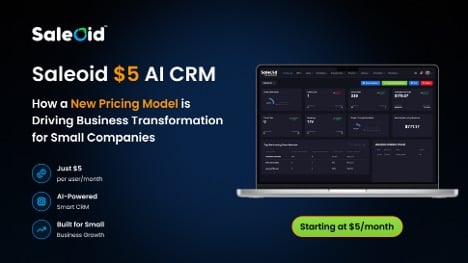
Small businesses depend on software to manage sales, marketing, customer service, and daily tasks. These tools once gave them affordable access to technology used by larger companies. Over time, useful features moved into higher tiers and per-user charges increased the bill. Contracts and paid add-ons also made costs harder to understand.
CRM software is a clear example of this problem. A growing business needs a reliable place to manage leads and customer activity, but many platforms become costly when a team adds users, automation, reports, or AI tools.
Saleoid is taking a different approach. Its AI CRM software costs $5 per month when billed over a two-year term. The company is not only offering a lower-priced CRM. It is also questioning why small businesses should pay high monthly fees for the customer tools they need to grow.
How SaaS Pricing Became More Expensive
Software subscriptions gave small businesses an alternative to buying costly programs. A company could pay monthly and start quickly. As businesses stored more data and trained staff on one platform, moving became difficult. Changing products meant transferring records, rebuilding processes, and training the team again.
Lower tiers began offering fewer useful tools, while automation, reports, permissions, and AI moved into higher-priced plans. Costs also rose each time a team added a user. The result is a difficult choice for small businesses. They can pay for a product built for a larger company, or use a basic plan that may not include the tools they need.
Why High CRM Pricing Hurts Small Businesses
CRM platforms help businesses store contact details, track messages, assign tasks, schedule follow-ups, and understand sales activity. These actions are important for companies of every size.
However, CRM pricing often makes these tools harder for small teams to afford. Many well-known platforms charge between $25 and $150 per user each month at plans that include useful sales features. A five-person team may pay hundreds of dollars a month for its CRM before adding other software.
Businesses that cannot support this cost often use spreadsheets, shared inboxes, calendars, and notes. Problems appear as the contact list grows.
Leads may not receive a reply. Customer details may be stored in the wrong place. Two team members may contact the same person without knowing it. Important history may be lost when an employee leaves.
A good CRM for small businesses should help prevent these problems without creating another major expense. Small companies need useful tools, not reduced products that leave out key features.
Why AI Has Not Made CRM More Affordable
AI can help CRM users sort leads, review customer activity, and decide where to focus. These tools can save time for small teams that have limited staff. Yet many providers placed AI in premium plans or sold it as an extra feature. Entry-level plans still had limited automation, contacts, and reports.
Saleoid is trying to close that gap by including AI lead scoring in its $5 plan. The goal is to help users find contacts that may need attention first. People still handle customer conversations and decisions, but the software can make it easier to choose where to start.
What Saleoid Includes for $5 a Month
Saleoid’s plan costs $5 per month when billed over two years. It includes tools that help a small team manage contacts, communication, and daily sales work.
Users receive:
- AI-powered lead scoring
- Email and SMS tools
- Appointment scheduling
- Email verification
- Email open and click tracking
- Email scheduling
- Custom dashboards and filters
- Roles and permissions
- Tasks, notes, and notifications
- A complete customer view with activity history
- Five automations with history
The base plan supports 2,500 contacts and companies, one user, and three accounts. These accounts include one main account and two sub-accounts.
Additional users cost $6 each. This lets a business add team members when needed instead of paying for several users from the start. Saleoid’s lower price is aimed at startups and small companies that want AI, automation, tracking, and reporting without a large software bill.
Paying Only for the CRM Tools You Need
Most CRM companies place features into fixed plans. A business may need one advanced tool but have to buy a more expensive plan that includes many features it will never use. Saleoid offers optional apps for $1 each. A customer can add a specific integration, report, or other tool without changing the entire plan.
This keeps spending closer to actual use. A small company can begin with the base CRM, then add an app when there is a clear reason for it. The business does not have to guess what it may need in the future or pay for unused tools today.
The model also makes costs easier to follow:
- The base plan is $5 per month over a two-year term
- Each additional user costs $6
- Each optional app costs $1
Clear pricing helps a business plan its software budget and understand how the cost will change as the team grows.
Why Saleoid Can Work as a CRM for Startups
A startup often begins with one founder managing every lead. Customer details may be kept in a spreadsheet, while meetings are stored in a calendar and follow-ups sit in an inbox. This approach becomes harder to manage once more leads arrive or another person joins the team. A shared CRM for startups can help the business create better habits early.
Saleoid gives startups one place to record customer activity, assign work, schedule contact, and track follow-ups. Lead scoring can help the team focus on important opportunities, while automation can handle some repeated actions.
The low price means a startup can begin building clear customer records while the business is still small. As the company grows, it can add users for $6 each and choose extra apps for $1. This allows the CRM to grow in smaller steps alongside the business.
Finding the Best Affordable CRM for a Small Team
Price alone does not make a product the right choice. A business should compare features, contact limits, users, communication tools, and automation.
When looking for anaffordable CRM, a small team should ask:
- Does the plan include the features we use every day?
- Are important tools placed behind a higher tier?
- How much will extra users cost?
- Can we add one feature without changing plans?
- Are the contact and automation limits suitable?
- Does the billing term work for our budget?
Saleoid may suit a business that needs email, SMS, scheduling, lead scoring, customer history, and simple automation at a low starting price. Larger teams should also calculate the cost of extra users and apps before choosing a plan.
What Saleoid’s $5 CRM Means for SaaS Pricing
Saleoid’s price raises a wider question about business software. Should small companies have to pay for large bundles to access a few useful tools?
The $5 plan suggests another option. A software company can offer a useful base product at a low price, then let customers add features as their needs change. This gives the buyer more control and makes the total cost easier to understand.
If the model works, other providers may face more pressure to explain high prices, feature limits, and forced plan upgrades. Small businesses may also become less willing to accept plans that charge for many tools they do not use. Saleoid is making a simple case: capable software can serve small businesses without copying enterprise pricing.
A Lower-Cost CRM Built for Small Business Growth
The cost of business software has risen as products have added more plans, user charges, and paid features. Small companies often pay too much or continue using manual systems that make customer work harder.
Saleoid $5 CRM includes lead scoring, communication tools, tracking, dashboards, permissions, tasks, customer history, and automation. Extra users and apps have clear prices.
For a business comparing a best affordable CRM, the value of Saleoid comes from both price and access. It gives small teams useful tools at the stage when good customer records and steady follow-ups can make the greatest difference.
The larger message goes beyond one CRM. Small businesses should not have to choose between expensive software and manual work. Saleoid’s pricing shows that there may be room for a simpler and fairer way to sell business software.




-

 Resources5 years ago
Why Companies Must Adopt Digital Documents
-

 Resources4 years ago
A Guide to Pickleball: The Latest, Greatest Sport You Might Not Know, But Should!
-

 Resources1 year ago
50 Best AI Free Tools in 2025 (Tried & Tested)
-

 Resources12 months ago
Get Paid $5000+ a month to write : Discover 30 Spectacular Websites That Reward Your Writing Effort