News
Humanoid Robots: Why the Market Is Moving From Research Labs to Real Products

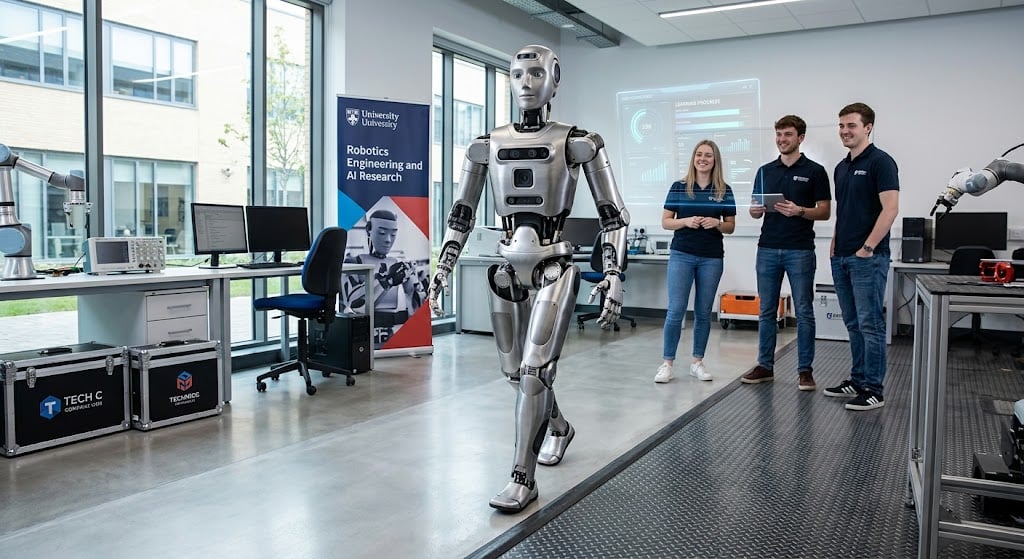
Why Humanoid Robotics Is Attracting Startups and Investment
Humanoid robots are moving from capital-intensive science experiments into viable commercial hardware categories. Venture capital firms and technology conglomerates invested heavily in robotics infrastructure over recent years, driven by shortages in industrial labor and breakthrough progress in spatial artificial intelligence.
According to research published by IEEE Spectrum, the shift toward general-purpose hardware allows a single robot framework to perform multiple tasks, replacing single-purpose automation machinery that requires expensive retooling. Startups can now purchase off-the-shelf bipedal platforms, layer proprietary neural networks on top, and deploy applications in months rather than spending years building joint actuators from scratch.
How Humanoid Robot Prices Are Beginning to Change
Historically, bipedal platforms cost anywhere from hundreds of thousands to over a million dollars per unit, limiting ownership to elite university departments and government labs. Today, scale manufacturing techniques, widespread availability of brushless motors, and standardized harmonic drives are driving unit costs down dramatically.
When discussing the emergence of more affordable or accessible humanoid platforms, hardware like the Unitree R1 Basic humanoid robot demonstrates how full bipedal locomotion is becoming available at entry-level price points that allow mid-sized tech companies and independent research groups to test hardware hands-on.
| Platform Tier | Average Price Range | Typical Actuator Count | Primary Target Audience |
| Entry-Level / Educational | $15,000 – $35,000 | 18 – 25 DOF | High schools, hobbyists, light prototyping |
| Advanced Research / SDK | $35,000 – $80,000 | 25 – 35 DOF | Universities, software labs, AI developers |
| Industrial / Enterprise | $100,000+ | 35+ DOF (High Payload) | Manufacturing, logistics, factory automation |
Entry-Level Humanoids Versus Research Platforms
Choosing the right robotic hardware depends heavily on payload demands, computing requirements, and joint flexibility. Entry-level humanoids focus primarily on walking stability, simple sensor telemetry, and basic gesture execution, whereas higher-tier platforms offer dynamic balancing, high-torque joint movement, and full developer control over inverse kinematics.
Key Factors Distinguishing Hardware Tiers:
- Joint Torque and Speed: Higher-end platforms withstand higher impacts and carry heavier physical payloads.
- Sensor Integration: Advanced units integrate depth cameras, LiDAR modules, and joint-torque feedback sensors out of the box.
- Onboard Compute: Enterprise units run heavy neural networks locally on high-performance edge computing hardware.
AI, Vision, and Embodied Intelligence
The defining leap for modern bipedal systems is embodied AI—the concept of combining visual processing, language understanding, and physics motor controls into cohesive foundation models. Rather than writing thousands of lines of hardcoded joint trajectories, engineers feed video demonstrations into reinforcement learning pipelines.
Robots use stereo cameras and depth sensors to map real-time environments, calculate step geometry, and re-balance when bumped or encountering uneven terrain. Modern spatial AI frameworks enable humanoids to translate direct natural language requests (“pick up the red mug”) into complex motor trajectories.
Why SDK and ROS Access Matter to Developers
Software control remains the true differentiator in modern hardware. Raw joint actuators are useless without robust software development kits (SDKs) and integration with the Robot Operating System (ROS2).
When discussing research, education, programming, SDK access or robotics development, platforms such as the Unitree R1 EDU Standard give engineers low-level C++ and Python API access, enabling researchers to build custom walking algorithms, test reinforcement learning models, and analyze telemetry data in real time.
Pros and Cons of Open Software Access
- Pros: Accelerated software development cycles, access to open-source community libraries, rapid debugging via virtual simulation environments like Isaac Sim.
- Cons: Requires higher technical expertise to implement safely, potential to bypass hardware joint limits if custom controllers are poorly tuned.
Dexterous Hands and Robotic Manipulation
While bipedal walking solves spatial navigation, hands solve useful work. Early bipedal platforms featured simple suction cups or rigid parallel clamps. Current hardware focuses heavily on multi-fingered, force-sensitive hands capable of manipulating fine objects, handling delicate tools, and operating door handles.
When discussing more advanced humanoid manipulation, dexterous hands, embodied AI or higher-end research platforms, machines like the Unitree G1 humanoid robot highlight how integrating tactile sensors and high-degree-of-freedom hands allows robots to interact safely with complex, unstructured human spaces.
Research and Education Applications
Academic institutions use bipedal robotics platforms to teach students multidisciplinary engineering concepts spanning mechanical design, control theory, spatial computing, and computer vision.
According to educational technical reports from MIT Technology Review, access to real physical hardware drastically improves student learning outcomes compared to running software purely inside virtual computer simulators.
Steps to Integrate Bipedal Platforms into Robotics Curricula:
- Set up simulated virtual testing environments using digital twin frameworks.
- Test basic inverse kinematics and gait planning algorithms inside the simulator.
- Deploy verified code to low-power physical hardware for low-speed testing.
- Integrate vision-based object pickup tasks using ROS2 node architectures.
Industrial and Commercial Opportunities
Outside of educational settings, businesses test humanoids for facility inspection, warehouse material handling, and security monitoring. Bipedal designs fit into environments engineered specifically for human workers—climbing stairs, navigating narrow aisles, and opening standard doorway latches without requiring expensive building modifications.
Practical Deployment Examples
- Logistics & Warehousing: Moving small boxes from conveyor belts to sorting racks where fixed robotic arms cannot reach.
- Facility Inspection: Walking remote thermal scanning pathways through sub-stations or chemical plants.
- Retail & Hospitality: Guiding customers through physical retail spaces or managing inventory checks during off-hours.
Common Implementation Mistakes
- Expecting Out-of-the-Box Human Versatility: Assuming a robot can immediately replace a human worker across varied, unpredictable tasks.
- Ignoring Physical Safety Boundaries: Deploying bipedal units without installing physical safety cages or dynamic software kill-switches during early testing phases.
- Underestimating Battery Downtime: Failing to account for charging cycles and battery replacement workflows in daily operational schedules.
Current Limitations of Humanoid Robots
Despite rapid hardware improvements, bipedal platforms are far from perfect. Bipedal balance requires constant sensor monitoring and rapid motor adjustments, consuming significant electrical power compared to traditional wheeled mobile robots. Additionally, sudden mechanical shock from unexpected falls can damage gearboxes and joint encoders, leading to maintenance downtime.
Battery Life, Safety, and Reliability
Power management remains a primary technical bottleneck. Most modern bipedal systems operate for one to two hours under normal load conditions before requiring a manual battery swap or returning to a dock.
Safety protocols are similarly critical. As robots become heavier and stronger, dynamic force-limiting control is required so that any unintended contact with human personnel immediately pauses joint movement.
What Startups and Businesses Should Evaluate Before Buying a Humanoid Robot
Purchasing physical hardware requires evaluating operational goals against technical constraints.
Pre-Purchase Checklist:
- Target Task Complexity: Determine whether the goal requires locomotion over stairs/obstacles or if a wheeled base suffices.
- Developer Skill Set: Verify that engineering teams have experience with ROS2, C++, and Linux-based hardware environments.
- Payload and Weight Specs: Ensure the chosen robot’s joint torque ratings match the physical lifting requirements of your application.
- API and Simulation Support: Confirm the manufacturer provides accurate URDF physics models for testing code in simulation before physical deployment.
Where the Humanoid Robotics Market May Go Next
As hardware platforms continue to standardize, market value will increasingly shift toward specialized software capabilities. The future of bipedal robotics rests on software models that transfer simulation training directly to physical machines with minimal recalibration.
With accessible hardware now available to developers worldwide, the ecosystem is set for rapid iteration, bringing general-purpose robotics out of science fiction and into daily operational use.




-

 Resources5 years ago
Why Companies Must Adopt Digital Documents
-

 Resources4 years ago
A Guide to Pickleball: The Latest, Greatest Sport You Might Not Know, But Should!
-

 Resources1 year ago
50 Best AI Free Tools in 2025 (Tried & Tested)
-

 Resources1 year ago
Get Paid $5000+ a month to write : Discover 30 Spectacular Websites That Reward Your Writing Effort