Blogs
5 Best Mobile Proxy Providers in 2026: Protect Your Network Footprint


Data collection changed this year. Target servers now inspect JA4 TLS fingerprints and post-quantum cryptography (X25519MLKEM768) before transferring a single byte of HTML. Standard server IP addresses drop instantly because they lack human behavioral signals. You need real cellular networks.
They rely on Carrier-Grade NAT (CGNAT) technology to bundle thousands of regular smartphone users under a single public IPv4 address. Platforms cannot restrict that node without cutting off access for everyday citizens, which generates exceptional trust scores.
Routing is only half the battle, though. Modern platforms evaluate your digital footprint synchronously. They check your connection region, then verify your billing address and phone number history. Buying these tools from disparate vendors causes instant profile flags. Here is a breakdown of each leading mobile proxy provider and where they actually fit.
Quick comparison: Who actually fits your workflow
Raw bandwidth is widely available as a basic commodity, but choosing the right mobile proxy provider dictates whether your sessions actually survive.
| Provider | Infrastructure Focus | Core Feature |
| CyberYozh App | Unified automation ecosystem | Integrates LTE/5G routing, virtual cards, SMS, and MCP-ready AI extraction |
| SOAX | Strict network routing | City and ASN-level network routing |
| ProxyEmpire | Rapid data cycling | Forced automatic IP rotation mechanics |
| IPRoyal | P2P sandbox testing | Crowdsourced nodes with unstable uptime |
| PrivateProxy | Basic static connectivity | Datacenter lines without cellular hardware |
1. CyberYozh App
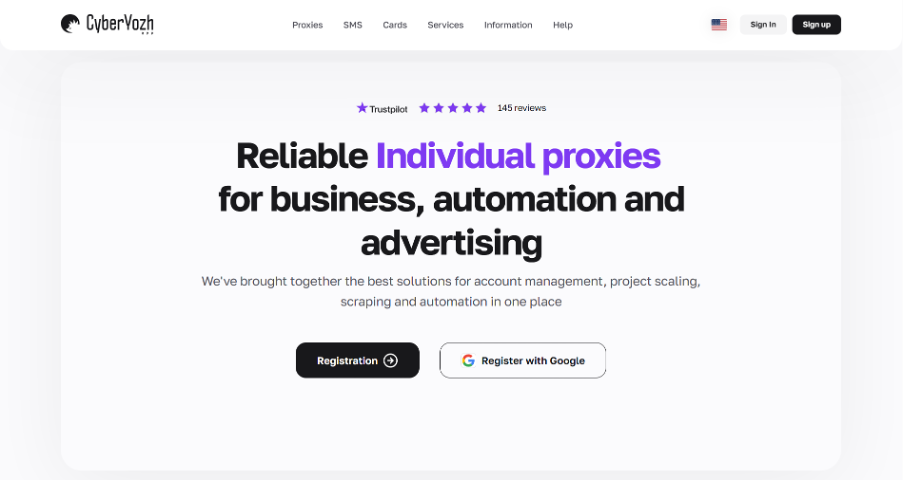
Mixing an IP from one vendor with a payment card from another usually breaks operational consistency. Platforms tend to flag these regional mismatches right away. CyberYozh App avoids this issue. It operates differently from a typical mobile proxy provider by functioning as a single integrated ecosystem. You manage your entire footprint in one single dashboard.
The platform aligns your network location directly with localized virtual cards and genuine ISP numbers for SMS verification. Their cellular nodes run on actual 4G/5G hardware, delivering a 99% success rate and 99.99% uptime. Pricing is structured transparently across four distinct infrastructure options:
- Mobile LTE/5G: From $1.70/day with unmetered bandwidth and full OS fingerprint protection for high-trust operations.
- Static Residential (ISP): From $5.29/month for dedicated residential lines with 99.9% uptime and natural traffic patterns.
- Rotating Residential: From $2.00/GB with access to a massive pool of 100M+ IPs across 195+ countries and sticky sessions up to 24 hours.
- Corporate Datacenter: From $1.77/month for dedicated lines with ultra-low latency and zero IP sharing.
Before connecting, their native Anti-Fraud Checker audits your setup using IPQualityScore and ThreatMetrix metrics. You see your exact risk rating and Abuse Velocity before launching a script. This pre-flight audit costs $0.15.
They support a wide range of protocols. You can route traffic using HTTP, SOCKS5, UDP, and the advanced VLESS/Xray protocol to mask your footprint heavily. The platform also features Yozh Scraper. This open-source extraction tool integrates the Model Context Protocol (MCP). It allows AI agents to command browser sessions directly, heal broken parsers autonomously, and generate clean Markdown optimized for LLM training.
- Unmetered cellular connections anchor long-term active sessions via API or manual setup.
- Virtual tokenized cards synchronize directly with your geographic network to match AVS and BIN data.
- Local ISP numbers include upfront reputation scoring to filter out blacklisted VOIP lines.
- Instant refunds for failed tests protect your initial budget during deployment.
- Zero traffic logs exist and private crypto payments require no KYC.
2. SOAX
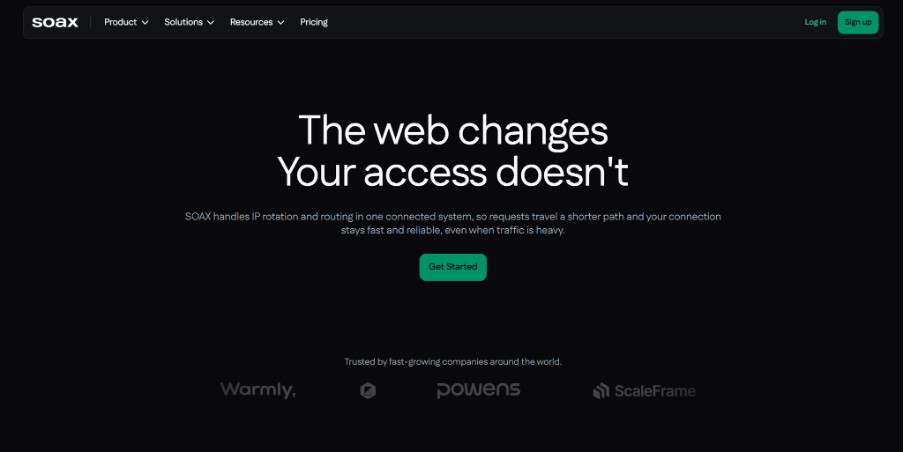
SOAX provides network routing with city and ASN-level targeting. Operators can adjust rotation settings from per-request changes to 60-minute sticky sessions.
The downside is that it functions strictly as a network pipe rather than a full-stack mobile proxy provider. Sourcing virtual cards and SMS lines from external vendors inevitably creates metadata conflicts. Mandatory KYC verification also creates a steep entry barrier for managing multiple operational profiles.
- Network routing reaches specific global cities.
- Rotation settings allow for timed connection intervals.
- Access requires passing mandatory identity verification checks.
- High financial barrier with entry packages starting at $200/month (Builder tier).
3. ProxyEmpire
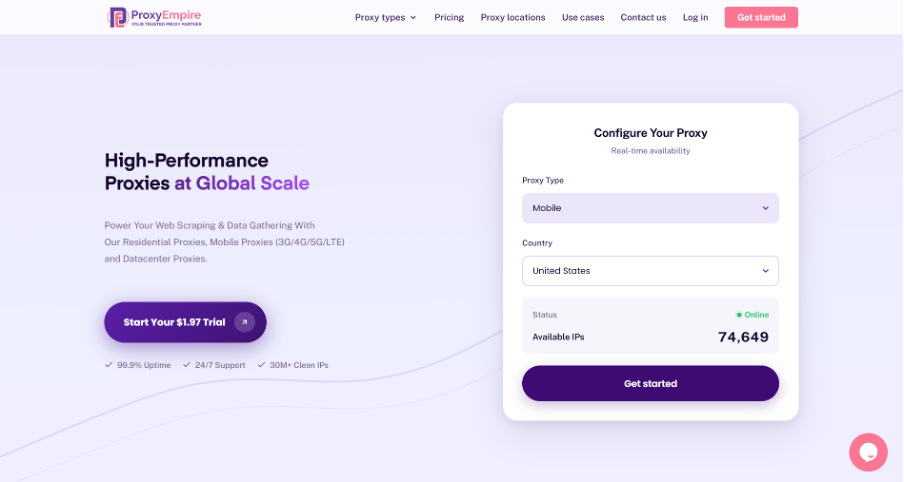
ProxyEmpire relies on rapid IP cycling mechanics. The system rotates your connection automatically with each new request. They also carry unused bandwidth into the next billing cycle.
The trade-off is session stability. Warmed profiles require persistent connections to build history. Rapid network hopping triggers security filters, making this cycling model ill-suited for managing long-term operational profiles.
- Automatic rotation forces a new IP on every request.
- Unused data rolls over into the subsequent billing cycle.
- Mobile bandwidth starts from $4.50/GB, while dedicated cellular lines run upwards of $125/month.
4. IPRoyal
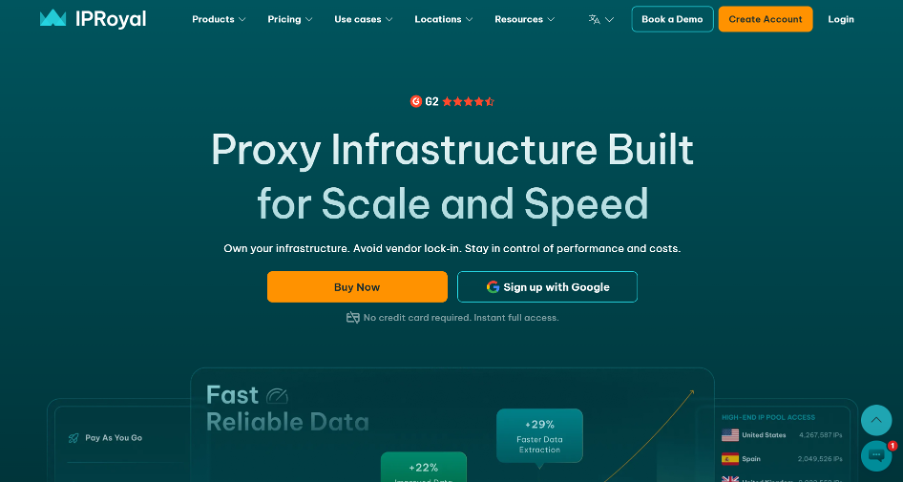
IPRoyal keeps entry costs low by utilizing crowdsourced P2P networks. Their traffic credits do not expire. This model only serves the most basic testing environments with minimal data requirements.
Production environments might expose structural limits here. Peer-to-peer nodes drop offline unpredictably. If a residential host turns off their router, you lose your active connection. Their cellular pricing also relies on rigid daily or monthly limits, restricting flexibility when scripts only require brief execution windows.
- Traffic credits remain active indefinitely.
- Entry testing runs on crowdsourced residential pools from $1.75/GB.
- Cellular lines demand rigid commitments, starting at $5.20/GB or $117/month for dedicated access.
- P2P structure introduces unexpected connection drops.
5. PrivateProxy
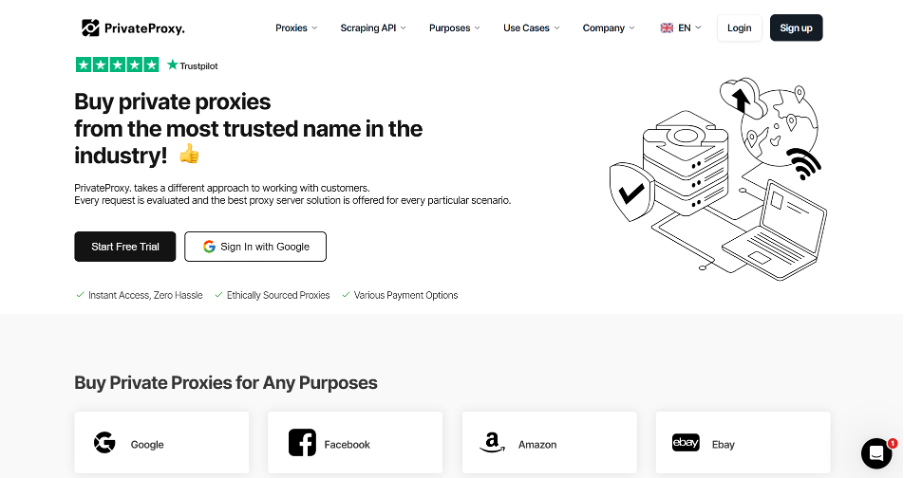
PrivateProxy provides legacy datacenter lines and static residential endpoints. They offer unmetered bandwidth allocations for basic scraping scripts. You get instant port activation to handle simple WebSocket connections.
The problem is the distinct lack of authentic cellular hardware. Overcoming regional limits today requires the high trust scores of a real 5G device. Standard datacenter inventory fails modern behavioral analytics checks. Target servers detect the hosting environment and restrict access immediately. You need genuine cellular signals to operate on fortified platforms.
- Unmetered bandwidth handles heavy data transfers.
- Instant activation speeds up deployment times.
- Datacenter lines start from $3/month, with static residential options from $5/month.
- Architecture completely lacks authentic cellular hardware with CGNAT coverage.
How should you set up your infrastructure
When choosing a mobile proxy provider, avoid fragmenting your stack. Sourcing nodes, payment cards, and SMS activations from separate vendors shatters metadata consistency. Cross-referencing between network origin and billing ZIP codes triggers flags. Centralizing routing, cards, and numbers in one dashboard eliminates this risk.
Why are hardcoded scrapers failing
Hardcoded CSS selectors break constantly because target layouts mutate. Your mobile proxy provider should ideally combine trusted routing with resilient parsing. Using tools equipped with MCP endpoints allows AI agents to manage browser sessions server-side. They heal broken parsers autonomously and extract data without fragile middleware.
Should you check your IPs before connecting
It is rarely a good idea to connect blindly. Most standard pools distribute unchecked addresses burdened with spam histories. Use native fraud scoring tools to evaluate your hardware parameters and Abuse Velocity before launching scripts. Checking your footprint exactly as a compliance algorithm evaluates it keeps campaigns active.
FAQ: Common infrastructure questions
What dictates the best mobile proxy provider in 2026?
Professionals require a combination of optimal pricing, high speed, massive uptime, and clean IPs with maximum trust rates. Essential features include UDP, SOCKS5, and VLESS support. Tying your network region directly to your virtual cards and local phone numbers keeps your data fully consistent. This approach prevents security algorithms from detecting behavioral mismatches.
How do premium networks handle automated sessions?
Constant rotation destroys active profiles. Managing bulk profiles requires prolonged, stable sessions on real 4G/5G carrier IPs. Top networks provide sticky sessions with unmetered traffic. This anchors isolated cookies so the connection accurately mirrors a standard smartphone user.
Why do profiles drop even on clean connections?
Algorithms evaluate the identity stack synchronously. A flawless cellular connection fails if the attached financial metadata looks suspicious. You must align your entire digital footprint to restore stable access to your targeted platforms.
Can AI agents effectively utilize these networks?
Yes. Modern open-source scrapers now feature native Model Context Protocol (MCP) endpoints. This enables AI agents to manage browser sessions directly. They can heal broken parsers autonomously using LLMs and output clean Markdown without triggering automated restrictions.



-

 Resources5 years ago
Why Companies Must Adopt Digital Documents
-

 Resources4 years ago
A Guide to Pickleball: The Latest, Greatest Sport You Might Not Know, But Should!
-

 Resources1 year ago
50 Best AI Free Tools in 2025 (Tried & Tested)
-

 Resources1 year ago
Get Paid $5000+ a month to write : Discover 30 Spectacular Websites That Reward Your Writing Effort