Blogs
How Laser Cleaning Technology is Shifting the Future of Smart Manufacturing

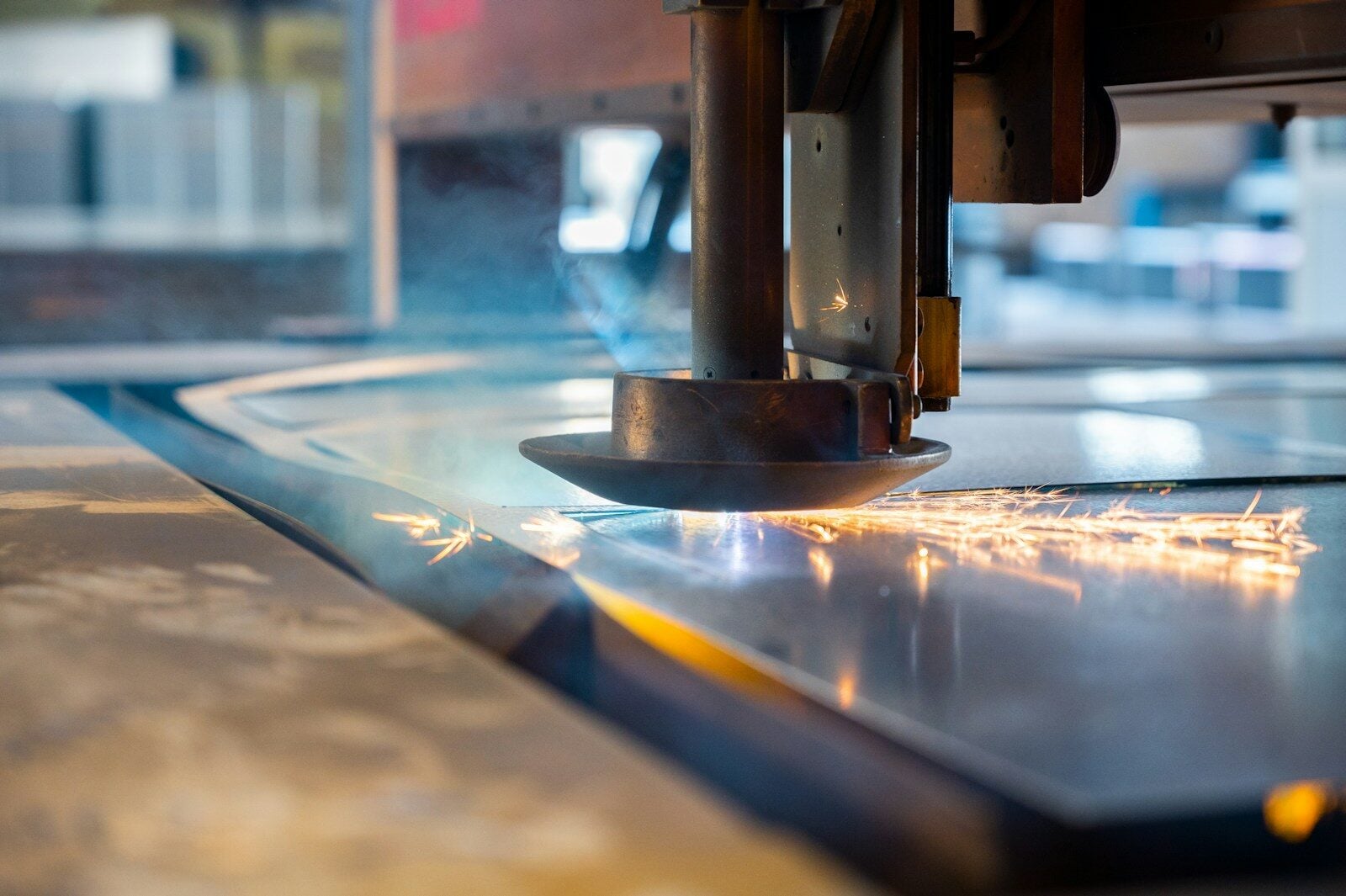
Innovation is constantly changing the manufacturing landscape with rapid automation, increased production efficiency, and new sustainability priorities. All companies, regardless of industry, want to achieve their goals cleaner, faster, and with less energy consumption. One way to reach these goals is through the use of laser cleaning systems.
Laser cleaning, a versatile surface preparation technique, is leading the 21st century automation of factories, regardless of the industry. The core principles of Industry 4.0 are driving companies to rethink their processes and use advanced laser systems, such as the HANTENCNC 300w laser cleaning machine, for maintenance, material prep, and industrial cleaning.
The Move Toward Cleaner Industrial Solutions
The traditional ways of industrial cleaning are chemical, abrasive, and labor intensive. The drawbacks of these antiquated systems are extensive. Chemical waste, labor costs, and new restrictions on the impact of business operations on the environment are forcing industry to find better alternatives.
These older techniques of cleaning industry surfaces are being disrupted by laser cleaning technology. Focused laser energy, rather than an abrasively rough substance, is used to clean metal surfaces of rust, oil, paint, and coatings with great precision with less effort.
Backed by investors and expected by governments and customers, companies can no longer ignore operational sustainability and run a clean business while keeping their productivity levels high.
Smarter Manufacturing Requires Smarter Maintenance
The rapid progress of automation, robotics, and the ability to gather and interpret data has brought about the design of advanced manufacturing systems. Along with the evolution of manufacturing systems is the need for high efficiency maintenance strategies.
Laser cleaning helps prevent the accumulation of contaminants on sensitive mechanical parts of factory equipment, helps support a factory’s predictive maintenance model, and can be used to automate cleaning. Once integrated, laser systems will help increase the efficiency of robotic manufacturing cells by reducing unplanned interventions.
The automated systems that comprise smart factories require a corresponding change in maintenance systems to assist with factory automation. The old systems that relied on inefficient maintenance and added costs to the bottom line are being replaced by systems that incorporate advanced manufacturing technologies and support automation.
Laser cleaning systems are a perfect fit because of their combination of precision, flexibility, automation, and low operational costs.
The Environmental Value of Laser Cleaning
Of all the innovations that are transforming the industrial landscape, laser cleaning is one of the most noteworthy. Governments are placing new restrictions on the environmental sustainability of manufacturers, and companies are developing Environmental, Social, and Governance (ESG) initiatives to remain in compliance.
Maintaining laser cleaning systems is expensive. Cleaning with traditional methods leaves behind residue and airborne contaminants that produce secondary pollution. Traditional cleaning also raises ongoing disposal and compliance costs.
Laser cleaning systems help reduce the need for consumables, secondary waste, and clogging residue. This gives laser cleaning an advantage over other systems by giving manufacturers and industries focused on sustainability an edge over the competition.
Countries are enacting more aggressive Carbon budgets and emission goals to address climate change. Businesses that invest in the sustainability of their manufacturing systems are more likely to retain a competitive advantage over the long term.
Integration of Automation and Robotics
Possibly the biggest advancement in industrial technologies yet is the marrying of the robotics and laser systems. Automated laser cleaning stations are being utilized at an increasing rate in advanced manufacturing environments where both speed and consistency are two key requirements.
In conjunction with robotic arms, laser cleaning tools are capable of performing cleaning tasks autonomously. This advantage minimizes the burden of labor and improves the safety of industrial environments, which are often the most dangerous of working environments.
For both the entrepreneur and the manufacturing startups, the integration of industrial robotics, automation software, and AI monitoring systems is creating more avenues of opportunity.
Future factories may be equipped with connected laser cleaning systems that interact with sensors and production management systems in real time. This will increase the productivity of the entire factory systems by enabling maintenance of equipment to be done automatically before it fails.
With the rise of autonomous manufacturing systems, integrated smart control systems that provide efficient manufacturing services are being created. Laser cleaning technology is quickly becoming an integral part of this movement.
Development and Implementation in Various Industries
The use of laser cleaning technology is rapidly moving outside its niche industrial areas.
Laser systems are used for both surface preparation and weld cleaning in automotive manufacturing. Precision cleaning is used in aerospace manufacturing for sensitive components. Laser solutions for Rust removal are being developed within the laser cleaning technology for corrosion control in shipbuilding. Laser cleaning technologies are being developed for use in the cleaning of the turbines and everything in the infrastructure of industrial and even renewable energy.
The expanded application uses of laser cleaning technology are providing ample opportunity for the specialized industries that have manufacturing concerns. The demand for industrial automation, equipment servicing, and smart manufacturing systems is growing and creating opportunities for startups in this space.
As hardware becomes cheaper and system performance improves, we may see the adoption of laser cleaning technology by mid-sized manufacturers.
Innovation Beyond Cleaning
The potential of laser technology extends further than maintenance and rust cleaning. The sophisticated configuration of lasers may one day be able to integrate with artificial intelligence, digital twins, quality control systems, and smart analytics.
One potential scenario is a laser cleaning tool that, using machine vision, detects the characteristics of the cleaning surface and adjusts the laser power accordingly. Factories could use analytics to clean less often, thus optimizing energy use and potentially predicting equipment failure before it occurs.
AI, lasers, and robotics are a system within themselves and are a reflection of the current trend occurring in the manufacturing industry. The focus is shifting away from machinery, and a connected system of tools and technologies that improves efficiency is becoming the primary area of investment.
The evolution of equipment such as the HANTENCNC 300w laser cleaning machine, illustrates the advance of integrated and intelligent tools in the manufacturing industry.
The Startup Opportunity in Industrial Innovation
Though there is a concentrated focus by many entrepreneurs on consumer products, fintech, and software, the innovative ecosystems surrounding industrial technology are becoming the most valuable sectors.
The new tools and systems advanced by the intersection of sustainable manufacturing and innovative technologies will be a valuable investment. Industrial innovation that is specifically designed around sustainability and the reduction of the carbon footprint of a particular industry is attractive to investors due to the anticipated impact on the environment and climate.
Laser cleaning technology is at the convergence of:
– Smart manufacturing
– Industrial automation
– Sustainable production
– Robotics
– Energy efficiency
– Predictive maintenance
This combination presents an opportunity for entrepreneurs to innovate and establish a sustainable technology-based business.
The Future
The manufacturing sector is under constant change as industries align with the regulators and adapt to digital transformation and new global players. The tools that manufacture on demand in an efficient and sustainable way will define the next era of industrial growth.
Laser cleaning technology is more than a maintenance tool; it is a shift in the right direction toward smarter, cleaner, and connected manufacturing networks.
Sustainable innovations are on a trajectory toward the next industrial revolution, and the laser rust removal machine is an example of how the current factory model will be transformed more by automation than by manufacturing.



-

 Resources5 years ago
Why Companies Must Adopt Digital Documents
-

 Resources4 years ago
A Guide to Pickleball: The Latest, Greatest Sport You Might Not Know, But Should!
-

 Resources1 year ago
50 Best AI Free Tools in 2025 (Tried & Tested)
-

 Resources1 year ago
Get Paid $5000+ a month to write : Discover 30 Spectacular Websites That Reward Your Writing Effort