Artificial Intelligence (AI)
Beyond the First Prompt How AI Music Generation Is Becoming a Real Production Workflow

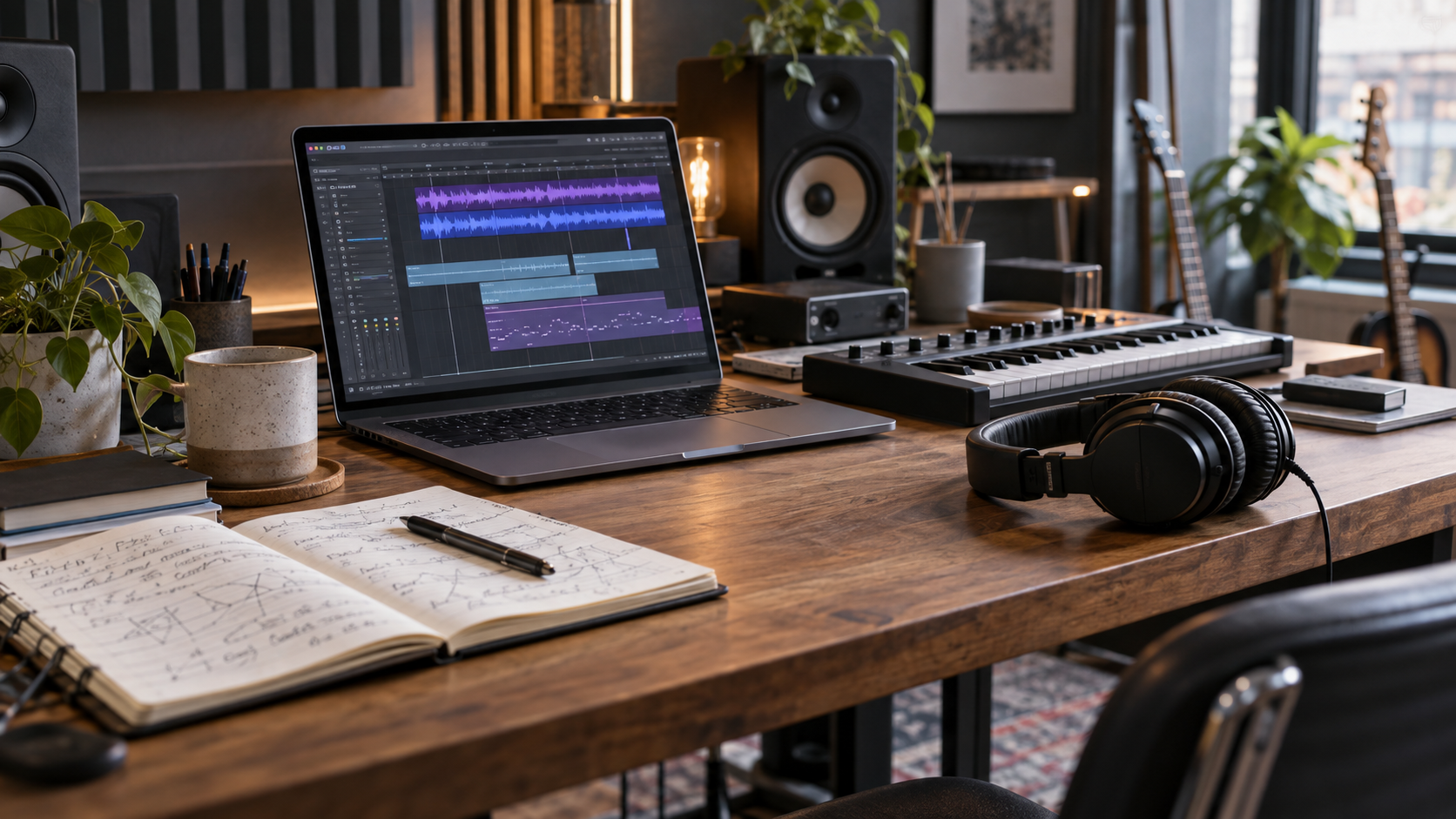
A video editor has a nearly finished cut, but the soundtrack is still wrong. One track is too busy under the narration. Another reaches its chorus before the key scene. A third has the right mood but ends twenty seconds early. The problem is no longer finding music. It is shaping music around the job it must do.
Editors know the struggle when a track sounds great on its own, but the narration gets completely buried halfway through. Generating a rough draft in seconds is no longer the hard part. The real challenge is making that piece work inside an actual edit. Platforms like TopMediai reflect this exact shift, focusing on real production needs instead of just handing you a finished MP3. The emphasis has officially moved from making the song to fixing it.
Why AI Music Generation Often Stalls After the First Draft
A year ago, any simple text prompt that spit out something vaguely musical felt like magic. Today, using a modern AI music generator is mostly about taking that first rough draft and tweaking its timing, stems, and structure until it actually fits your video timeline.
Prompting alone does not solve every mismatch. A phrase such as “warm cinematic electronic music” describes atmosphere, but it says little about narrative timing. A creator may need a restrained opening, a lift after thirty seconds and an outro that resolves cleanly beneath a call to action. Those requirements are closer to a creative brief than a genre label.
The first generation should therefore be treated as a direction, not a finished asset. Useful systems allow the creator to compare variations, preserve the strongest idea and change only what fails. Without that loop, every revision becomes another roll of the dice.
What Creators Need From an AI Music Generator
A usable AI music tool needs to support the practical realities of production, moving beyond basic genre selection into three core areas:
Fine-Grained Creative Control
Genre and mood still matter, but duration, vocal presence, tempo, instrumentation and the role of the track matter just as much. Background music for a tutorial should leave space for speech. A podcast intro needs an identity that arrives quickly. A game loop must repeat without drawing attention to the seam.
Flexible In-Line Iteration
Creators need ways to extend a promising track, generate a related version, test a new arrangement or use a reference to communicate a direction that is difficult to describe. These actions reduce the gap between accepting or rejecting a whole song. They turn generation into editing.
Commercial-Ready Licensing & Export
File format, commercial-use terms and a final human review all affect whether a track can move from a browser tab into a published project. The output must be checked for audible artifacts, awkward lyrics, unwanted resemblance and the terms attached to the chosen plan. “Royalty-free” is useful language, but it does not remove the need to read the license that applies to the account and project.
Case Study: Moving From Instant Generation to a Real Editing Workflow
TopMediai illustrates the industry shift from a plain prompt box toward an integrated creative workspace. Its music studio separates quick generation from custom and soundtrack-oriented modes, keeping reference, remix, and vocal tools close to the main timeline.
That integrated layout matters because creators rarely know every musical detail upfront. A quick brief might yield the right vocal character but the wrong arrangement. Keeping generation and revision in one environment turns raw outputs into a predictable, four-stage workflow:
Step 1: Draft a Production-Focused Prompt Brief
Start with the job rather than a list of adjectives. Define where the music will appear, how long it should run, whether speech needs space and where the energy should change. Mood and genre can then support those constraints instead of replacing them.
Step 2: Generate 3 to 4 Distinct Audio Benchmarks
Skip the tiny prompt adjustments for a moment. Try generating a few wildly different directions right out of the gate. Aim for one driven by heavy drums, one led by melody, and another acting as a quiet ambient background. It is much easier to pick what works when you compare clearly different options side by side.
Step 3: Edit and Extend the Core Arrangement
Keep the section that already works. Extend a short ending, remix an arrangement that feels crowded or use a reference to communicate instrumentation and pacing. The aim is controlled change, not endless regeneration.
Step 4: Test Audio Within the Video Edit
Music should be tested under the actual voiceover, edit or interactive scene. A track that sounds balanced on its own can overwhelm dialogue or lose impact once paired with visuals. Export only after checking the full context and the relevant usage terms.
Where AI Generated Music Delivers in Practice
Feature lists look convincing on a product page. The real test is whether the workflow adapts when the same technology meets different production constraints.
Video and Short Form Content
Editors need music that respects timing. A soundtrack may have to introduce the mood immediately, stay restrained during speech and rise at a visual reveal. Generation becomes useful when duration and structure can follow the edit rather than forcing the edit to follow a stock track.
Podcasts and Branded Audio
A podcast intro has only a few seconds to establish recognition without delaying the episode. A reusable sonic identity can begin as a generated concept, then be refined into shorter intros, transition cues and outros that share the same character.
Games and Interactive Projects
Game music often needs variations rather than a single linear song. Menu themes, ambient exploration and combat cues may share instrumentation while changing intensity. Reference and remix workflows can help maintain that relationship, though seamless looping and implementation still require careful testing.
The Hard Limits of AI Music Generation
AI music generation does not remove creative judgment. Lyrics can contain strained phrasing. Vocals may mispronounce names or lose emotional continuity. Instrumental sections can become crowded, and longer tracks may reveal repetition that is less obvious in a short preview.
Reference-led creation also needs restraint. A reference should communicate qualities such as tempo, density or instrumentation, not serve as an invitation to imitate a living artist too closely. Commercial projects need clear records of inputs, account terms and final review decisions, especially when clients or distribution platforms are involved.
Human editing remains the point where suitability is decided. The technology can shorten the route from brief to options, but someone still has to recognize which option fits the story and which merely sounds impressive in isolation.
Quick Takeaway
The initial shock value of one-click AI music is gone. What creators care about now is iteration speed, like extending a clean tail, swapping an instrument, or dipping audio around a voiceover. Tools built for fast editing will win out here. Creators just want a track that works with their content, not a random masterpiece they cannot tweak.
That shift favors platforms built around iteration rather than one-off output. A strong AI music generator should not ask creators to accept the first song or start over. It should help them move from an imperfect draft toward music that performs a specific job. The future of AI music production will be shaped less by the speed of the first prompt than by the quality of the decisions that follow it.



-

 Resources5 years ago
Why Companies Must Adopt Digital Documents
-

 Resources4 years ago
A Guide to Pickleball: The Latest, Greatest Sport You Might Not Know, But Should!
-

 Resources1 year ago
50 Best AI Free Tools in 2025 (Tried & Tested)
-

 Resources1 year ago
Get Paid $5000+ a month to write : Discover 30 Spectacular Websites That Reward Your Writing Effort