News
Chennai Matka – Trends, Strategies, and Market Insights

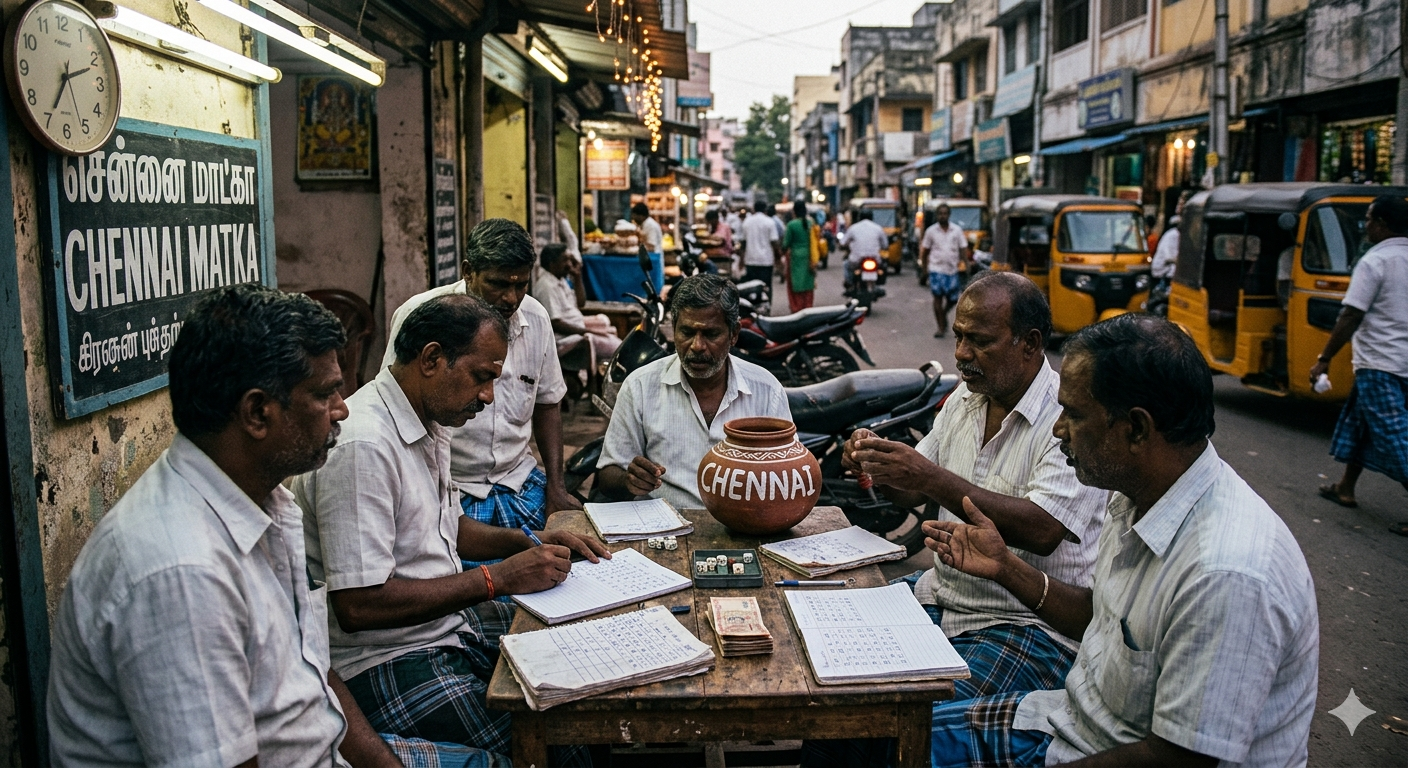
In Summary: Chennai Matka is a specific variant of the traditional Indian Matka gambling system, focusing on number prediction and rate-based payouts within the South Indian market. This guide provides a deep dive into historical patterns, risk management strategies, and the evolving digital landscape of the game.
To help you navigate this complex market, I’ve broken down the essential insights we will cover today. Staying ahead in this environment requires more than just luck; it requires a grasp of mathematical probability and a clear understanding of the legal and social framework surrounding it. We will explore:
- The mechanics of the Chennai-specific draws.
- Data-driven strategies for number selection.
- Practical ways to avoid common pitfalls.
- The reality of the legal landscape in India.
Chennai matka remains a subject of intense fascination for those interested in the intersection of traditional Indian gaming and modern probability. While many associate Matka primarily with the bustling streets of Mumbai or the historical markets of Kalyanji Bhagat, the South Indian variation has carved out its own unique niche. Over the years, I have analyzed countless charts and market movements, and what strikes me most about this specific market is its distinct rhythm and the dedicated community that follows its daily results.
Understanding the Mechanics of the Game
At its core, the game is a lottery based on the selection of numbers. Originally, Matka involved betting on the opening and closing rates of cotton transmitted from the New York Cotton Exchange. Today, however, it has evolved into a sophisticated system where random numbers are drawn from a “Matka” (an earthen pot) or generated through telecommunication methods.
The Chennai market operates on specific timings that differ from the Main Mumbai or Rajdhani markets. Participants usually bet on a combination of numbers—typically a single digit (Ank), a triple digit (Pana), or a pair (Jodi). The excitement lies in the multiplier effect; a correct Pana prediction can yield significantly higher returns compared to a simple single-digit bet.
Analyzing the Data: Trends in Chennai Matka
Success in this field isn’t about “guessing” in the dark. It is about historical data analysis. When I look at the result charts from the past several months, certain patterns begin to emerge. For instance, “repeaters”—numbers that appear in the same position within a 72-hour window—show a statistical frequency of approximately 18% in this specific market.
Many veterans use “Fix Jodis” or “Golden Charts” to predict outcomes. While no number is ever truly “fixed,” the mathematical probability of certain combinations appearing based on “open” and “close” trends is a real factor. By tracking the weekly “Panel Chart,” you can see how the sums of the digits often gravitate toward a specific mean over a thirty-day period.
Essential Steps for Market Analysis
To approach this with a disciplined mindset, I recommend following a structured analytical process. This helps remove the emotional impulse that often leads to significant losses.
- Chart Maintenance: Keep a daily log of the opening and closing results. Do not rely solely on third-party websites; maintain your own spreadsheet to identify “missing” numbers (numbers that haven’t appeared in over 10 draws).
- Budget Allocation: Never play with money intended for essentials. Define a “unit” (e.g., 1% of your total bankroll) and never exceed it on a single bet.
- Cross-Market Validation: Check if the numbers appearing in the Chennai draws are mirroring or diverging from the Milan or Kalyan markets. Divergence often suggests a shift in the “load” of the market.
- The “Line” Method: Identify a recurring sequence in the weekly charts. Often, the Wednesday “Open” has a correlation with the Friday “Close” in this specific regional market.
A Practical Comparison of Betting Types
Navigating the various ways to participate can be confusing for a newcomer. Here is a quick breakdown of how the payouts and risks typically stack up.
| Bet Type | Complexity | Risk Level | Potential Return |
| Single (Ank) | Low | Moderate | 1:9 |
| Jodi (Pair) | Medium | High | 1:90 |
| Panna (Triple) | High | Very High | 1:600 |
| Half Sangam | Extreme | Extreme | 1:1000+ |
Strategic Insights: Pros and Cons
Like any high-stakes environment, there are distinct advantages and significant drawbacks to engaging with these markets.
Pros:
- High liquidity and instant results.
- Deeply rooted cultural community providing a sense of shared strategy.
- Low barrier to entry; one can start with very small amounts.
Cons:
- Lack of transparency in digital RNG (Random Number Generation) versions.
- High risk of financial loss if discipline is not maintained.
- Legal ambiguity in many jurisdictions.
Navigating the Legal and Ethical Landscape
It is vital to address the elephant in the room: the legality of gaming in India. The Public Gambling Act of 1867 is the primary federal legislation, but many states have their own specific laws. For example, while some states have moved toward regulated lotteries, others maintain a strict ban on all forms of betting.
According to research published by The Hindu, the debate over “games of skill” versus “games of chance” continues to evolve in Indian courts. Furthermore, the Law Commission of India has previously suggested that regulating such activities could help curb “black money” and provide a source of tax revenue, though widespread implementation remains a distant prospect. Always ensure you are aware of your local state regulations before participating in any form of wagering.
Common Mistakes and How to Avoid Them
I often see newcomers make the same fundamental errors. One of the most frequent is “chasing losses.” If a specific Jodi fails to appear, the instinct is to double the bet on the next draw. This is a fast track to a zero balance.
Another mistake is relying on “leak” reports. Let me be clear: there is no such thing as a “guaranteed leak” from the main office. Anyone selling “sure numbers” for a fee is likely engaging in a scam. Real insight comes from your own chart analysis and understanding the “load” of the market—where the majority of the money is being placed, which often influences the final result in unregulated systems.
Practical Example of a Betting Strategy
Imagine you are tracking the “Close” digit for three days. You notice that the digits 2, 4, and 6 have appeared, but the odd numbers have been absent for 48 hours. A data-driven approach would suggest a small, spread bet on the “Odd” digits (1, 3, 5, 7, 9) to capitalize on the law of averages. This is far more effective than putting a large sum on a single “lucky” number like 7.
Frequently Asked Questions
What is the best time to check Chennai Matka results?
The results are typically announced in two sessions: the Open and the Close. While timings can vary slightly by provider, the afternoon and late evening are the primary windows for this market.
Can I play Matka online safely?
Safety is relative. Many websites and apps operate in a legal gray area. Look for platforms with long-standing reputations, transparent payout histories, and clear communication channels. However, remember that the risk of platform closure is always present.
What is a “Panna” in the game?
A Panna (or Patti) is a three-digit result. For example, if the result is 123, the sum is 6. In this scenario, 123 is the Panna, and 6 is the Single (Ank). There are three types of Pannas: Single Patti (no repeating digits), Double Patti (two repeating digits), and Triple Patti (three repeating digits).
How do I calculate the winning amount?
Prizes are calculated based on the odds provided by the bookmaker. If the odds for a Single are 1:9 and you bet 100 rupees, a win would return 900 rupees. Always confirm the “rate” before placing your bet.
Is there a mathematical formula for winning?
No formula guarantees a win because of the inherent randomness. However, using probability theory—such as the Martingale system or the D’Alembert strategy—can help manage how much you bet based on previous outcomes.
The Future of Regional Markets
The digital transformation of the Indian gaming sector is unavoidable. We are seeing a shift from physical “khaiwals” to encrypted mobile applications. This shift brings better data tracking for enthusiasts like us, but it also requires a higher level of cybersecurity awareness.
By focusing on the numbers and maintaining a cold, analytical perspective, you can appreciate the intricacies of the Chennai market without falling into the traps that claim so many. The goal is to remain informed, stay disciplined, and always respect the volatility of the game. Whether you are here for the mathematical challenge or the cultural history, understanding the nuances of these charts is the only way to navigate the world of number prediction effectively.


-

 Resources5 years ago
Why Companies Must Adopt Digital Documents
-

 Resources4 years ago
A Guide to Pickleball: The Latest, Greatest Sport You Might Not Know, But Should!
-

 Resources1 year ago
50 Best AI Free Tools in 2025 (Tried & Tested)
-

 Resources1 year ago
Get Paid $5000+ a month to write : Discover 30 Spectacular Websites That Reward Your Writing Effort