Marketing
How 3D Visualization Is Changing Product Marketing?

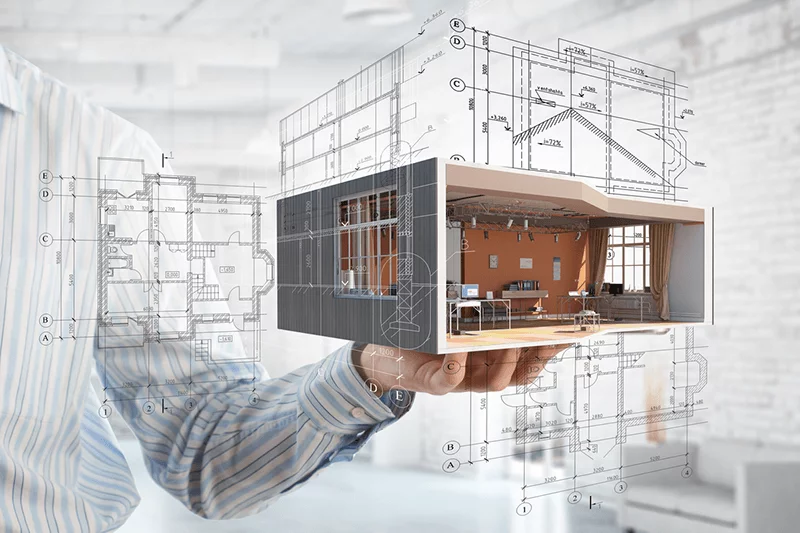
A product page used to live or die on photography. A skilled photographer, a well-lit set, a handful of angles, and that was the ceiling of what most companies could show a prospective buyer before they committed to a purchase. That ceiling has quietly moved. Product marketing teams now routinely show customers things a camera was never capable of capturing at all: internal mechanisms, exploded assembly views, configurations that don’t exist as physical samples yet, and the shift has changed what customers expect to see before they’ll trust a claim on a product page.
3D product animation sits at the centre of that shift, and its adoption has moved well past early-stage tech companies and into categories as varied as furniture, industrial equipment, cosmetics packaging, and consumer electronics. Understanding why requires looking past the visual polish and at the actual mechanics of what changed in how customers evaluate a purchase online.
The Photography Ceiling Nobody Talks About
Product photography has real, structural limits that most marketing teams simply worked around for years rather than solving. A new colour variant meant a new photo shoot. A packaging redesign meant rescheduling a studio session around a photographer’s availability. A product that didn’t exist yet as a finished sample, common in furniture, appliances, and anything still in late-stage manufacturing, simply couldn’t be photographed at all, leaving marketing teams to launch with placeholder imagery or delay a campaign entirely.
None of these constraints exist in the same way once a 3D model replaces the physical product as the source of truth. A new colour becomes a texture swap rather than a studio booking. A packaging update becomes a model revision rather than a full reshoot. And a product still in development can be marketed months before a physical unit exists, since the animation is built from CAD data and design specifications rather than something a camera needs in hand.
What Customers Actually Respond To?
The commercial case for 3D visualization isn’t really about looking impressive, though it often does. It’s about answering the specific questions that stop a browser from becoming a buyer. A shopper considering a piece of furniture wants to understand scale relative to their own space, something a single static photo communicates poorly. A buyer evaluating a piece of equipment wants to see how it actually operates, not just what it looks like sitting still. A cosmetics brand launching a new formula wants to show texture and application in a way a flat product shot simply cannot convey.
3D animation answers these questions by controlling exactly what a customer sees and in what order, rather than leaving them to infer function from a still image and a bullet-pointed description. This matters enormously in categories where the purchase decision hinges on understanding mechanism or scale, and it explains why return rates tend to drop when 3D visualization replaces or supplements traditional photography on a product page.
Where This Shows Up Across Ecommerce Specifically?
Ecommerce video production has absorbed 3D visualization particularly quickly, since online retail depends entirely on visual communication doing the work a physical showroom or a helpful sales associate would otherwise handle. A shopper cannot pick up a product, turn it over, or ask a question in real time, which means every visual asset on a listing page has to preemptively answer the questions that would normally come up in person.
Several patterns have emerged consistently across ecommerce brands adopting this approach. Product demo videos built from 3D models show functionality that static images cannot, reducing the uncertainty that leads to abandoned carts. Multiple colour and configuration variants get produced from a single underlying model rather than a separate photo shoot for each option, cutting production cost meaningfully once a catalogue reaches any real size. And advertising creative built from the same 3D assets can be recut rapidly for different platforms and campaigns, giving performance marketing teams far more creative variants to test than a fixed set of photographs ever allowed.
The Data Behind the Shift
Retailers adopting 3D visualization consistently report specific, measurable outcomes rather than vague brand-building benefits. Product pages featuring animated or interactive 3D content tend to see stronger time-on-page and lower bounce rates than pages relying solely on static photography, since there’s simply more for a visitor to engage with before deciding to leave. Return rates linked to product mismatch, where a customer receives something that looks or functions differently than expected, tend to decline once 3D visualization gives buyers a clearer, more complete understanding before purchase. And production costs per additional SKU or variant fall considerably once a base 3D model exists, since generating a new angle or colourway from an existing model costs a fraction of commissioning new photography.
A Practical Framework for Adopting 3D Visualization
Brands considering this shift for the first time don’t need to convert an entire catalogue overnight. A focused starting approach tends to work best.
Begin with the products generating the most customer service questions about function or scale, since those are the clearest signals that static photography isn’t fully doing its job. Prioritise products with multiple variants or configurations, where the cost savings from a single reusable 3D model compound fastest. Build the first project with reuse in mind from the outset, planning for the model to support product pages, paid advertising, and social content simultaneously rather than a single isolated use. And measure return rate and time-on-page before and after the change, rather than relying on instinct to judge whether the investment paid off.
Many brands starting this process for the first time find value in a structured product visualization audit, a straightforward review of which SKUs would benefit most from 3D treatment based on current return data and customer questions, before committing budget to a full production run.
What This Means for Product Marketing Going Forward?
The gap between brands using 3D visualization effectively and brands still relying entirely on traditional photography is likely to widen rather than close, particularly as the underlying production cost of 3D animation continues to fall and customer expectations continue to rise in parallel. A product page that still asks a customer to imagine scale, function, or texture from a handful of static images is competing against pages that show all three clearly, and that gap shows up directly in conversion numbers over time.
For any product marketing team still treating 3D visualization as an optional upgrade rather than a baseline expectation, the more useful question isn’t whether to adopt it, but which products in the current catalogue are losing the most sales to that exact gap right now.



-

 Resources5 years ago
Why Companies Must Adopt Digital Documents
-

 Resources4 years ago
A Guide to Pickleball: The Latest, Greatest Sport You Might Not Know, But Should!
-

 Resources1 year ago
50 Best AI Free Tools in 2025 (Tried & Tested)
-

 Resources1 year ago
Get Paid $5000+ a month to write : Discover 30 Spectacular Websites That Reward Your Writing Effort