Resources
From Prototype to Port: Why Hardware Startups Must Design for Ocean Transport Before Scaling

By Konstantin Kalnyi
Hardware startups are often built around a clear sequence: develop a prototype, validate the technology, secure investment, begin production and enter international markets. Logistics usually appears near the end of that sequence, when the product is finished and the company needs to deliver it to a customer.
For compact consumer products, this approach may be manageable. For industrial equipment, energy systems, modular structures, production machinery and other large or heavy units, it can become a costly mistake.
An industrial product is not truly ready for export simply because it performs as intended. It must also be capable of leaving the factory, travelling by road, passing through a port, being lifted safely, fitting on or inside a suitable vessel and reaching the destination without damage.
Decisions made during product design can determine whether this transport process is straightforward, expensive or operationally impossible.
A unit that is slightly too wide may require a different road route. Additional height may prevent passage under bridges or cranes. An unsuitable centre of gravity can complicate lifting. The absence of certified lifting points may require a specially designed frame. A fully assembled product may need a much larger vessel than the same product divided into transportable modules.
By the time these problems are discovered, the equipment may already have been manufactured and the delivery date committed to the buyer. The company must then choose between redesigning the product, accepting higher logistics costs or delaying the contract.
For hardware startups planning international growth, transportability should therefore be treated as a product requirement from the beginning.
A successful prototype is not necessarily an exportable product
A prototype is normally designed to demonstrate that a technology works. Its designers focus on performance, reliability, safety, production cost and user requirements.
Transport introduces a different set of constraints.
A large unit must move through several physical environments before it reaches the customer. It may need to pass through the factory gate, travel on a trailer, enter a port terminal, be positioned within the working radius of a crane and fit through a vessel’s hatch opening. At the destination, the entire process takes place in reverse.
Each stage has its own limitations.
The factory may have restricted access. Public roads may impose limits on vehicle dimensions, axle loads or operating hours. Bridges, tunnels and overhead cables can affect the available route. Ports have restrictions relating to berth dimensions, terminal equipment, storage areas and permissible ground loads. Ships differ in hatch size, crane capacity, deck strength and cargo-space configuration.
An item may be technically suitable for ocean transport but still be unable to reach the loading port. Alternatively, it may arrive at the terminal only for the ship’s cranes to lack the necessary outreach or lifting capacity.
These are not minor operational details. They affect the commercial feasibility of the entire export transaction.
Dimensions can influence cost more than value
Startups naturally evaluate a product in terms of what it does and how much it is worth. Transport providers must also evaluate its physical characteristics.
Length, width, height and weight determine which handling and shipping options are available. Even a relatively small change can move the cargo into a different category.
A slightly wider component may no longer fit inside a standard container. A taller unit may require open-top equipment or transport as breakbulk cargo. A heavier module may exceed the capacity of the cranes available at the intended ports. A concentrated load may require additional analysis even when the total weight appears manageable.
This means that two products with similar manufacturing costs can have very different transport costs.
The difficulty is especially significant for young companies because the first export order may involve only one or two units. There is no established logistics process, no historical cost data and often little room within the sales margin for unexpected expenses.
A preliminary transport assessment during the design stage can reveal where small engineering changes would create substantial logistical savings. Reducing the height of a frame, making a component detachable or changing the position of an external fitting may allow the cargo to use a wider range of transport options.
The objective is not to redesign every product around the cheapest method of shipping. It is to understand the consequences of design choices before they become fixed.
Modular design creates logistical flexibility
Modularity is usually discussed in relation to manufacturing, maintenance and product upgrades. It can also be one of the most effective tools for controlling international transport costs.
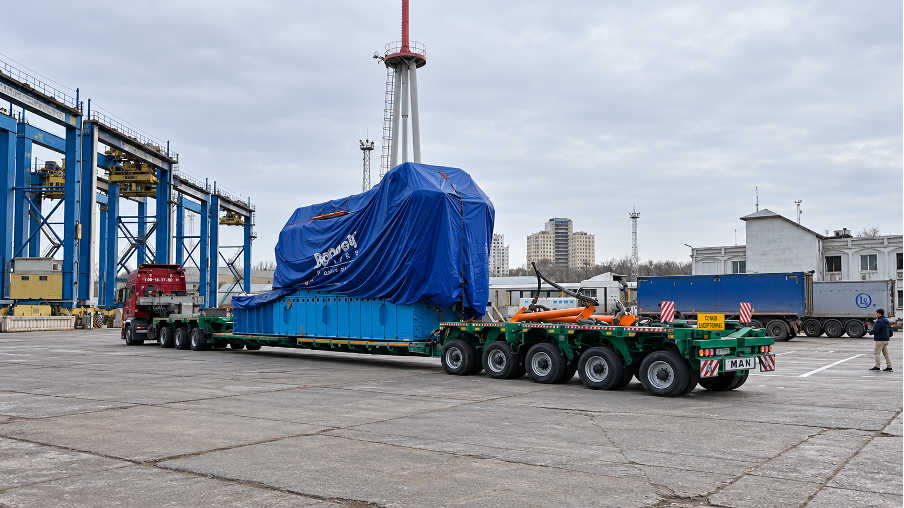
A large system transported as a single unit may require special road permits, heavy-lift equipment and a vessel with particular capabilities. If the same system can be separated into practical transport modules, the company may gain access to more ports, carriers and vessel types.
This can improve both cost and schedule flexibility.
However, dividing cargo into the greatest possible number of pieces is not always the right solution. Every additional module creates new requirements for packing, marking, handling, documentation, storage and final assembly. Small components may become separated from the main shipment. Sensitive interfaces may be exposed to moisture or impact. Reassembly at the destination may require specialist personnel and equipment.
The best transport configuration is therefore a balance between several considerations:
- the dimensions and weight of each module;
- the available lifting points;
- protection of vulnerable components;
- the sequence of installation at the destination;
- the number of separate cargo units;
- the cost and risk of disassembly and reassembly;
- the capabilities of the loading and discharge ports.
These decisions should involve engineering, production and logistics specialists. If they are made only after manufacturing has been completed, the available options will be much narrower.
Lifting points are part of the product’s export design
A lifting drawing is not simply a document prepared for the port shortly before shipment. It reflects decisions that should already have been considered during engineering.
The cargo must have clearly defined lifting points capable of supporting the forces generated during handling. The centre of gravity must be known and correctly marked. The lifting arrangement must provide stability and avoid damage to the equipment.
A unit that appears symmetrical may have an uneven internal weight distribution. If the declared centre of gravity is inaccurate, the cargo can tilt unexpectedly when lifted. This creates risks for the equipment, lifting gear, vessel and personnel.
The position of the lifting points also matters. Slings must be able to reach them without pressing against vulnerable surfaces. Spreader beams may be required to control sling angles. Lifting lugs must be accessible after the cargo has been packed.
If appropriate lifting points are missing, the shipper may have to design a transport frame or use a more complicated handling method. This can increase cost, add weight and delay the shipment while calculations and approvals are completed.
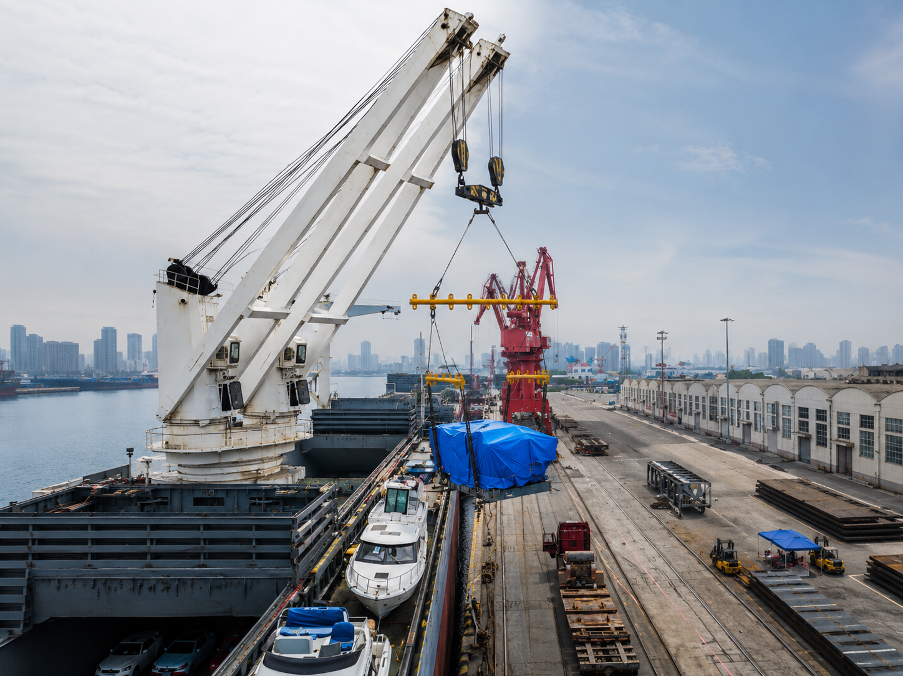
The interaction between cargo design, lifting equipment and shipboard operations can be seen in this project cargo operation handled by Kiev Shipping.
For a hardware startup, incorporating lifting requirements into the design process is usually easier than developing an improvised solution once the completed unit is waiting at the factory.
Packaging must be designed for the actual voyage
Export packaging is often treated as a purchasing task: obtain a crate, wrap the equipment and protect visible surfaces. For ocean transport, packaging must respond to the conditions the cargo will actually experience.
The shipment may be stored outdoors, exposed to rain, salt-laden air and temperature changes. Condensation can form inside sealed packaging. Cargo may remain in a terminal longer than planned. It may be lifted several times and transported by road before and after the sea voyage.
The appropriate packaging depends on the equipment and the transport method.
Sensitive machinery may require moisture barriers, desiccants and corrosion protection. Exposed parts may need additional physical protection. Loose components must be secured so that they cannot move inside the package. Inspection points and lifting positions must remain accessible.
Packaging also affects dimensions and weight. A large timber case can change the cargo profile sufficiently to alter the transport plan. Reinforced skids or steel frames may increase the gross weight and change the centre of gravity.
For this reason, freight quotations should not be based only on the dimensions of the unpacked product. The shipping data must reflect the final transport condition.
A startup that requests a freight estimate using preliminary dimensions and then adds substantial packaging shortly before dispatch may discover that the original vessel or road solution is no longer suitable.
The sales contract should reflect logistical reality
A technically successful product can still produce a commercially unsuccessful order if the delivery obligations were agreed without understanding the transport chain.
Before signing an international sales contract, the seller should know where its responsibility begins and ends, which costs are included and which party controls the critical logistics decisions.
Delivery terms alone do not answer every question. The contract should also reflect realistic production dates, packing time, inland transport, port handling and vessel availability.
For project and breakbulk shipments, a vessel may not be available exactly when the factory finishes production. The cargo may need to wait for a suitable sailing position or a vessel with the necessary cranes and cargo space. If the sale contract promises a fixed arrival date without sufficient margin, the seller can become exposed to delay claims even when production was completed on time.
The contract should also identify who provides essential technical information and by what deadline. Accurate drawings, weights, lifting arrangements, packing specifications and cargo-readiness dates are required to obtain reliable transport proposals.
If this information changes after the vessel has been fixed, the consequences may include additional freight, deadfreight, cancellation costs or the need to find another ship.
Specialist project cargo chartering should therefore begin before the transport commitment becomes irreversible. Early market consultation can help the startup understand which assumptions can safely be included in the sales offer.
The lowest freight quotation may not be the cheapest solution
Young companies often compare logistics proposals by focusing on the headline freight figure. That number is important, but it does not necessarily represent the total cost of delivery.
One proposal may exclude loading or discharge expenses. Another may depend on shore cranes being available. A lower freight rate may involve a port that requires longer and more expensive inland transport. A vessel without suitable lifting equipment may create additional terminal costs.
The company should examine the complete transport chain, including:
- transport from the factory to the loading port;
- permits, escorts and route surveys;
- port handling and storage;
- crane and lifting-equipment requirements;
- sea freight and related charges;
- cargo securing and surveying;
- discharge arrangements;
- transport from the destination port to the final site;
- possible delay and demurrage exposure.
Schedule reliability also has a value. A higher freight rate may be commercially preferable if it provides a realistic loading window and reduces the risk of missing the customer’s installation programme.
The correct comparison is therefore not between freight quotations alone. It is between complete delivery solutions and the risks attached to each one.
Accurate cargo information protects credibility
Startups entering the international market are establishing relationships with customers, carriers, terminals and service providers. The quality of the information they provide affects how those parties assess the company.
A cargo enquiry should include more than a general description and estimated weight. Depending on the shipment, it may require:
- the number of packages;
- final dimensions and gross weight of every unit;
- technical drawings and photographs;
- the centre of gravity;
- lifting and securing points;
- packing details;
- stackability and weather sensitivity;
- cargo-readiness dates;
- loading and discharge locations;
- any special handling limitations.
If the information is incomplete, transport providers must either make assumptions or qualify their offers. The resulting price may appear attractive but prove unusable once the true cargo details become known.
Repeated changes can also weaken confidence. Vessel owners reserve space and plan cargo operations using the information supplied by the charterer. A significant change in dimensions or weight may affect stability calculations, stowage arrangements and lifting plans.
A startup does not need to have every detail available during the first conversation. It should, however, distinguish clearly between confirmed information and preliminary estimates.
Early logistics involvement supports better investment decisions
Transport planning is not only an operational issue. It can influence pricing, production strategy, market selection and capital allocation.
If a company knows the approximate delivered cost of its equipment in different regions, it can evaluate potential markets more accurately. It may discover that one destination is commercially attractive because it has suitable ports and regular vessel availability, while another requires expensive special handling.
This information can also influence decisions about assembly locations. A company may choose to manufacture complete units centrally, ship modules for local assembly or establish regional production once volumes justify the investment.
Investors and lenders increasingly expect scaling plans to address more than production capacity and customer demand. For a hardware company, the ability to deliver the product reliably is part of the business model.
A realistic logistics plan demonstrates that management understands the path between receiving an order and completing delivery. It also reduces the risk that future growth will be constrained by transport problems that could have been anticipated during product development.
Build transportability into the scaling process
Hardware startups do not need to become shipping experts. They do need to recognise when logistics can materially influence product design and contract performance.
Before a design is frozen, the company should review the expected transport dimensions, weights, lifting points and packaging. Before quoting an overseas customer, it should test the likely transport route and obtain an indicative total cost. Before signing the contract, it should align delivery obligations with realistic cargo-readiness and vessel schedules.
This process does not eliminate uncertainty. Ports become congested, vessel positions change and production schedules move. Early preparation does, however, give the company more alternatives when circumstances change.
The most expensive logistics problems are often created long before the cargo reaches the port. They begin with a drawing that ignores transport dimensions, a lifting point placed in the wrong position, a package whose final size was never checked or a sales promise based on an incomplete freight estimate.
For industrial startups, scaling successfully means more than building additional units. It means designing a repeatable path from production to delivery.
A product intended for international markets should therefore be engineered not only to work at its destination, but also to reach it safely, economically and on time.
Author biography

Konstantin Kalnyi is the CEO and Founder of Kiev Shipping Ltd and an international shipbroker with more than 25 years of experience. He specialises in vessel chartering and maritime brokerage for dry bulk, breakbulk and project cargoes and has arranged more than 350 voyages.


-

 Resources5 years ago
Why Companies Must Adopt Digital Documents
-

 Resources4 years ago
A Guide to Pickleball: The Latest, Greatest Sport You Might Not Know, But Should!
-

 Resources1 year ago
50 Best AI Free Tools in 2025 (Tried & Tested)
-

 Resources1 year ago
Get Paid $5000+ a month to write : Discover 30 Spectacular Websites That Reward Your Writing Effort
Ximena Delgado
09/20/2026 at 9:12 AM
Designing for ocean transport at the prototype stage is a smart reminder that hardware must survive the full logistics chain, not just function in a lab. Accounting early for vibration, moisture, packaging, and port handling could prevent expensive redesigns once production scales.
Olivia Carter
09/23/2026 at 10:05 AM
The point about lifting points and centre of gravity being an engineering decision rather than a port-day document really landed for me. A unit that looks symmetrical but hides an uneven internal weight distribution is exactly the kind of thing that only shows up once the crane is already over it.