Tech
Agentic Commerce: What Happens When Your Next Customer Is an AI Agent

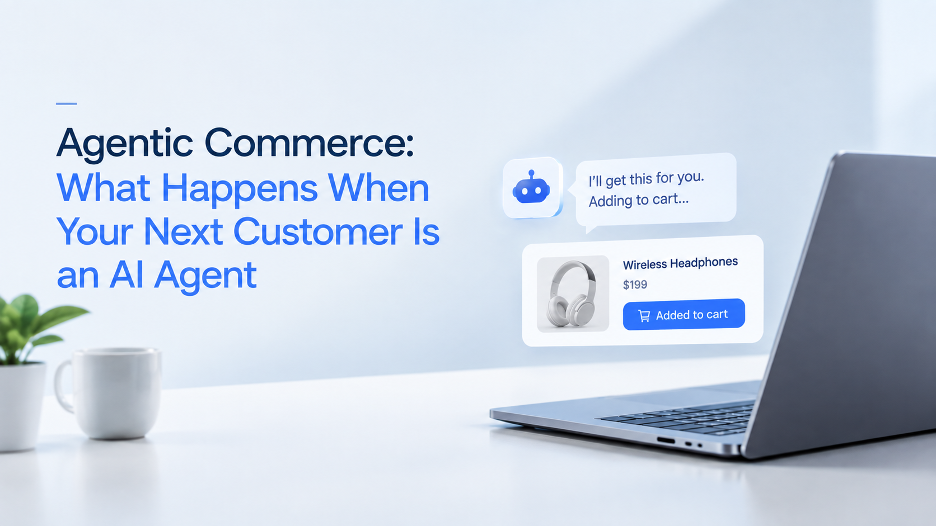
A growing share of customers are not browsing anymore. Their agent is. Traffic from AI sources to U.S. retail sites grew 393% year over year in the first quarter of 2026, and those visitors now convert better than the ones arriving from traditional search. The problem is that almost every storefront was built for human eyes: product data trapped inside rendered pages, checkout flows that assume someone is clicking, and no clean interface an agent can actually use. Closing that gap is a real engineering program rather than a marketing campaign, which is why commerce teams working with flat headcount budgets are leaning on staff augmentation to get agent-ready before the next peak season instead of after it.
What makes this different from previous ecommerce upgrades is the pace. The payment and checkout protocols behind agentic shopping went from announcement to live transactions in roughly a year, and the implementation work now competes for exactly the engineers everyone else is trying to hire. Teams comparing the best IT staff augmentation companies in the USA for this work tend to screen for commerce platform depth, payments integration experience, and the ability to start in days, because a six-month hiring cycle is longer than the window in which being early still counts for anything.
The shopper is still a person. The thing reading your website increasingly is not.
Agentic commerce is commerce in which an AI agent discovers, compares, and purchases on a buyer’s behalf, which requires merchants to expose product, pricing, inventory, and checkout capability in machine-readable form rather than only through a human-facing storefront.
The numbers moved faster than most roadmaps. Adobe Analytics, which tracks more than a trillion visits to U.S. retail sites, measured that 393% jump in AI-referred traffic in early 2026 and found those visitors converting around 42% better than non-AI traffic by March, rising to roughly 60% better by July, the eleventh consecutive month AI traffic outperformed. Shopify has reported orders from AI-powered search growing many times over year on year. McKinsey puts the U.S. retail revenue that agents could influence or orchestrate by 2030 at $900 billion to $1 trillion, and $3 trillion to $5 trillion globally.
Key takeaways before the detail:
• Agent traffic is small in volume but unusually high in intent, which is why it converts better.
• Being agent-ready is an API and data problem, not a redesign.
• Two competing protocols now exist, and neither removes the need for clean product and inventory data.
• The merchants who move first get picked more often, because agents cannot recommend what they cannot read.
What Is Agentic Commerce, Really?
Strip away the terminology and there are three patterns, which McKinsey labels agent to site, agent to agent, and brokered agent to site.
In the first, a consumer’s assistant visits your storefront, reads what it can, and either completes a purchase or hands the shopper a recommendation. In the second, your own systems negotiate directly with the buyer’s agent. In the third, a platform sits in the middle, holding the customer relationship and the payment credentials while your store supplies the catalog and fulfills the order.
Two protocols are shaping how this works in practice. The Agentic Commerce Protocol, built by OpenAI and Stripe, introduced the idea of a shared payment token: the buyer’s payment provider issues a token scoped to one merchant, one amount, and a short expiry, so the agent never handles the actual card. The Universal Commerce Protocol, developed by Google and Shopify, covers a wider arc from discovery through checkout and post-purchase support.
The strategic point is not which protocol wins. It is that both assume a merchant can answer machine questions about price, availability, shipping, and returns in real time. Most cannot.
Why Is Agent Traffic Converting Better Than Search?
This reversed quickly. A year earlier, AI-referred visitors converted at roughly half the rate of everyone else. Now they convert substantially better, and the explanation is simple: the agent already did the filtering.
A person arriving from a search results page may be comparing, researching, or killing time. A person arriving because their assistant checked specifications, compared four options, confirmed the item was in stock in their size, and told them this was the right one is close to a decision. The browsing happened somewhere you could not see.
That changes the economics of a visit. Fewer sessions, each worth more, and far less opportunity to persuade anyone on the page. The influence moved upstream, into whether an agent can read your catalog accurately and trust the answer it gets.
What Makes a Store Agent-Ready?
The work is unglamorous and mostly invisible to customers:
• A structured product feed with accurate titles, attributes, variants, real-time pricing, and live inventory, not a nightly export that goes stale by lunchtime.
• Read APIs an agent can query for availability, delivery estimates, and options, without scraping a rendered page.
• A programmatic checkout path that supports tokenized, scoped payments rather than a form that requires a human to fill it in.
• Machine-readable policies, so returns windows, shipping costs, taxes, and warranty terms can be quoted without a human calling support.
• Identity, consent, and spending limits, so the merchant knows which agent acts for which customer and what it is authorized to do.
• Bot policy that distinguishes shopping agents from scrapers, since blocking all automated traffic now means blocking buyers.
• Instrumentation that separates agent sessions from human ones, because a blended conversion number hides everything useful.
Notice how little of that is a design question. It is data quality, interfaces, and plumbing, which is exactly the kind of work that gets deferred until something external forces it.
What the Research Says About the Size of the Shift
Forecasts of new commerce channels deserve healthy skepticism, so the methodology matters more than the headline.
McKinsey’s QuantumBlack analysis, The agentic commerce opportunity, published in late 2025, sized the U.S. B2C opportunity at $900 billion to $1 trillion of revenue that agents could orchestrate by 2030, with $3 trillion to $5 trillion globally. The figures rest on moderate assumptions about merchant readiness and the spread of AI-powered discovery, which is the part worth underlining. The forecast is not a prediction that agents will shop for everything. It is a projection of how much commerce could flow through agent-mediated journeys if merchants make themselves available to them.
The same research frames the risk clearly. In a brokered model, the platform holds the customer relationship, the payment credentials, and the behavioral data. Merchants who arrive late to that arrangement negotiate from a weaker position, the way they did when marketplaces and app stores became the default channel in earlier platform shifts.
The Engineering Work Nobody Scoped
Most commerce teams discovered this as an unplanned project in the middle of a roadmap that was already full.
The reason is that agent-readiness touches systems owned by different teams. Pricing truth lives in one place, inventory in another, tax and shipping logic in a third, and the checkout in a fourth. An agent asking a single question can require all four to agree within a second, which is a harder bar than a web page that can tolerate a stale number for an hour.
Then there is latency. An agent comparing six merchants will not wait for a slow API, and the merchant that times out loses without ever learning it was in the running. Add fraud controls that were tuned to flag non-human traffic, and a quarter of the stack needs revisiting.
This is the work that gets outsourced or augmented most often, not because it is unimportant but because it is finite, specialized, and sitting on top of an already committed roadmap.
Where Does Agentic Commerce Break?
The failure modes are becoming clear enough to plan around:
• Disputes and liability, when an agent buys the wrong item and nobody has agreed whether the shopper, the platform, or the merchant owns the mistake.
• Returns volume, since a purchase made without the buyer seeing the page can come back more often.
• Authorization gaps, where spending limits and consent were never explicitly defined per agent.
• Audit trails, which regulators and payment networks will expect for automated purchases.
• Margin pressure, as agents optimize for price and delivery speed, both of which are easy to compare and hard to differentiate on.
That last one deserves attention. If your only answer to an agent is a price, you are in an auction. Merchants with genuine advantages in availability, delivery reliability, bundling, or service have more to say when the comparison is machine-made.
What Happens to SEO?
Discovery is not disappearing. It is moving to a layer that reads structured data instead of marketing copy.
Practically, that means answer engine optimization sits alongside traditional SEO: accurate feeds, complete attributes, clear policy pages, genuine reviews, and content that answers the specific questions an agent asks on a shopper’s behalf. Keyword density does nothing for a system that is comparing specifications.
Brand still matters, arguably more. When two products match on every machine-readable dimension, the tiebreaker is reputation, and that is the one input a competitor cannot replicate by editing a feed.
How Are Commerce Teams Staffing This?
The pattern among teams moving quickly looks like this:
• A small permanent core owns the agent surface long term: the data contracts, the APIs, and the decisions about which protocols to support.
• Flexible specialists handle the build-out, including feed engineering, payments integration, and the checkout path, which is bounded work with a clear finish line.
• Sequencing runs from data outward. Get the feed and inventory accurate, then expose read APIs, then programmatic checkout, then post-purchase.
• Agent traffic gets measured on its own, so the team can see conversion, return rates, and margin separately from human sessions.
The sequencing matters more than the staffing model. A programmatic checkout sitting on top of inaccurate inventory does not create a sale. It creates a cancellation and a chargeback.
Frequently Asked Questions (FAQ’s)
Q1. What is agentic commerce?
It is commerce where an AI agent handles discovery, comparison, and purchasing for a buyer. Instead of a person browsing a storefront, an assistant queries merchants for products, prices, availability, and policies, then completes or recommends a purchase.
Q2. How much AI traffic are retailers actually seeing?
Adobe Analytics measured a 393% year-over-year increase in AI-referred traffic to U.S. retail sites in the first quarter of 2026. Volumes remain small relative to search, but conversion rates from that traffic have run well above non-AI traffic for nearly a year.
Q3. What does it take to make an ecommerce store agent-ready?
Accurate structured product data with real-time pricing and inventory, APIs an agent can query, a programmatic checkout supporting tokenized payments, machine-readable shipping and returns policies, agent identity and spending controls, and separate analytics for agent sessions.
Q4. What is the Agentic Commerce Protocol?
It is a specification from OpenAI and Stripe for agent-initiated purchases. Its central idea is a shared payment token scoped to a single merchant and amount with a short expiry, so an agent can complete a checkout without ever holding the buyer’s card details.
Q5. Does agentic commerce replace SEO?
No, it adds a layer. Agents rely on structured data, policies, specifications, and reviews rather than marketing copy, so discovery work shifts toward making accurate product information machine-readable while brand reputation becomes the tiebreaker.
Q6. Is agentic commerce only relevant to large retailers?
No. Smaller merchants on modern commerce platforms often get protocol support through the platform itself, which can make them agent-ready faster than a large retailer running custom legacy systems.
Final Verdict
Every platform shift in commerce has rewarded the merchants who made themselves easy to transact with before the channel mattered, and punished the ones who waited until it did. Catalogs, marketplaces, mobile, and now agents.
The difference this time is that the customer on the other end cannot be charmed. It reads a feed, checks an API, compares the answers, and moves on. Design, copy, and campaigns do not reach it. Accurate data, fast interfaces, and honest policies do.
The storefront is still for people. The next layer in front of it is for machines, and that layer is already deciding which products get recommended.



-

 Resources5 years ago
Why Companies Must Adopt Digital Documents
-

 Resources4 years ago
A Guide to Pickleball: The Latest, Greatest Sport You Might Not Know, But Should!
-

 Resources1 year ago
50 Best AI Free Tools in 2025 (Tried & Tested)
-

 Resources1 year ago
Get Paid $5000+ a month to write : Discover 30 Spectacular Websites That Reward Your Writing Effort