Resources
Electronic Waste Disposal in 2026: A Compliance Guide for EU Businesses

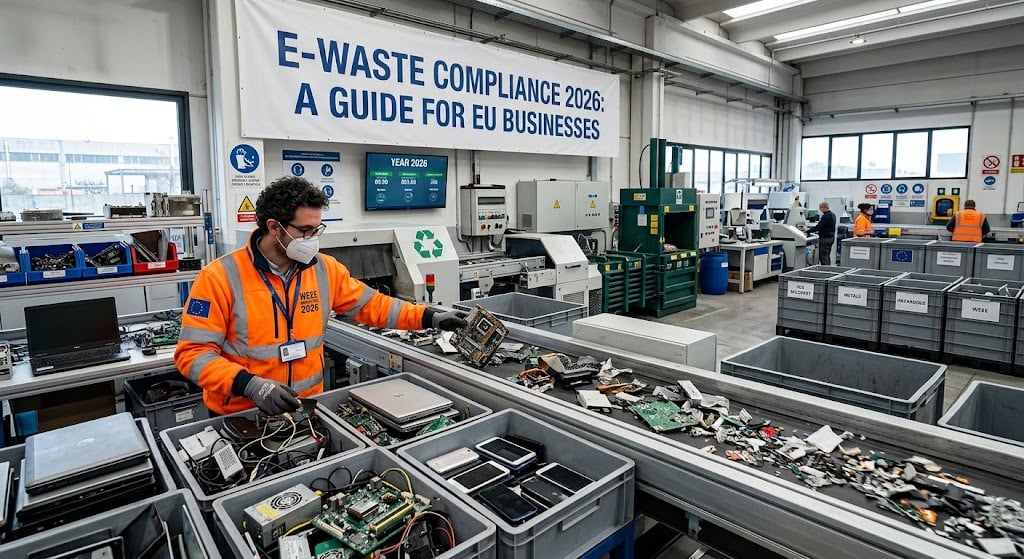
Electronic waste is no longer an occasional facilities issue. For EU businesses, it is a regulated material stream involving environmental obligations, data security, transport controls, financial exposure and reputational risk. As organisations replace computers, servers, telecommunications equipment, industrial electronics and connected devices, they need a disposal process that is both commercially practical and legally defensible.
The challenge is growing. Europe generates millions of tonnes of discarded electrical and electronic equipment each year, while products are becoming more complex and increasingly likely to contain batteries, sensitive data, hazardous components and recoverable metals. In 2026, simply handing obsolete equipment to an unknown collector is not an adequate compliance strategy. Businesses must understand what they hold, who is responsible for it and what evidence should remain after collection.
Start by identifying your role and obligations
The EU Waste Electrical and Electronic Equipment framework, commonly known as WEEE, establishes requirements for the collection, treatment, recovery and environmentally sound disposal of electrical and electronic equipment. However, a company’s precise responsibilities depend on its role and the national rules implementing EU legislation.
A business may be an ordinary waste holder, but it may also qualify as a producer if it manufactures equipment, sells it under its own brand or places electrical products on the market from another country. Online sales can create obligations in more than one Member State. Producers may need to register with national authorities, report quantities placed on the market, finance collection or treatment, join an approved compliance scheme and satisfy labelling requirements.
Do not assume that a supplier, landlord or waste contractor automatically carries every obligation. Map the legal entities, sales channels and countries involved, then verify the applicable national requirements. When operations cross borders, a single EU-wide policy should be supported by country-specific procedures.
Build an auditable electronic asset inventory
Effective compliance begins before equipment becomes waste. Maintain an inventory covering asset type, serial or internal identification number, location, acquisition date, owner, data classification, battery presence and planned end-of-life route. This turns a rushed storeroom clean-out into a controlled process.
When equipment is retired, classify it carefully. A functioning device intended for genuine reuse may not yet be waste, but merely labelling broken equipment as reusable does not remove waste obligations. The condition, testing records, packaging, destination and commercial arrangement should support the classification. If reuse is not realistic, the equipment should enter an authorised waste-management route.
For mixed loads, separate obvious categories such as displays, temperature-exchange equipment, lamps, batteries, printed circuit boards and general IT hardware. Good segregation reduces safety risks, prevents damage to reusable items and can improve material recovery and commercial value.
Treat data destruction as part of disposal
Environmental compliance does not replace data-protection responsibilities. Laptops, phones, servers, printers, network hardware and industrial control systems may retain personal data, credentials, intellectual property or configuration information. Deleting files or performing a basic factory reset may not provide sufficient assurance.
Create a written sanitisation standard based on device type and risk. Depending on the media, the appropriate method may include verified overwriting, cryptographic erasure, degaussing or physical destruction. Your documentation should connect each asset or batch to the method used, the date, the responsible party and the result. High-risk media should remain under a documented chain of custody until sanitisation or destruction is confirmed.
If a recycler or IT asset disposition provider performs this work, define the required evidence contractually. A generic recycling receipt is not automatically proof that every storage device was securely processed.
Perform due diligence on collection and treatment partners
Price matters, but it should not be the only supplier-selection criterion. Before transferring equipment, verify that the operator has the permits and capabilities required for the relevant waste categories and activities. Ask where materials will be treated, whether subcontractors are involved and how downstream processors are evaluated.
A practical due-diligence review should cover:
- Applicable waste collection, storage and treatment authorisations;
- Accepted equipment categories and any excluded or hazardous items;
- Transport arrangements and documentation responsibilities;
- Data-security procedures and chain-of-custody controls;
- Weighing, grading and valuation methods;
- Downstream destinations and recycling or recovery evidence;
- Insurance, incident reporting and subcontractor oversight;
- Records supplied after each transaction.
This is where a specialist partner can simplify the process. Latvia-based Metalbee focuses on responsible recycling and the evaluation of valuable material streams, including printed circuit boards and non-ferrous metals. Businesses planning electronic equipment handover (elektronikas nodošana) can use a specialist conversation to clarify accepted materials, preparation requirements and the records available before arranging collection.
Do not overlook batteries and dangerous components
Modern electronics frequently contain lithium batteries, mercury-bearing lamps, refrigerants, capacitors or other components requiring special handling. Damaged lithium batteries are particularly important because they can create fire risks during storage and transport.
Train employees not to place unwanted electronics in general waste containers. Establish a secure, weather-protected holding area with clear labels and access controls. Isolate damaged, swollen, leaking or overheated batteries and obtain specialist advice rather than improvising packaging. Battery-related duties may apply alongside WEEE requirements, so records and operating procedures should distinguish the relevant material streams.
Control transport and cross-border movements
Once an item is classified as waste, transport and shipment rules become central. Domestic movements may require registered carriers and prescribed transfer documentation. Cross-border shipments can trigger additional procedures under EU waste-shipment rules, including controls that vary according to the material, destination and intended recovery or disposal operation.
Exports described as reuse deserve particular scrutiny. Authorities may expect evidence that equipment is functional, appropriately tested and protected against transport damage. Shipping mixed or non-functioning electronics as second-hand goods can create enforcement, delay and return-shipment risks. Before any international movement, confirm the classification, waste code, carrier status, receiving facility and documentary route.
Create an evidence pack for every collection
A defensible process produces more than an invoice. For each transfer, retain an evidence pack containing the inventory or batch list, photographs where useful, weights, relevant waste codes, collection date, carrier information, receiving facility details, transfer or shipment documentation, data-destruction evidence and recycling or recovery confirmation.
Records should be consistent enough to reconcile operational data with producer-responsibility reports, sustainability metrics and financial entries. Define retention periods according to applicable national law, contractual commitments and internal audit needs. Centralised digital records are preferable to documents scattered across facilities, procurement inboxes and local filing cabinets.
Use commercial value without weakening compliance
Electronic equipment may contain copper, aluminium, gold, silver, palladium and other useful materials. Printed circuit boards can therefore have meaningful recovery value, but pricing depends on board type, composition, contamination, volume and market conditions. A transparent assessment is more reliable than a headline rate applied indiscriminately to a mixed load.
Businesses should request documented weighing and grading, understand whether transport or processing charges apply, and avoid dismantling equipment unless staff are trained and authorised to do so. Recovering value is a legitimate objective, but it must remain subordinate to safe handling, lawful treatment and complete documentation.
For organisations in Latvia reviewing accumulated electronic waste (elektronikas atkritumi), Metalbee offers a relevant starting point for discussing electronic materials and recoverable components. Contacting the company before moving a load can help procurement, facilities and compliance teams agree on sorting, valuation and transaction expectations in advance.
A practical 2026 action plan
Compliance becomes manageable when responsibilities are assigned and repeated consistently. Businesses can begin with five actions:
- Review legal roles: Determine whether each entity is a waste holder, distributor or producer in every market served.
- Audit stored equipment: Identify unknown devices, batteries, data-bearing assets and legacy stock awaiting disposal.
- Approve qualified partners: Check permits, downstream routes, security controls and documentation before issuing work.
- Standardise handovers: Use one procedure for authorisation, packing, collection, data treatment and evidence capture.
- Test the records: Select a recent batch and confirm that its journey can be reconstructed from retirement to final treatment.
The strongest electronic waste programmes combine legal awareness with everyday operational discipline. By classifying equipment correctly, protecting data, managing hazardous components, checking service providers and retaining a complete audit trail, EU businesses can reduce risk while recovering more value from materials. In 2026, responsible disposal is not merely the final step in an asset’s life; it is part of sound governance, circular resource management and credible environmental performance.


-

 Resources5 years ago
Why Companies Must Adopt Digital Documents
-

 Resources4 years ago
A Guide to Pickleball: The Latest, Greatest Sport You Might Not Know, But Should!
-

 Resources1 year ago
50 Best AI Free Tools in 2025 (Tried & Tested)
-

 Resources1 year ago
Get Paid $5000+ a month to write : Discover 30 Spectacular Websites That Reward Your Writing Effort