Resources
How to Create More Privacy While Camping: Practical Campsite and Tent Layout Tips

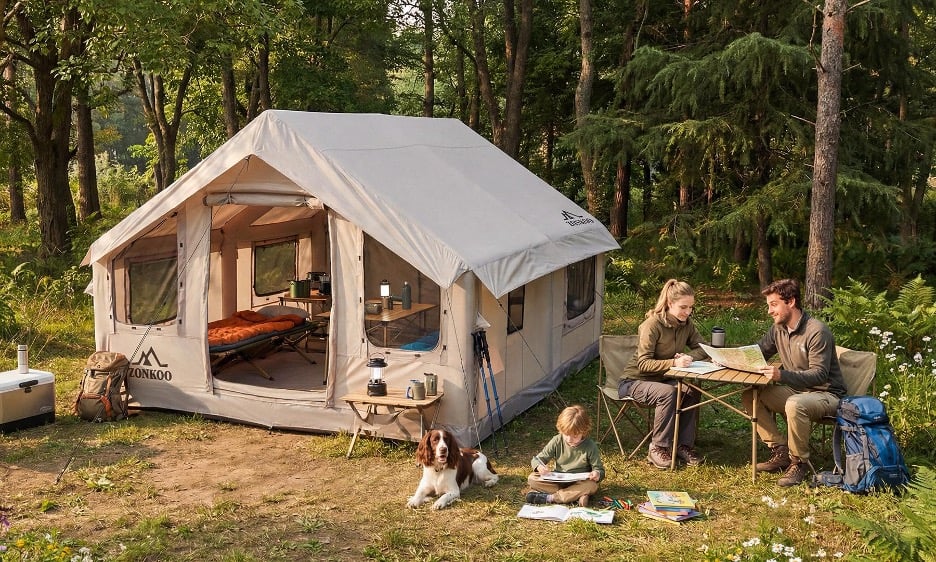
Camping offers a chance to escape daily routines and enjoy some peace outdoors. But a crowded campground can make privacy difficult. Your tent may sit closer to neighboring campers than expected, face a busy path, or reveal silhouettes when the lights are on at night.
Camping privacy isn’t simply about having fewer people nearby. It also depends on how you use the space. Campsite location, tent orientation, lighting, and interior layout all affect how comfortable your setup feels.
Fortunately, a few thoughtful adjustments can often improve privacy without requiring a bigger tent or extra equipment.
Look Beyond the View When Choosing a Campsite
When booking a campsite, it’s easy to focus on lake views, wooded surroundings, or site size while overlooking the distance between neighboring campers.
If there’s little separation between sites, you may find yourself facing another group whenever you sit outside your tent.
Before booking, check campground maps and guest photos for trees, shrubs, or other natural features that provide some privacy.
Consider nearby facilities as well. Being close to restrooms, parking areas, or main walking paths is convenient, but usually means more people passing by.
If you prefer a quieter evening, consider a site away from busy paths or with fewer immediate neighbors. However, being farther from shared facilities can make nighttime trips less convenient, especially when camping with children.
The right balance depends on your group’s needs.
How Tent Orientation Affects Your Privacy
Even within the same campsite, changing the direction your tent faces can make a noticeable difference.
If the entrance opens toward a campground road, people walking past may see your sleeping area and belongings whenever the door is open. Facing a quieter part of the site can reduce unwanted views.
Before setting up, look around. Where do neighboring campers spend their time? Which direction does the main path run? What will be visible when the tent door opens?
For families who frequently move in and out, keeping shoes and everyday essentials near the entrance can reduce unnecessary trips inside.
Privacy shouldn’t come at the expense of safety. Ground conditions, drainage, ventilation, weather, and the manufacturer’s instructions should still guide your final choice.
Use the Available Space to Reduce Unwanted Views
Creating privacy doesn’t necessarily mean surrounding your tent with screens.
Natural features, tent orientation, and freestanding privacy screens can all reduce direct lines of sight within a limited campsite.
If trees or shrubs already provide separation, you may be able to use them without additional equipment, provided the location remains suitable for pitching your tent.
When more screening is needed, consider a freestanding privacy screen if the campground permits one. Position it where it blocks the most unwanted visibility rather than enclosing the entire site.
For example, a screen beside the entrance may be more useful than one facing an area already sheltered by trees.
Whether you’re using traditional pole tents or inflatable tents, external screens shouldn’t obstruct ventilation openings, entrances, or anchoring systems.
The goal is to address specific visibility problems without crowding your campsite.
How Lighting Changes Tent Privacy at Night
A tent that feels private during the day may offer much less privacy after dark.
When lights are on inside, thinner fabrics can reveal silhouettes and movement to people outside. Even when details aren’t visible, this can feel uncomfortable.
Before changing clothes or getting ready for bed, close the tent doors and available privacy panels.
For everyday activities, use lighting that’s bright enough for your needs without unnecessarily illuminating the tent walls or shining toward neighboring campsites.
Light placement matters, too. Directing a lamp toward the area you’re using can be more comfortable than lighting the entire interior.
Avoid closing essential ventilation openings simply to block light. Managing lighting and using the tent’s privacy features is a better approach than restricting airflow.
Create Personal Space Inside a Shared Tent
When camping with family or friends, privacy depends more on interior organization than floor space alone.
One person may be preparing for bed while another is sorting luggage. Different morning routines can also make changing clothes or accessing belongings inconvenient.
When sleeping, changing, and storage all happen in one open area, even a spacious tent can feel less private.
For example, large inflatable tents such as the zonkoo Draco offer 183 square feet of interior space and a removable divider, allowing sleeping, changing, and personal storage areas to be separated as needed.
This creates visual boundaries within a shared space, although a divider doesn’t provide the privacy of a separate room or completely block sound.
If your group needs greater separation, individual tents may be more suitable. Discussing sleeping schedules and shared-space arrangements beforehand can also help everyone feel comfortable.
Privacy Also Includes Noise and Personal Boundaries
Visual barriers reduce unwanted views, but they won’t prevent sound from traveling between campsites.
When sites are close together, conversations, phone calls, or music may disturb nearby campers.
If peace and quiet matter to you, consider the distance between your campsite and busy gathering areas when booking. Check the campground’s quiet hours as well.
Groups sharing a campsite can agree on evening activities and sleeping schedules beforehand, particularly when some people prefer to turn in earlier.
Respecting neighboring campers’ privacy is equally important. Avoid walking through occupied campsites or including other people’s private activities in photographs.
Comfortable camping depends on thoughtful use of your own space and consideration for those around you.
When Is Extra Privacy Gear Worth Buying?
Not every camping trip requires privacy screens, interior dividers, or a different tent.
If unwanted views are an occasional issue, try choosing another campsite, changing your tent’s orientation, or adjusting your lighting first.
But if the same problems continue across different trips, reconsidering your equipment may make sense. Limited changing space, outside visibility, or insufficient separation when sharing a tent can indicate that your setup no longer meets your needs.
A freestanding privacy screen may improve outside visibility, while a tent with a better interior layout could make shared accommodations more comfortable.
When comparing black friday deals, focus on equipment that addresses a specific problem rather than simply looking for the largest discount.
For privacy screens, consider anchoring requirements, packed size, and whether your usual campgrounds permit them.
Better Camping Privacy Starts With a Thoughtful Layout
Camping privacy rarely requires complete isolation. A well-chosen site, thoughtful tent orientation, controlled lighting, and clearly defined personal areas can make shared outdoor spaces more comfortable.
Before your next trip, take a few minutes to observe nearby paths, neighboring activity areas, and potential sightlines.
Sometimes, simply repositioning your tent or rearranging your belongings is enough to make the same campsite feel more private.


-

 Resources5 years ago
Why Companies Must Adopt Digital Documents
-

 Resources4 years ago
A Guide to Pickleball: The Latest, Greatest Sport You Might Not Know, But Should!
-

 Resources1 year ago
50 Best AI Free Tools in 2025 (Tried & Tested)
-

 Resources1 year ago
Get Paid $5000+ a month to write : Discover 30 Spectacular Websites That Reward Your Writing Effort