Blogs
How Automated Vehicles Are Transforming Industrial Logistics and Supply Chain Operations

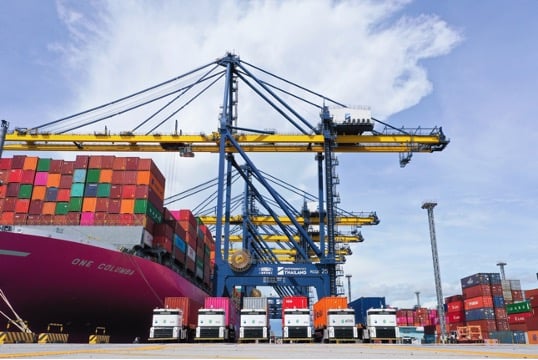
As global supply chains become increasingly interconnected, logistics operators face growing pressure to move goods faster, improve operational safety, and reduce environmental impact. Ports, airports, distribution centers, and manufacturing facilities must coordinate thousands of movements every day while responding to changing schedules, cargo priorities, and resource constraints.
Traditional transportation systems still rely heavily on manual driving, fragmented dispatching processes, and separate equipment management systems. Although these methods remain essential in many environments, they can become difficult to scale as cargo volumes increase and operational requirements grow more complex.
This is where automated vehicles are creating new opportunities. By combining autonomous driving, artificial intelligence (AI), real-time data, and intelligent fleet management, businesses can transform how materials and goods move through industrial environments.
However, the greatest opportunity is not simply to replace human drivers. It is to connect vehicles with the wider logistics operation so that transportation becomes more coordinated, predictable, and efficient.
1. What Are Automated Vehicles in Industrial Logistics?
Automated vehicles use technologies such as sensors, computer vision, onboard computing, and control systems to perform some or all driving tasks with reduced human intervention.
In industrial environments, these vehicles include autonomous terminal tractors, container transport vehicles, automated guided vehicles (AGVs), autonomous mobile robots (AMRs), and specialized vehicles designed for airport or factory logistics.
Unlike conventional road vehicles, many industrial autonomous vehicles operate within defined environments with established traffic rules, mapped routes, and predictable operational tasks. This can make certain logistics applications suitable for structured automation.
For example, an autonomous terminal tractor may transport containers between a quay crane and a storage yard. At an airport, an autonomous cargo tractor may move freight between designated handling areas. In a factory, an automated transport vehicle can deliver materials between storage locations and production lines.
These applications demonstrate that vehicle automation is not limited to public roads. It can also address the repetitive transportation activities that keep industrial operations running.
2. Why Industrial Logistics Is a Natural Application for Automation
Industrial logistics presents several challenges that make automation particularly valuable.
Repetitive Transportation Tasks
Many logistics facilities require vehicles to follow recurring routes throughout the day. Repeated movements between loading areas, storage zones, and production lines create opportunities for automated transportation.
Once routes, operating procedures, and safety conditions have been established, automated vehicles can perform assigned tasks consistently while human employees focus on supervision, exception handling, and more complex work.
Continuous Operational Demand
Ports, airports, and large industrial facilities often operate across multiple shifts. Managing vehicle availability, operator schedules, maintenance, and changing workloads can become increasingly complex.
Automated systems can support extended operating schedules, provided that charging or battery swapping, maintenance, supervision, and other operational requirements are properly managed.
Improved Safety Management
Industrial traffic environments may contain pedestrians, manually driven vehicles, heavy machinery, and moving cargo. Coordinating these activities requires clear procedures and reliable communication.
Automated vehicles can use sensors, perception systems, geofencing, and programmed operating rules to support safer movement. Nevertheless, automation does not eliminate risk. Effective implementation requires hazard assessment, appropriate protective systems, site-specific traffic management, and continuous monitoring.
Better Resource Utilization
Vehicles that wait unnecessarily, follow inefficient routes, or travel without useful cargo can consume time and energy without contributing much value.
Intelligent dispatching can help assign tasks according to vehicle availability, location, priority, and operational requirements. The resulting improvements depend on data quality and how well the system integrates with existing processes.
3. Automated Vehicles vs. Traditional Industrial Transportation
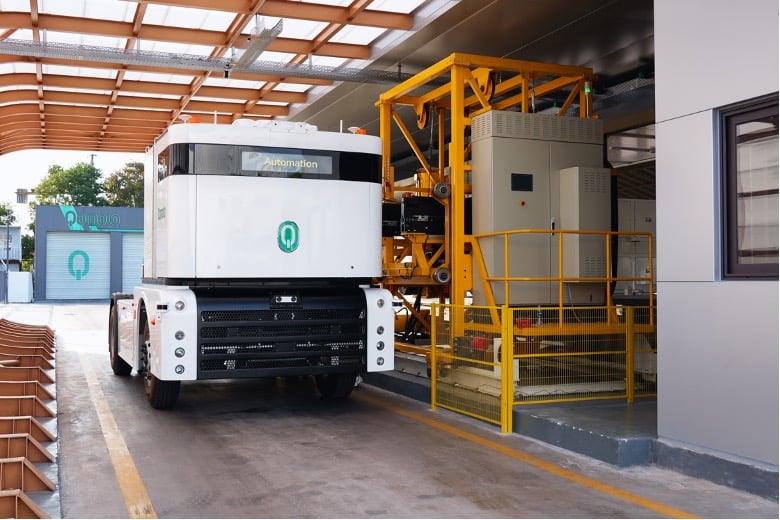
Automated vehicles and conventional industrial vehicles serve similar transportation purposes, but they differ in how driving tasks, traffic coordination, and fleet operations are managed.
| Evaluation Factor | Automated Vehicles | Traditional Vehicles |
| Vehicle operation | Automated driving functions perform defined tasks | Generally depends on human drivers |
| Route execution | Follows programmed routes within system capabilities | Relies on driver decisions and established procedures |
| Fleet coordination | Can connect with digital dispatching systems | May depend on manual scheduling or separate tools |
| Operating hours | Can support extended operations with appropriate infrastructure and supervision | Depends on driver availability and shift planning |
| Safety management | Uses sensors, control systems, and defined safety procedures | Relies on driver training, operational rules, and vehicle safety systems |
| Initial investment | May require vehicles, software, infrastructure, and integration | May use existing vehicles and established infrastructure |
| Operational flexibility | Works well for defined, repeatable transportation tasks | Human drivers can adapt to many unexpected situations |
| Typical applications | Repetitive transportation in structured industrial environments | Diverse tasks and environments requiring frequent human judgment |
Automated vehicles are particularly attractive when transportation tasks are repetitive, operating routes are well defined, and facilities can support digital coordination. Traditional vehicles may remain more practical when operations involve frequent exceptions, changing routes, or infrastructure that is difficult to automate.
For many businesses, a hybrid approach can be a sensible starting point. Automated vehicles can handle predictable transportation tasks while human-driven vehicles manage irregular deliveries and situations requiring additional judgment.
4. The Role of AI in Automated Vehicle Operations
An automated vehicle must do more than move from one location to another. It needs to understand its surroundings, respond to changing conditions, and coordinate its movements with other vehicles and equipment.
Artificial intelligence supports these capabilities in several ways.
Environmental Perception
Cameras, lidar, radar, and other sensors can provide information about nearby vehicles, obstacles, pedestrians, and infrastructure. Perception software interprets this information to help the vehicle understand its immediate environment.
The specific sensor configuration depends on the operating environment, visibility conditions, vehicle design, and safety requirements.
Route Planning and Decision-Making
Autonomous driving systems use maps, localization, planning algorithms, and vehicle controls to determine how to travel along an assigned route.
In industrial facilities, route planning must account for more than distance. Restricted zones, equipment movements, temporary obstructions, traffic rules, and the status of loading areas can all influence a vehicle’s next action.
Intelligent Fleet Dispatching
Fleet-level intelligence addresses a different challenge: deciding which vehicle should perform which task, and when.
For example, if one loading area becomes temporarily unavailable, a fleet management system may need to reassign vehicles, adjust task priorities, or select alternative routes. These decisions require coordination between vehicle status, cargo demand, equipment availability, and site operations.
When autonomous driving and intelligent dispatching work together, operators can move beyond isolated vehicle automation toward a coordinated transportation system.
5. From Individual Vehicles to Connected Logistics Systems
Deploying a few autonomous vehicles can demonstrate the feasibility of automation. Scaling the technology across an entire facility requires a broader approach.
Consider a container terminal. Autonomous vehicles may transport containers between cranes and designated storage areas, but their performance also depends on crane availability, container priorities, yard capacity, gate activity, and the movement of other vehicles.
If each system operates independently, delays in one area can create congestion elsewhere. Vehicles may arrive before a loading position is ready, or equipment may remain idle while waiting for transportation.
A connected logistics platform can bring together information from vehicles, cargo systems, equipment, and operational planning tools. This creates a more complete view of the operation and supports coordinated task allocation.
The same principle applies to airports and factories. Airport cargo transportation must respond to changing flight schedules and handling priorities, while factory logistics must synchronize material delivery with production requirements.
For businesses exploring these technologies, automated vehicles are one part of a broader shift toward connected, AI-enabled industrial logistics. The long-term opportunity lies in coordinating transportation, equipment, operational data, and energy management rather than optimizing individual vehicles in isolation.
6. How Automated Vehicles Support More Sustainable Operations
Sustainability is becoming an important consideration in logistics investment. Transportation equipment can contribute to energy consumption, operating costs, and emissions, particularly in facilities with intensive vehicle activity.
Automated vehicles can support sustainability initiatives when combined with suitable electric powertrains, intelligent energy management, and efficient operating procedures.
Electric Transportation
Electric industrial vehicles can reduce direct exhaust emissions at the point of operation compared with conventional combustion-powered alternatives. Their overall environmental impact also depends on electricity generation, battery production, vehicle utilization, and end-of-life management.
More Efficient Routing
Intelligent dispatching can reduce unnecessary travel, avoid certain congestion patterns, and improve the use of available vehicle capacity.
The actual energy savings depend on the baseline operation, traffic conditions, load characteristics, and quality of route optimization.
Integrated Energy Management
Fleet electrification introduces new planning requirements. Charging schedules, battery availability, operating demand, and electricity infrastructure must be considered together.
Battery swapping may be appropriate for some high-utilization applications where vehicle downtime must be minimized. Other operations may benefit from scheduled charging or a combination of charging strategies.
Connecting vehicle dispatch with energy management helps operators make decisions that balance productivity, vehicle availability, and energy use.
7. Key Challenges in Implementing Automated Vehicles
Despite their potential, automated vehicles are not a universal solution for every transportation task. Businesses should evaluate several practical challenges before deployment.
Infrastructure readiness: Vehicles may require accurate digital maps, reliable connectivity, suitable traffic layouts, and designated operating zones. Existing facilities may need modifications before automation can be introduced effectively.
Integration with existing systems: Autonomous vehicles must work with warehouse management systems, terminal operating systems, production planning software, and other relevant platforms. Poor integration can limit the benefits of automation.
Safety and operational governance: Businesses need clear rules for mixed traffic, emergency stops, blocked routes, unexpected obstacles, and system failures. Human intervention and recovery procedures remain important.
Workforce preparation: Employees need training to supervise automated operations, respond to exceptions, and maintain the equipment. Successful implementation requires operational teams to understand how responsibilities change.
Return on investment: Costs include vehicles, software, infrastructure, integration, maintenance, training, and ongoing support. A realistic business case should compare these costs with measurable benefits such as labor allocation, vehicle utilization, throughput, downtime, and energy consumption.
Starting with a clearly defined use case and expanding after performance validation can help organizations manage implementation risks.
8. What the Future Holds for Automated Industrial Transportation
The next stage of industrial automation will likely involve closer coordination between autonomous vehicles, intelligent equipment, operational software, and energy systems.
Improvements in perception, planning, computing, and fleet management may allow automated transportation systems to handle more complex environments and changing workloads.
At the same time, industrial operators are likely to place greater emphasis on interoperability. A vehicle that performs well independently may deliver limited value if it cannot exchange information with the cranes, warehouse systems, production lines, and dispatch platforms that determine its work.
This creates an opportunity for integrated solutions that connect transportation, equipment, and operational decision-making.
Another important development is the shift from isolated automation projects toward scalable deployment models. Businesses increasingly need systems that can be adapted to different sites while respecting local infrastructure, safety rules, and operating requirements.
The goal is not automation for its own sake. It is a more resilient logistics network in which vehicles and equipment respond intelligently to operational demand.
Frequently Asked Questions (FAQ)
1. What are automated vehicles?
Automated vehicles are vehicles equipped with technologies that perform some or all driving tasks with reduced human intervention. They may use sensors, cameras, artificial intelligence, and control systems to navigate routes and respond to their surroundings. In industrial logistics, they are commonly used for transporting cargo, materials, and equipment within designated operating environments.
2. How are automated vehicles used in industrial logistics?
Automated vehicles transport containers in ports, move cargo at airports, deliver materials in factories, and support internal transportation in warehouses. When connected to fleet management software, they can receive assigned tasks, coordinate routes, and share operational information with other systems.
3. What are the main benefits of automated vehicles?
The main potential benefits include more consistent task execution, reduced reliance on manual driving for repetitive work, improved fleet coordination, and better visibility into transportation operations. Actual results depend on the application, system integration, infrastructure, and quality of operational planning.
4. Are automated vehicles suitable for every industrial environment?
No. Automated vehicles generally perform best when routes, traffic rules, and operating conditions can be sufficiently defined. Facilities with unpredictable traffic, frequent layout changes, poor connectivity, or complex mixed-traffic conditions may require additional infrastructure, safety measures, and operational planning before deployment.
5. How can businesses evaluate the return on investment in automated vehicles?
Businesses should assess the total cost of ownership, including vehicles, software, infrastructure, integration, maintenance, charging, and training. These costs should be compared with measurable operational outcomes such as transportation throughput, vehicle utilization, labor allocation, downtime, and energy consumption. Pilot projects can help validate assumptions before a larger deployment.
Conclusion
Automated vehicles are becoming an important part of the digital transformation of industrial logistics. By combining autonomous driving, AI-powered decision-making, intelligent dispatching, and appropriate energy solutions, businesses can improve the coordination of transportation activities across ports, airports, factories, and distribution facilities.
However, successful automation requires more than advanced vehicles. It depends on safe operating procedures, reliable infrastructure, effective system integration, workforce preparation, and measurable business objectives.
For logistics operators evaluating automation, the most practical starting point is to identify repetitive, high-demand transportation tasks and determine how vehicle intelligence can improve the entire workflow.
As industrial environments become more connected, the competitive advantage will increasingly come from coordinating vehicles, equipment, information, and energy as one integrated operational system.
Website:www.en.westwell-lab.com
Westwell:https://en.westwell-lab.com/about
Email: hello@westwell-lab.com


-

 Resources5 years ago
Why Companies Must Adopt Digital Documents
-

 Resources4 years ago
A Guide to Pickleball: The Latest, Greatest Sport You Might Not Know, But Should!
-

 Resources1 year ago
50 Best AI Free Tools in 2025 (Tried & Tested)
-

 Resources1 year ago
Get Paid $5000+ a month to write : Discover 30 Spectacular Websites That Reward Your Writing Effort